Introduction
The chemistry and biological properties of castor oil
Therapeutic applications of castor oil
Benefits, limitations, and safety considerations
References
Further reading
From its unusual fatty acid chemistry to experimental skin treatments, drug-delivery systems, and regenerative biomaterials, research is examining where castor oil's long medicinal history intersects with modern biomedical science.
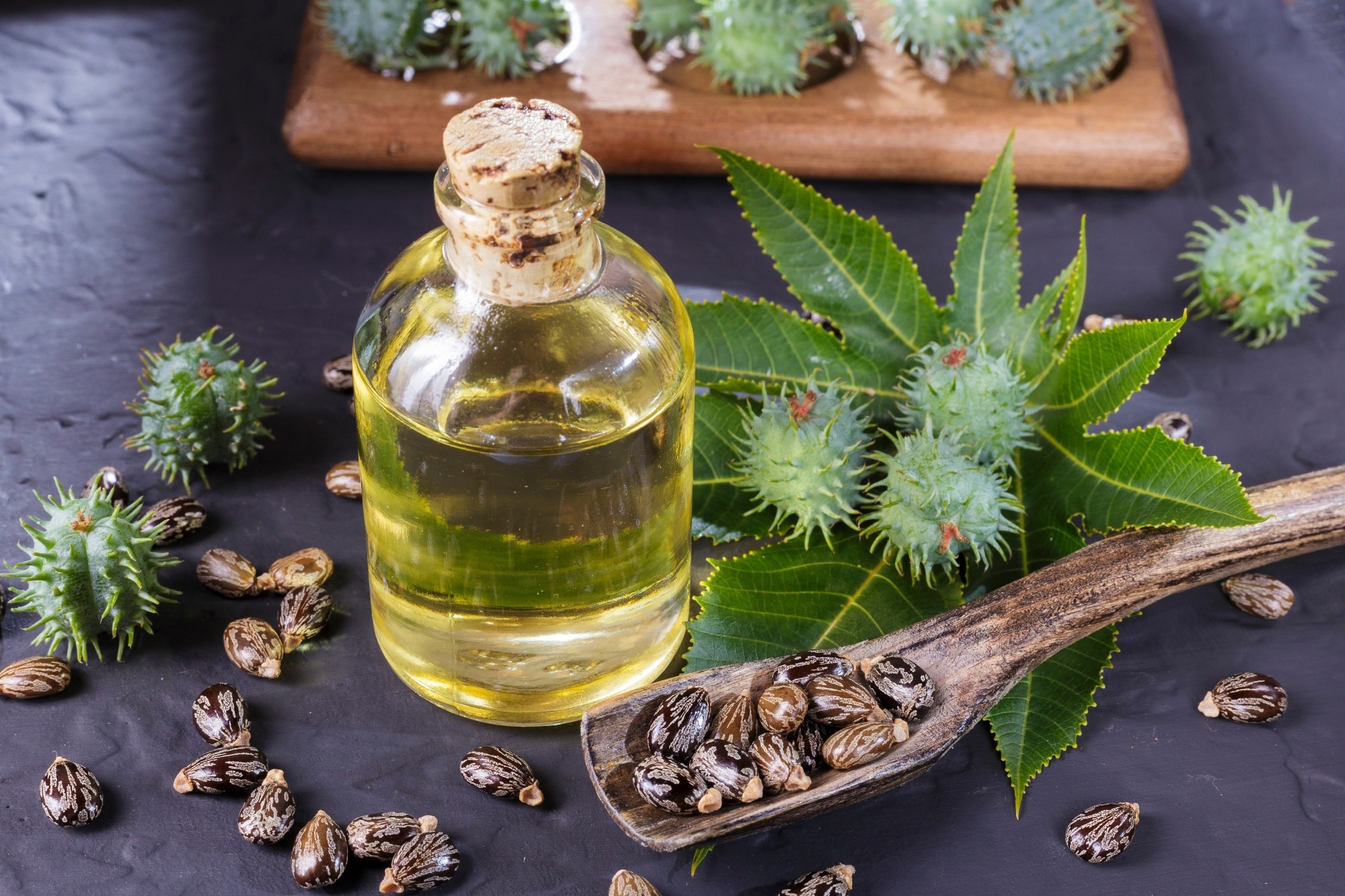 Image Credit: Alexander Ruiz Acevedo / Shutterstock.com
Introduction
Castor oil has been used in traditional medicine for centuries to treat conditions ranging from constipation to skin disorders. Recent advances in pharmacological research are revealing the unique chemical composition of castor oil and its emerging biomedical applications.
The chemistry and biological properties of castor oil
Approximately 90% of castor oil’s fatty acid content is ricinoleic acid, which contributes to its distinctive chemical profile and has been associated with several of its reported biological activities. Other fatty acids include linoleic acid, oleic acid, stearic acid, palmitic acid, dihydroxystearic acid, linolenic acid, and eicosanoic acid.3,4
Preclinical studies of Ricinus communis extracts and castor oil-derived compounds have reported antioxidant and anti-inflammatory activities, including free-radical scavenging in laboratory assays. DPPH is a synthetic radical used to measure antioxidant activity, not a physiological reactive oxygen species. Studies of R. communis constituents have also reported activation of nuclear factor erythroid 2-related factor 2 (Nrf2), although these findings should not be attributed uniformly to purified castor oil.
Ricinoleic acid has separately been identified in preclinical work as an inhibitor of prostaglandin D2 synthase, a proposed mechanism relevant to hair biology rather than antioxidant activity.1,3
Moreover, in vitro studies of R. communis extracts and castor-oil-derived materials have reported antibacterial activity against Escherichia coli and Staphylococcus aureus while also exhibiting antifungal activity against Candida albicans, Aspergillus ochraceous, and Fusarium verticillioides.1,3
Although castor oil is obtained from castor beans for its numerous health benefits, it is important to distinguish it from the highly toxic ricin protein also present in these beans. Purified castor oil does not contain ricin. Ricin is a water-soluble, heat-labile protein, and appropriate processing removes or inactivates it rather than leaving biologically active ricin in the finished oil.1,3,5
Therapeutic applications of castor oil
In Ayurveda and Traditional Chinese Medicine (TCM), castor oil has historically been used for hair and scalp care, as well as to treat joint pain, constipation, and dermatological concerns such as corns, moles, warts, and breast indurations. Eye infections such as conjunctivitis and styes have also been managed with castor oil in traditional practice, although clinical evidence supporting these uses remains limited.1,2
Modern preclinical research has expanded on these traditional applications by investigating the therapeutic mechanisms of castor oil and its bioactive components, such as ricinoleic acid, which may contribute to wound-healing effects. Animal and preclinical wound models have associated castor oil preparations with improved epithelialization, collagen formation, reduced lipid peroxidation, and other measures of tissue repair.2,3
Castor oil-containing formulations and chemically modified derivatives have been investigated for their effects on skin barrier integrity, hydration, and elasticity. Due to its moisturizing, antimicrobial, and anti-aging properties, castor oil is often incorporated into topical formulations being studied for conditions including acne, eczema, dermatitis, and psoriasis. Castor oil and its derivatives can also function as formulation vehicles or excipients that can improve the dermal delivery or retention of active ingredients in some formulations.1-3
 Image Credit: Jane Berry / Shutterstock.com
Clinical evidence for wound healing largely supports castor oil-containing combination products rather than castor oil alone. A castor oil-balsam of Peru-trypsin ointment was associated with epithelialization of skin graft donor sites, while a study of pressure ulcers reported trends toward faster healing that were not statistically significant. A case report also described reduced irritation, pain, and drainage in radiation-associated wet desquamation following treatment with a similar combination ointment. Separately, a phenol-castor oil peel and a small single-arm trial of castor oil cream have reported improvements in melasma or infraorbital hyperpigmentation.3
Castor oil is also used as a stimulant laxative for acute constipation, as it promotes rhythmic contractions of the intestinal smooth muscle to facilitate stool movement. This effect is primarily mediated by ricinoleic acid, which activates prostaglandin EP3 receptors in the intestinal smooth muscle, thereby enhancing motility.2
Emerging studies are also exploring the potential of castor oil-derived polymers for drug delivery and advanced bioengineering applications, as their unique hydroxyl functional groups allow scientists to easily modify their chemical structure. Polyethoxylated castor oil derivatives are already used as pharmaceutical excipients for poorly water-soluble drugs, while experimental castor-oil-based delivery systems and polymers are being investigated for controlled drug delivery.2,6
Castor oil is being investigated as a polyol source for biocompatible and biodegradable polyurethane materials. Although conventional polyurethanes are already used in medical products such as sutures, catheters, wound dressings, drug-delivery systems, and pacemaker insulation, these established devices should not be assumed to contain castor oil. In regenerative medicine, castor oil-based polyurethane composite foams are being tested as three-dimensional structural scaffolds. When infused with reinforcing microparticles, these porous scaffolds support the adhesion, growth, and proliferation of cells including mesenchymal stem cells and have shown potential for bone and cardiac tissue engineering.6
 Image Credit: ShutterstockAI / Shutterstock.com
Benefits, limitations, and safety considerations
Castor oil is an established stimulant laxative and is also incorporated into a range of topical and pharmaceutical formulations. However, popular internet claims of castor oil promoting fast hair growth, fat loss, and detoxifying the liver are not supported by robust clinical evidence. Dermatologic evidence remains heterogeneous and includes laboratory studies, formulation studies, case reports, small clinical studies, and limited randomized trials, so larger controlled trials are needed to establish efficacy, long-term safety, and optimal formulations.2,3,5
While refined castor oil is generally considered safe for use, rare cases of contact dermatitis and hair felting have been reported after exposure to castor oil or castor-oil-containing cosmetic products. However, most reported cases of dermatitis are mild and can be resolved by stopping the offending agent or by using antihistamines and corticosteroids. Hair felting is rare but can be severe and may require affected hair to be cut.3
Excessive castor oil consumption can cause gastric irritation, leading to nausea, vomiting, diarrhea, and dehydration or disturbances in fluid and electrolyte balance. Oral use should therefore be approached cautiously, particularly when gastrointestinal symptoms are already present. Due to its stimulatory effects on smooth muscle, castor oil can also induce uterine contractions and has been used clinically and traditionally to initiate labor. Its ingestion during pregnancy should therefore only occur under appropriate medical supervision.1,2
References
- Ramothloa, T. P., Mkolo, N. M., Motshudi, M. C., et al. (2025). Phytochemical Composition and Multifunctional Applications of Ricinus communis L.: Insights into Therapeutic, Pharmacological, and Industrial Potential. Molecules 30(15); 3214. DOI: 10.3390/molecules30153214. https://www.mdpi.com/1420-3049/30/15/3214
- Abomughaid, M. M., Teibo, J. O., Akinfe, O. A., et al. (2024). A phytochemical and pharmacological review of Ricinus communis L. Discover Applied Sciences 6(315). DOI: 10.1007/s42452-024-05964-5. https://link.springer.com/article/10.1007/s42452-024-05964-5
- Girdler, K., Cabatu, A., Olds, H., et al. (February 09, 2026) Use of Castor Oil in Dermatology: A Narrative Review. Cureus 18(2); e103289. DOI: 10.7759/cureus.103289, https://www.cureus.com/articles/407925-use-of-castor-oil-in-dermatology-a-narrative-review
- Chauke, N. P., Mukaya, H. E., & Nkazi, D. B. (2019). Chemical modifications of castor oil: A review. Science Progress. DOI: 10.1177/0036850419859118, https://journals.sagepub.com/doi/10.1177/0036850419859118
- Mysore, V., & Arghya, A. (2022). Hair Oils: Indigenous Knowledge Revisited. International Journal of Trichology 14(3); 84. DOI: 10.4103/ijt.ijt_189_20. https://journals.lww.com/ijot/fulltext/2022/14030/hair_oils__indigenous_knowledge_revisited.2.aspx
- Arévalo-Alquichire, S. & Valero, M. (2017). Castor Oil Polyurethanes as Biomaterials. In book: Elastomers, DOI: 10.5772/intechopen.68597, https://www.intechopen.com/chapters/55131
Further Reading
Last Updated: Sep 30, 2026