Introduction
Circadian rhythms and the biology of hunger
Meal timing, glucose metabolism, and energy balance
Lifestyle and environmental factors
Nutritional strategies for optimizing circadian health
References
Further reading
Meal timing helps regulate hunger, glucose control, lipid metabolism, and energy balance through its alignment with circadian rhythms. Eating earlier and maintaining consistent meal and sleep schedules may support better metabolic health.
 Image Credit: Shobujsk / Shutterstock.com
Introduction
Meal timing is increasingly recognized as a key determinant of metabolic health, as it influences glucose homeostasis, energy production, and hormonal regulation. Aligning food intake with endogenous circadian rhythms has the potential to improve metabolic outcomes and reduce the risk of obesity, type 2 diabetes, and other cardiometabolic disorders.
Circadian rhythms and the biology of hunger
Within the hypothalamus, the suprachiasmatic nucleus (SCN) serves as the master clock, synchronizing the intricate network of biological clocks distributed across cells and tissues throughout the body to regulate hunger, satiety, and metabolism over a 24-hour period. Circadian rhythms in the liver, for example, regulate nutrient uptake, lipid and glucose metabolism, and amino acid processing2.
This process of entrainment, which refers to the alignment of endogenous clocks with environmental stimuli, is primarily affected by light, as darkness triggers melatonin production by the pineal gland, which initiates sleep. Comparatively, cortisol levels often rise in early morning hours and gradually decline throughout the day to prepare the body for increased gluconeogenesis, immune modulation, and arousal responses.
While light primarily entrains the central clock, food intake timing predominantly entrains peripheral clocks.”2
Emerging evidence emphasizes the potent impact of feeding patterns on peripheral clock regulation, as demonstrated by ghrelin levels that often rise during fasting and before habitual mealtimes to promote hunger, while leptin secretion typically peaks during the sleep phase to support satiety. The release of appetite-regulating neuropeptides, such as neuropeptide Y (NPY), agouti-related peptide (AgRP), and pro-opiomelanocortin (POMC), is similarly affected by circadian rhythms. In a 13-day forced-desynchrony study, hunger showed an endogenous circadian trough in the biological morning and a peak in the biological evening, independent of food intake and sleep-wake timing.1
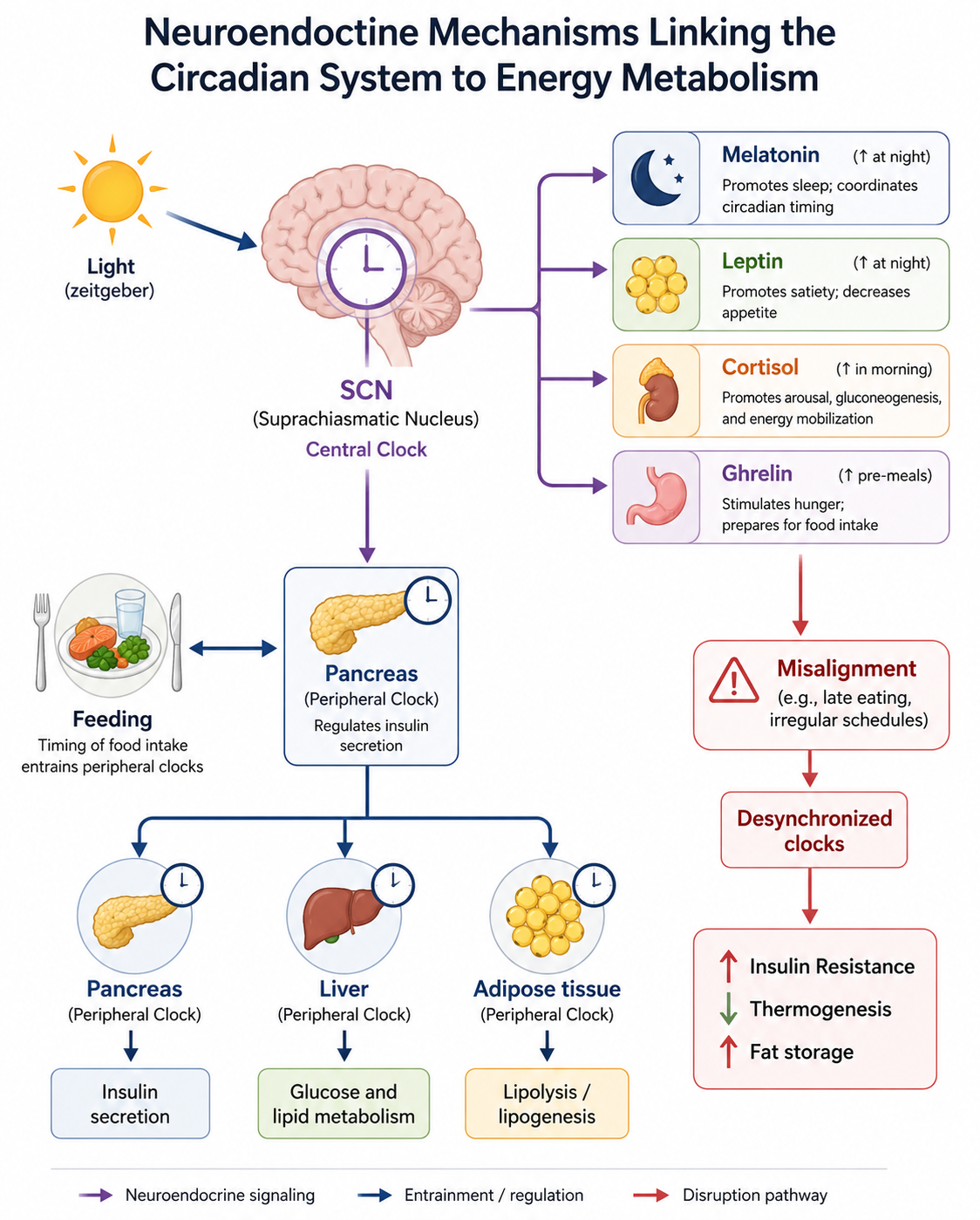
Illustration of the bidirectional relationship between the circadian system and metabolic regulation. It emphasizes how feeding behavior and light exposure interact with the master clock in the SCN and peripheral clocks in metabolic tissues. Disruption of this network, particularly through inappropriate meal timing, contributes to metabolic dysregulation, including impaired insulin sensitivity, altered lipid metabolism, and increased risk for obesity. Abbreviations: SCN = suprachiasmatic nucleus.2
The circadian clock regulates metabolic activity, with insulin sensitivity peaking during the morning and declining toward the evening. Thus, eating later at night, when insulin sensitivity is reduced, can lead to higher postprandial glucose responses and impaired glucose tolerance, regardless of the composition or volume of the food consumed. Diet-induced thermogenesis is also higher after morning meals, suggesting that energy utilization may be more efficient earlier in the day than at night.2
Individual responses may vary due to differences in chronotypes, genetic susceptibility, and lifestyle factors. Whereas those with a morning chronotype typically consume most of their daily calories earlier in the day, those with evening chronotypes often prefer later meals.
Circadian clocks may also influence hedonic feeding pathways, including leptin-receptive neuronal circuits involved in reward-driven food intake. Some individuals have higher reward sensitivity, characterized by increased dopamine release in response to the sight or smell of food, which can increase hunger signals despite adequate energy intake. Moreover, insufficient sleep due to irregular work schedules can adversely affect glucose metabolism, neuroendocrine function, appetite, and energy intake. Stress-related elevations in cortisol may further interact with circadian and appetite-regulating pathways, increasing vulnerability to overeating in some individuals.2,3,5
How eating feeds into the body clock
Lifestyle and environmental factors
Lifestyle factors, diet, occupation, and environmental exposures influence the feeling of hunger. Irregular sleep schedules, late-night screen exposure, stress, caffeine intake, and inconsistent meal timings can lead to hormonal imbalances that increase energy intake, often in quantities that exceed energy demands. Meals containing protein and fiber may support satiety, while diets dominated by refined carbohydrates may lead to larger postprandial glucose fluctuations, which can affect perceived hunger in susceptible individuals. 2,5
Shift work is a primary example of circadian misalignment, as increased caloric intake during the biological night impairs insulin release and disrupts glucose regulation, thereby affecting blood sugar control. Circadian clock disruption also affects the activity of appetite-regulating hormones such as ghrelin and leptin, contributing to dysregulated satiety and weight gain.
Cultural and behavioral factors also influence dietary patterns, as exemplified by certain religious practices that temporarily alter eating schedules. For example, during the month of Ramadan, Muslims abstain from all food and drink from their pre-dawn meal until sunset. In some Mediterranean countries, dinner is often later in the evening, whereas in other cultures, meals are larger in the midday. Food culture also includes meal timing, etiquette, communal eating, and ritual meanings attached to food, which can shape whether circadian-aligned meal schedules are practical or acceptable.6
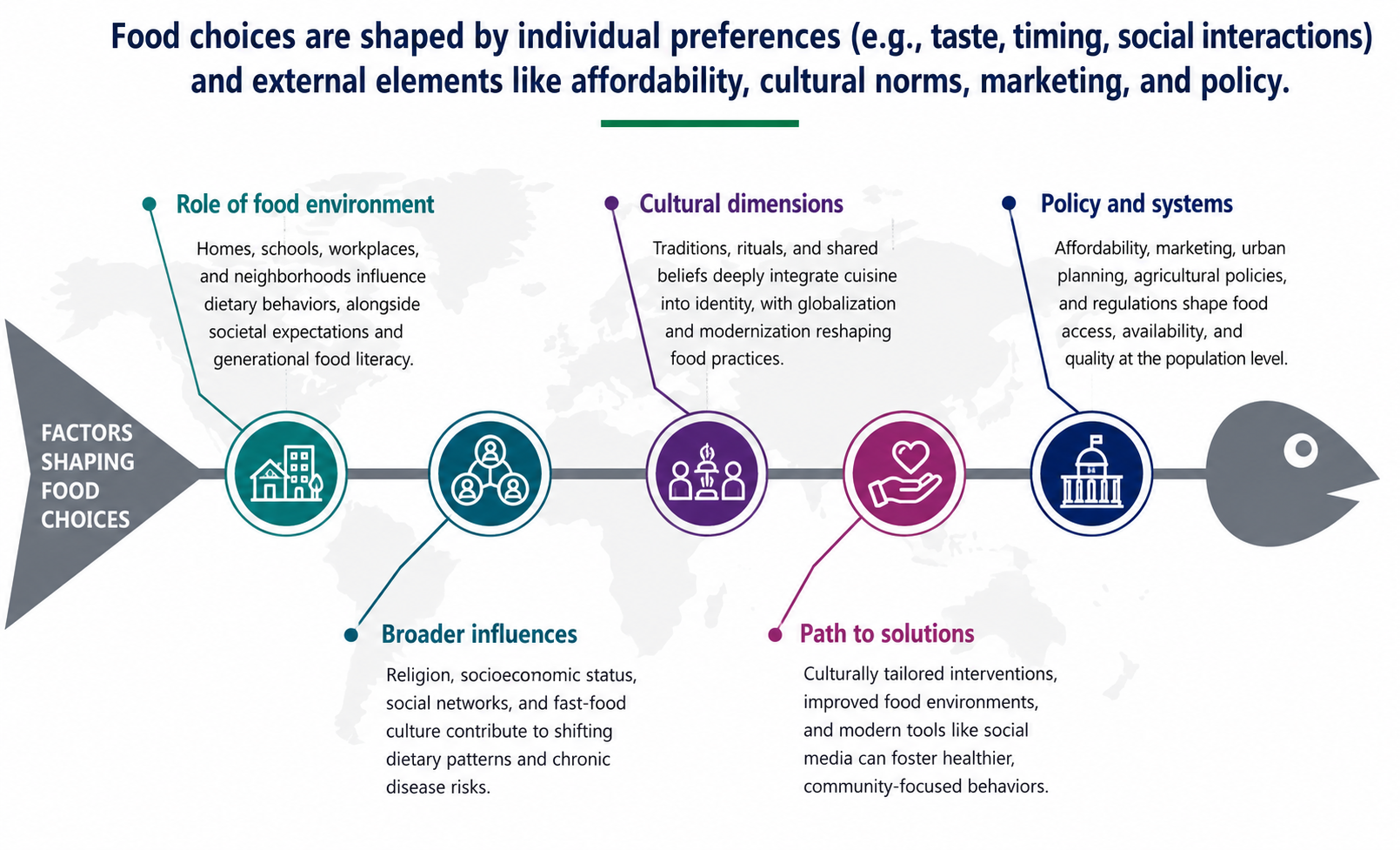
Figure adapted and redrawn from: Jayasinghe S, Byrne NM, Hills AP. Cultural influences on dietary choices. Progress in Cardiovascular Diseases. 2025;90:22–26. https://doi.org/10.1016/j.pcad.2025.02.003. Redrawn with assistance from OpenAI ChatGPT based on the original published graphical abstract.6
Nutritional strategies for optimizing circadian health
Eating patterns that align with circadian rhythms support better glucose control, lipid metabolism, and energy expenditure. Eating earlier in the day may suppress ghrelin more effectively and improve satiety. Likewise, front-loading calories aligns with the endogenous metabolic rate, as glucose and lipid handling are generally more efficient earlier in the active phase. Maintaining consistent meal timings and sleep schedules supports the entrainment of internal clocks, whereas late-night eating can lead to weight gain, partly because equivalent caloric intake during the inactive or biological night is associated with poorer metabolic responses.2,4
 Image Credit: Baba.Images / Shutterstock.com
To optimize metabolism and ensure efficient utilization of these hormonal responses, early time-restricted eating (eTRE) involves limiting caloric intake to earlier parts of the day, when insulin sensitivity is highest, to improve weight regulation. Clinical studies suggest that eTRE can improve weight control, insulin sensitivity, blood pressure, mood, and lipid-related outcomes, although optimal eating windows and long-term adherence remain areas for further research. Evidence on nighttime high-fat intake is strongest in animal studies, while observational human studies link late-night eating patterns with dyslipidemia, visceral adiposity, and increased risk of metabolic syndrome.2
Moving forward, integrating holistic approaches that consider meal timing, sleep, physical activity, and circadian health into preventive care could support long-term metabolic well-being in an increasingly digital, convenience-driven world.2,4,5
References
- Scheer, F. A. J. L., Morris, C. J., & Shea, S. A. (2013). The internal circadian clock increases hunger and appetite in the evening independent of food intake and other behaviors. Obesity 21(3); 421-423. DOI: 10.1002/oby.20351, https://onlinelibrary.wiley.com/doi/10.1002/oby.20351
- Reytor-González, C., Simancas-Racines, D., Roman-Galeano, N. M., et al. (2025). Chrononutrition and Energy Balance: How Meal Timing and Circadian Rhythms Shape Weight Regulation and Metabolic Health. Nutrients 17(13). DOI: 10.3390/nu17132135. https://www.mdpi.com/2072-6643/17/13/2135
- Osorio-Mendoza, J., Kiehn, J., Stenger, S., et al. (2025). Regulation of hedonic feeding rhythms by circadian clocks in leptin-receptive neurons. Molecular Metabolism 100. DOI: 10.1016/j.molmet.2025.102221. https://www.sciencedirect.com/science/article/pii/S2212877825001280
- Khaira, F., & Sulastri, D. (2026). Meal timing and ghrelin: A chrononutritional perspective on weight regulation potential. Chronobiology International 43(5); 606-613. DOI: 10.1080/07420528.2026.2624753. https://www.tandfonline.com/doi/full/10.1080/07420528.2026.2624753
- Doherty, R., Madigan, S., Warrington, G., & Ellis, J. (2019). Sleep and Nutrition Interactions: Implications for Athletes. Nutrients 11(4). DOI: 10.3390/nu11040822, https://www.mdpi.com/2072-6643/11/4/822
- Jayasinghe, S., Byrne, N. M., & Hills, A. P. (2025). Cultural influences on dietary choices. Progress in Cardiovascular Diseases 90; 22-26. DOI: 10.1016/j.pcad.2025.02.003. https://www.sciencedirect.com/science/article/pii/S0033062025000209
Further Reading
Last Updated: Jun 10, 2026
 Daily routines reduce pain and depression in older adults