From global manufacturers to virtual biotech, pharmaceutical and life science organizations face increasing pressure to accelerate development timelines, enhance manufacturability, and better manage costs while meeting increasingly stringent regulatory expectations.
The practicalities of powder processing continue to challenge even the most experienced teams. They can be difficult to handle, prone to inconsistent flow or segregation, and sensitive to electrostatic effects or humidity.
Outcomes are often determined by powder behavior, particularly in solid dose and inhalation supply chains.
Challenges such as segregation, content uniformity, poor flowability, variable particle-size distribution (PSD), sensitivity to moisture or charge, and scale-up risks must be addressed early to avoid any compromise in batch consistency and product quality.
Regulatory requirements add a further layer of complexity, necessitating the implementation of robust documentation, validation evidence, traceability, and tightly controlled change management.
Maintaining the specialist equipment, operator expertise, containment, and controlled environments needed to ensure effective size reduction, micronization, and classification can be difficult to scale and capital-intensive for many organizations.
Outsourcing to a specialist contract development and manufacturing organization (CDMO) has, therefore, become a popular strategic route for reducing operational risk and accelerating programs.
A new guide published by Hosokawa Micron Limited outlines the benefits of outsourcing powder processing and classification.
It covers what to look for in an outsourcing partner and explores how Hosokawa Micron Limited’s CDMO capability supports efficient, compliant, and scalable outsourced production, especially in applications requiring precise particle-size control, particle/blend engineering, and air classification.
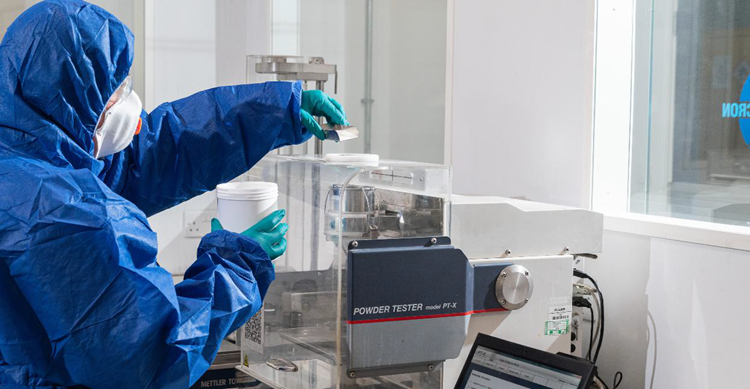
Image Credit: Hosokawa Micron Ltd
Understanding CDMO
CDMO powder processing is also referred to as contract manufacturing. This agreement involves a company partnering with a third-party provider in order to support final product development by processing materials in line with precise customer specifications.
This approach ensures that required material standards are met while removing the need for considerable upfront investment in terms of specialized operator training and equipment.
Advanced size-reduction technologies like micronization and milling enable the handling of a wide range of materials while achieving precise particle sizes, including at the micron level. CDMOs have become critical enablers of flexibility, speed, and agility in the areas of material classification and size reduction.
They are also able to significantly reduce risk and ensure cost efficiency in drug development as it scales up to commercialization.
Contract processing supports the conversion of powders, granules, bulk solids, and other raw materials into consistent, high-quality final forms across a wide range of industries, including pharmaceuticals.
Businesses can improve product quality and efficiency by leveraging scalable capabilities and working with specialists in controlled processing environments, allowing them to rapidly respond to production demands while reducing both operational complexity and capital investment.
The importance of powder processing in pharmaceutical production
Powder processing in the pharmaceutical industry ensures reliability across outsourcing while addressing key challenges regarding speed-to-market.
The pharmaceutical sector’s distinct combination of scientific, regulatory, and operational factors means there are a number of challenges associated with bringing a drug from concept to commercial availability. These challenges include:
- The demand for ready-to-use development able to scale up a manufacturing facility, including process development, optimization, scaling up, and tech transfer
- The need for capital investment in specialist equipment, which must be delivered and validated prior to use
- A potential lack of commercial production expertise and specialist knowledge
- The demand for robust compliance, including traceability, supporting documentation, and quality expectations for regulated supply chains
- The need to accelerate time-to-market
CDMOs can support businesses throughout the pharmaceutical industry, from corporations to start-ups. Common production use cases for a CDMO include:
- APIs and intermediates necessitating de-agglomeration or a defined PSD
- Excipients and functional powders that need consistent classification
- Powder blends requiring segregation control and homogeneity
- Inhalation-relevant powders where PSD and classification underpin performance
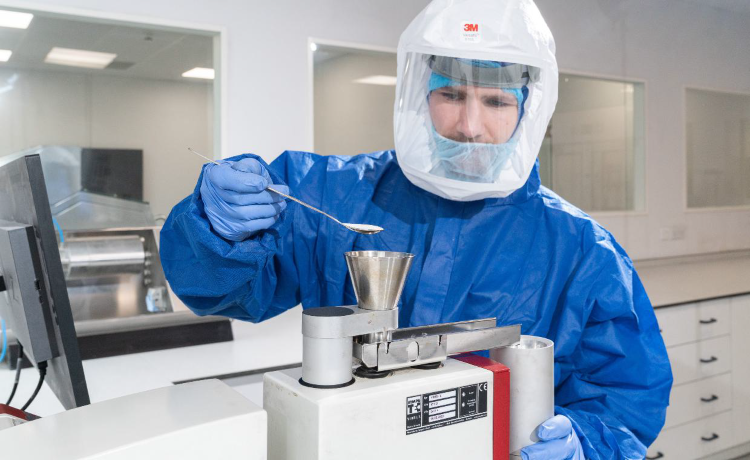
Image Credit: Hosokawa Micron Ltd
Trustworthiness is arguably the foundation of the pharmaceutical sector. Outsourced products are often prescribed by healthcare professionals and used by patients in medical settings. This means that any failure in processing, compliance, or quality control can have severe consequences, from regulatory action and financial loss, through to potential harm to patients.
A trusting and reliable relationship between the pharmaceutical company and CDMO is key to ensuring optimal results. This trust must extend to full transparency in processes, strict adherence to regulatory and GMP standards, robust quality management systems, and full traceability throughout the supply chain.
Validated processes, consistent batch-to-batch performance, and comprehensive documentation are all key indicators that a partner can be relied upon over the long term.
A dependable third-party provider quickly identifies risks, maintains confidentiality, and proactively responds to shifting requirements or unforeseen challenges.
The third-party provider effectively functions as an extension of the client’s own operations, meaning this relationship must be underpinned by solid communication and shared quality objectives.
This relationship allows pharmaceutical companies to ensure optimal operational outcomes, as well as continued product safety and efficiency as these are delivered to patients.
Considering pharmaceutical powder classification
Specialist medical and pharmaceutical companies looking to align projects to their own timelines can benefit from outsourcing pharmaceutical powder classification and processing. The need for internal processes and approvals can slow progress, but working with external partners typically offers increased flexibility.
Many projects also necessitate internal ‘outsourcing’ between different departments, for example, transferring work between R&D and scale-up, then passing this onto manufacturing and quality control.
This internal outsourcing can introduce added red tape, competing priorities, and delays. Each handover typically results in further delays due to the need for additional alignment, documentation, and approval steps.
Working with a reliable and respected CDMO can streamline this process by consolidating development and manufacturing through a single external partner.
CDMOs leverage aligned quality systems and integrated workflows, lowering the requirements for cross-functional coordination and repeated technology transfers.
This more streamlined approach minimizes bottlenecks, accelerates time-to-market, and improves project efficiency and scalability. Products can, therefore, move more smoothly from concept to commercialization.
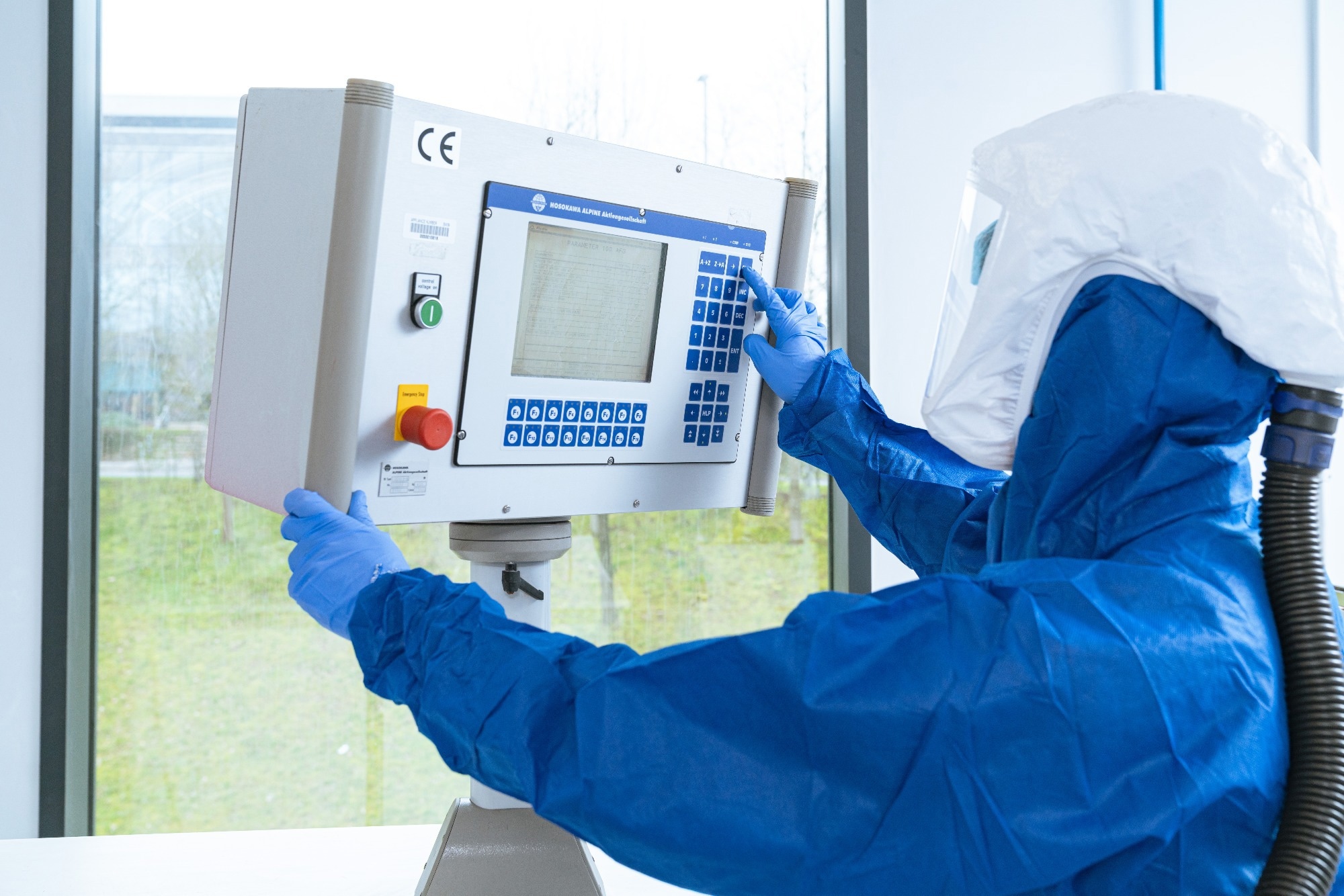
Image Credit: Hosokawa Micron Ltd
Common manufacturing challenges
A wide range of organizations are likely to benefit from outsourced pharmaceutical material processing and/or powder processing, including:
- Pharmaceutical companies looking to produce finished dosage forms
- Companies without appropriate GMP-compliant equipment
- Companies with the right equipment but no related expertise or in-house resources
- Businesses looking to accelerate time-to-market by minimizing the delays associated with building or expanding in-house capabilities
- Companies working with toxic, highly potent, or sensitive materials that require specialized handling and containment
- Projects looking to leverage advanced technologies like jet milling, air classification, micronization, or precision blending that are unavailable internally
- Companies looking to minimize risk as they scale up from R&D or pilot batches to commercial production
- Organizations seeking flexible manufacturing capacity able to accommodate short production runs or variable demand
- Companies looking to mitigate operational risk by working with experienced, specialist partners.
- Companies that have the formula and workflow but not the specialist process knowledge or experience to manufacture in line with required specifications
- Companies facing in-house financial constraints
Establishing a long-term, reliable partnership with an experienced provider is key to ensuring repeatability, control, and speed for pharmaceutical companies focused on development and optimization.
Pharmaceutical powder classification for particle characterization and quality assurance
Pharmaceutical powder processing is dependent on precise particle characterization and quality assurance. Regulatory compliance, product efficacy, and manufacturing reliability are all impacted by these key processes.
Particle characterization involves measuring and understanding a powder's physical properties, including particle size, shape, density, distribution, and surface area. These properties directly impact product performance, including flowability, solubility, and content uniformity.
Accurate particle characterization ensures consistent powder behavior throughout the manufacturing process and into final dosage forms. This is a key aspect of ensuring consistent drug efficacy or a formulation suited to the final dosage form.
Quality assurance is the systematic process of confirming and monitoring that manufacturing practices and finished products meet all established standards and regulatory requirements, before monitoring these practices and products to ensure ongoing compliance.
In pharmaceutical powder processing, QA ensures that every batch meets GMP guidelines, remains consistent, and maintains reproducibility. Robust QA practices are key to minimizing deviation risk, supporting regulatory compliance, and helping ensure that patients receive effective, safe, and reliable products.
Particle characterization in this context generally considers a range of properties, including:
- Particle shape, morphology, and surface characteristics
- Bulk, tapped density, and compressibility indicators
- Segregation tendency and flow behavior
- Electrostatic behavior and moisture sensitivity
- Particle-size distribution (PSD)
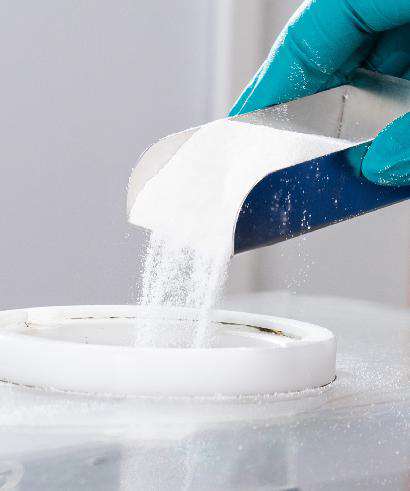
Image Credit: Hosokawa Micron Ltd
These parameters impact critical outcomes including blend uniformity, dose uniformity, flowability, dissolution and solubility, and manufacturability.
Appropriate quality assurance ensures the process is completed under controlled conditions and that documented evidence is in place to confirm that requirements were met. Robust QA practice helps to support audit readiness, minimize deviation risk, and maintain consistent batch-to-batch performance.
Material classification
Material classification in pharmaceutical applications involves more than standard size-reduction and milling techniques.
Effective classification removes fine or coarse fractions from the material, so this process underpins both processing and downstream operations, enhancing downstream performance for tableting and capsule filling, inhalation behavior, coating consistency, and other key processes.
Blending
Denser or larger particles may segregate from finer powders in cases where particle sizes are inconsistent. This can potentially lead to uneven PSD of the active pharmaceutical ingredient (API) and risk compromised dosage uniformity.
Granulation and tableting
Incorrectly classified powders can lead to variable tablet hardness, poor compaction, or capping during compression, adversely affecting manufacturability and quality.
Coating processes
Oversized particles or fines can negatively affect the even application of coatings, impacting product stability and dissolution rates.
Inhaled products
Fines can also impede accurate dosage delivery in dry-powder inhaled formulations.
Despite these potential risks, the resulting problems usually only appear later in the process, prompting many pharmaceutical companies to overlook API particle classification.
Quality assurance
The implementation of appropriate quality assurance techniques ensures consistency from the initial process through to the end product. These processes allow clients to confirm that their specifications are being adhered to, validating system setups at key points.
Process consistency checks
Regular monitoring of critical parameters ensures that the process consistently meets defined specifications, for example, moisture content, particle size, and blend uniformity.
In-process validation (for equipment and processes)
Verifying system setups and equipment performance during production helps enable the early identification of issues, reducing the risk of downstream quality issues.
Equipment validation must be performed in line with GMP requirements, including the qualification of installation, operation, and performance using surrogate materials.
Full validation documentation must be maintained and kept available to support all appropriate regulatory requirements.
End-product verification
Comprehensive final product testing is performed to confirm that the finished material aligns with regulatory standards and client requirements. This testing will incorporate certificates of analysis (COAs) and critical quality attributes.

Image Credit: Hosokawa Micron Ltd
Regulatory compliance and documentation standards
Trust is a key aspect of outsourcing pharmaceutical powder processing. Pharmaceutical companies must be confident that a partner is able to consistently and reliably meet the required technical specifications before assessing documentation and regulatory compliance. This may involve uniform blending, precise particle-size distribution, or the safe handling of sensitive materials.
The level of regulatory compliance and the robustness of documentation standards offered by the provider are further key considerations. It is essential that full traceability, clear validation processes, and adherence to GMP requirements are in place to ensure product quality and audit readiness, while maintaining long-term reliability.
Documentation and regulatory compliance in pharmaceutical processing
A selected CDMO partner for pharmaceutical processing must be able to supply CoAs, batch manufacturing records, and detailed written reports pulled from production data.
It is important that CDMOs provide clients with a comprehensive, transparent, step-by-step process that includes essential components.
Pre-planning documentation
Pre-planning documentation defines the intended process, incorporating methods, parameters, and anticipated outcomes.
Batch or campaign records
These records capture the steps and outcomes that occurred during processing, ensuring complete accountability and traceability.
Final reports and CoAs
Final reports provide detailed end-product verification, incorporating critical quality attributes such as particle size and distribution.
Documentation consistency
It is also important to ensure that feasibility work, clinical trial material processing, or repeat production all use the same documentation. A typical document flow comprises a number of key stages.
Protocol development
Hosokawa Micron Limited prepares a detailed protocol for a start-up or feasibility study, outlining the objectives and experimental background.
Testing phase
Experiments are performed in line with the established protocol to gather relevant data.
Executive reporting
An executive report summarizes results, analysis, and key findings.
Documentation outcomes
Any required compliance materials and executive documentation are generated from the report.
Accreditations and audits in pharmaceutical processing
Clients are encouraged to undertake supplier audits to confirm capability, suitability, and quality controls. Organizations should also look for evidence of structured management systems, for instance, ISO-aligned safety, quality, and environmental frameworks.
The audit affords the client sufficient confidence that the contracted facility can manufacture its products safely and compliantly, as well as ensuring that all key equipment is comprehensively validated.
Clients should also ensure that the CDMO adheres to stringent regulatory and compliance standards, including:
- ISO 9001:2026 Quality Management Systems (QMS)
- ISO 45001:2018 Occupational Health and Safety (OH&S)
- ISO 14000 International Standards for Environmental Management Systems (EMS)
Download the full article now to learn more
About Hosokawa Micron Ltd
Hosokawa Micron Ltd is the UK arm of the global Hosokawa Micron Group, a world leader in powder and particle processing technologies. Based at our purpose-built facility in Runcorn, Cheshire, we design, manufacture and supply advanced equipment and integrated systems for the safe, efficient and compliant processing of powders and bulk solids.
With more than 100 years of powder processing innovation across the wider group, Hosokawa Micron Ltd supports customers operating in highly regulated and technically demanding industries, including pharmaceuticals, chemicals, food and beverage, cosmetics, minerals, nuclear, energy and advanced materials.
Our core technologies and solutions include:
- Powder and particle processing equipment
- High-performance containment systems, including downflow booths and isolators
- Hygienic filling and weighing systems
- Size reduction, mixing, drying, agglomeration and classification
- Material handling, conveying and discharge solutions
All systems are engineered to order, combining proven technology with application-specific design to help customers improve product quality, protect operators, and meet stringent regulatory and environmental requirements.
In addition to equipment supply, Hosokawa Micron Ltd offers a comprehensive range of technical services, including powder testing, process development, equipment lifecycle support and contract manufacturing. Customers benefit from access to our state-of-the-art test and development facilities and the wider Hosokawa Micron Group’s global network of application centres and engineering expertise.
As part of the Hosokawa Micron Group, we combine global technology leadership with local engineering support, enabling us to deliver reliable, future-focused solutions that help customers innovate, scale and remain competitive.
Hosokawa Micron Ltd – Your trusted partner in containment solutions and processing technology.
Sponsored Content Policy: News-Medical.net publishes articles and related content that may be derived from sources where we have existing commercial relationships, provided such content adds value to the core editorial ethos of News-Medical.net, which is to educate and inform site visitors interested in medical research, science, medical devices and treatments.