A newly identified circadian checkpoint shifts neutrophils into a protective night-like state, reducing inflammatory heart injury while preserving the body’s ability to fight infection.
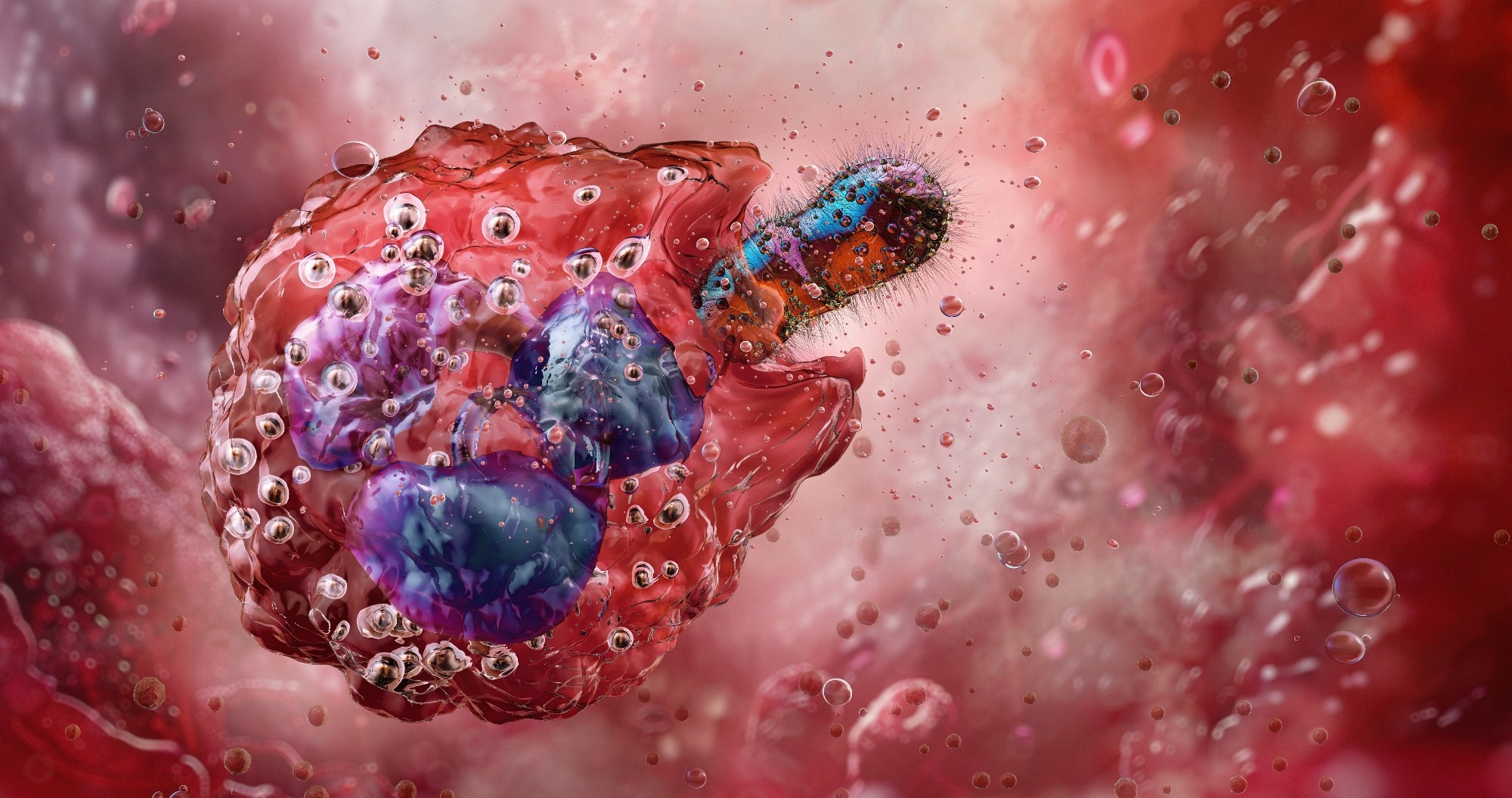
Study: A circadian checkpoint relocates neutrophils to minimize injury. Image Credit: Corona Borealis Studio / Shutterstock
In a recent study published in the Journal of Experimental Medicine, researchers identified a circadian neutrophil checkpoint that protects against inflammation.
Neutrophils are the first responders to infections and trauma. However, their highly cytotoxic activity can cause irreversible damage to bystander host cells. This is particularly relevant in the context of sterile inflammation and infections, conditions in which the affected tissues recruit neutrophils that can increase the area of damage by secreting cellular components and chemicals and inducing the death of unaffected cells.
These antagonistic effects of inflammatory injury and immune protection impede therapeutic development, as both properties are deemed inseparable features of neutrophils. However, recent studies report that neutrophils are not homogeneous across disease states, tissues, and diurnal time, suggesting that neutrophils may be targeted in a spatiotemporal manner.
Myocardial Infarction as a Circadian Model
In the present study, researchers showed that a circadian neutrophil checkpoint protects against inflammation. They focused on myocardial infarction (MI), which represents a paradigm of collateral injury and exhibits circadian patterns in severity in mice and humans. First, the left anterior descending coronary artery of mice was transiently ligated for 45 minutes every four hours to induce ischemia.
Infarcted left ventricles were analyzed after one hour of reperfusion. Cardiac damage exhibited marked diurnal variations, peaking when the infarct was induced at zeitgeber time 1 (ZT1) and ZT5 (8 a.m. to 12 p.m.), and reaching a trough when induced at ZT13 and ZT17 (nighttime). Notably, pre-infarction neutrophil depletion reduced infarct size and eliminated circadian patterns of myocardial injury without reducing neutrophil recruitment or altering the recruitment of other immune cells.
Human Evidence Linking Neutrophils and Injury
Next, a retrospective analysis was performed to assess whether neutrophils are associated with diurnal variations in myocardial injury in humans. Using a dataset of 2,043 MI patients, the team noted that neutrophil counts at admission time were positively correlated with cardiac injury severity. Further, patients were stratified into percentiles of neutrophil counts to determine whether naturally low neutrophil counts blunt diurnal variations.
Expectedly, plasma troponin levels, a measure of myocardial injury, exhibited a gradual increase from the low- to high-neutrophil count groups. Moreover, there was a progressive decline in the amplitude of circadian variations across the high-, intermediate-, and low-count groups, which showed strong, mild, and no oscillations, respectively. The team also observed an early-morning peak in injury in the intermediate-count group and an even earlier peak in the high-count group.
Neutrophil Circadian Clock Mechanism
Next, the researchers induced ischemic injury in mice with neutrophil-specific ablation of the brain and muscle ARNT-like 1 (Bmal1) transcription factor, in which the neutrophil circadian clock is disabled, and analyzed the damage after 24 hours of reperfusion. While the circadian oscillations in neutrophil numbers and other hematological parameters were preserved in these mutants, they were protected from myocardial tissue death.
Of note, the diurnal spikes in myocardial injury were completely diminished, and this was not due to changes in organismal circadian activity. These data suggested that diurnal variations in neutrophil basal activation state and intravascular behavior, regulated by neutrophil circadian clocks, are responsible for circadian oscillations in inflammatory injury.
CXCR4, CXCL12 as Protective Checkpoint
Next, the researchers focused on C-X-C motif chemokine receptor 4 (CXCR4), a key regulator of neutrophil trafficking and also a cell-intrinsic inhibitor of the neutrophil circadian clock, and its natural agonist, C-X-C chemokine ligand 12 (CXCL12). They found that the oscillations in diurnal plasma CXCL12 levels in naïve mice were out of phase with oscillations in infarct size, suggesting that diurnal signaling through CXCR4 in neutrophils may protect against inflammatory injury.
Further, the team cultured neutrophils from naïve mice and observed their spontaneous temporal phenotypic changes by flow cytometry. Neutrophils exhibited clear phenotypic transitions resembling those observed during in vivo aging; these changes were absent in mice with neutrophil-specific CXCR4 ablation.
Therapeutic CXCR4 Agonism Effects
Further, mice with a gain-of-function mutation that produced a hyperactive form of CXCR4 were protected from myocardial injury, and the associated circadian variations were blunted despite no changes in organismal circadian activity. This suggested that inhibiting the neutrophil circadian clock through CXCR4 activation prevents diurnal spikes in neutrophil activation without globally suppressing inflammation.
Next, the researchers found that inhibiting the neutrophil clock through CXCR4 agonism, using ATI2341, an experimental CXCR4 agonist, protected mice from vascular inflammation by inducing the natural deactivation state observed at night. In addition, CXCR4 agonism with ATI2341 protected against vascular inflammation in a sickle cell disease mouse model.
Similarly, CXCR4 agonism protected the heart from ischemia-reperfusion injury without affecting neutrophil counts or other hematological parameters. Further experiments indicated that CXCR4 agonism repositioned neutrophils within affected tissues, concentrating them at sites of injury while limiting their spread into adjacent healthy tissue, a mechanism inferred across multiple tissue models, including skin and heart, that is active at night and prevents indiscriminate tissue death.
Finally, the team investigated whether the protective effects of CXCR4 agonism, including neutrophil relocation to the affected tissue, would be detrimental during infections. ATI2341 or vehicle-treated mice were challenged with Staphylococcus aureus or Candida albicans. ATI2341 treatment did not compromise antimicrobial defense and was associated with a mild improvement in host control of Staphylococcus aureus, revealing that CXCR4 agonism preserves antimicrobial responses.
Circadian Checkpoint Therapeutic Implications
Taken together, the study identified a ligand-receptor pair that serves as a circadian checkpoint for neutrophil activation and tissue positioning. CXCR4 agonism via a synthetic agonist induces a neutrophilic transition into a more permissive, night-like state, which mitigates inflammatory injury by limiting collateral damage rather than reducing neutrophil recruitment, without compromising antimicrobial defense. Thus, the circadian neutrophil checkpoint protects against inflammation, and this protective effect can be therapeutically activated to benefit the host.
 Eating fewer foods of concern may protect the heart beyond pills