A landmark clinical trial reveals that a widely used obesity drug may also curb alcohol cravings and consumption, opening a potential new front in addiction treatment.
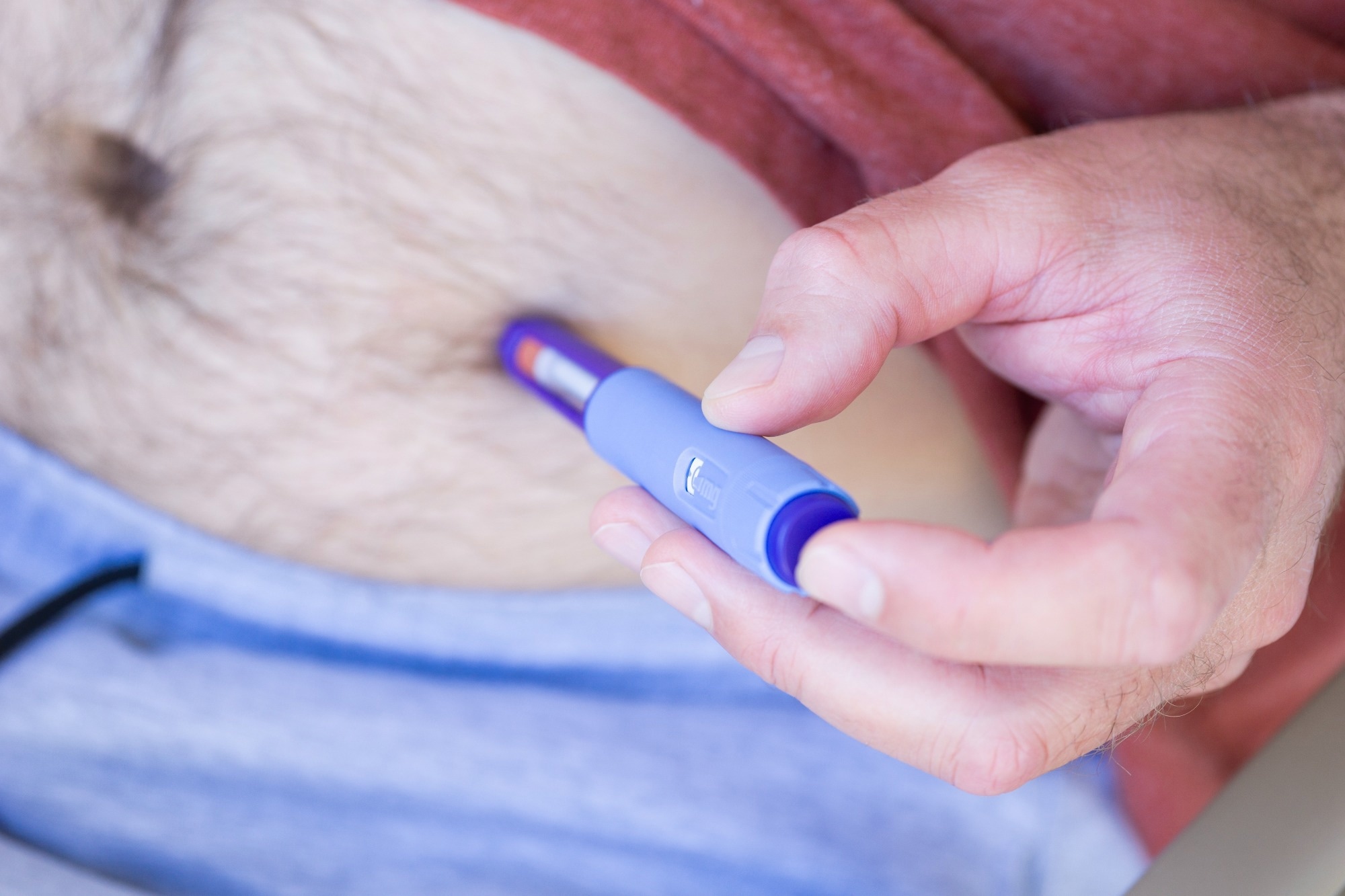 Study: Once-weekly semaglutide versus placebo in patients with alcohol use disorder and comorbid obesity: a randomised, double-blind, placebo-controlled trial. Image credit: Pietukhova/Shutterstock.com
In a recent study published in The Lancet, researchers investigated the efficacy of semaglutide in individuals with comorbid obesity and alcohol use disorder (AUD).
GLP-1 drugs emerge as potential targets for addiction
Alcohol use disorder (AUD) is a chronic and relapsing brain disorder characterized by compulsive use of alcohol and loss of control over consumption. It accounts for 5 % of deaths worldwide each year. So far, only three medications (acamprosate, naltrexone, and disulfiram) are approved for AUD, highlighting the need for more effective and novel treatments. Glucagon-like peptide-1 receptor agonists (GLP-1RAs) have received attention for their effects on brain pathways involved in reward and appetite regulation.
Several GLP-1RAs have demonstrated promising and robust effects in preclinical models, decreasing alcohol intake, relapse-like behavior, and reward processing. In a randomized controlled trial (RCT), semaglutide significantly reduced alcohol intake in AUD patients not seeking treatment. Only one RCT has investigated a GLP-1RA (exenatide) in AUD treatment seekers. While it found no overall effect on heavy drinking days, exploratory analyses suggested reductions in alcohol intake among those with a body mass index (BMI) > 30 kg/m2.
A double-blind study combines drug with behavioral therapy
In the present study, researchers investigated the safety and efficacy of semaglutide in treatment-seeking people with AUD and obesity. This 26-week, single-center, randomized, placebo-controlled double-blind trial was conducted in Denmark. AUD treatment-seeking individuals aged 18–70 years, with a BMI ≥ 30 kg/m2, were recruited. All participants had at least six heavy drinking days in 30 days and an AUDs Identification Test (AUDIT) score > 15.
Individuals with other substance use disorders, severe mental disorders, use of AUD medications, or a history of pancreatitis, diabetes, or alcohol withdrawal seizures were excluded. Participants were randomized to receive subcutaneous semaglutide or placebo once weekly. Semaglutide injections were initiated at 0.25 mg, escalating every four weeks until reaching 2.4 mg. Saline placebo injections were used to match semaglutide volume.
All subjects received up to 10 standardized cognitive-behavioral therapy sessions. The study’s primary endpoint was the change in heavy drinking days after 26 weeks. Secondary endpoints included changes in total alcohol intake, number of drinks per day, number of days without alcohol intake, alcohol craving, plasma enzymes, body weight, hemoglobin A1c (HbA1c), waist circumference, and self-reported measures of quality of life and health, among others.
Statistical analyses followed the intention-to-treat principle. Analysis of covariance (ANCOVA) was used to analyze the primary endpoint. For secondary endpoints, Cox proportional hazards and ANCOVA models were used for time-to-event and continuous outcomes, respectively. The relationship between weight loss and the endpoints of total alcohol intake and heavy drinking days was assessed using a Spearman’s rank correlation test.
Semaglutide reduces heavy drinking and overall alcohol intake
The study included 108 participants (54 per group), of whom only 88 completed the trial. At baseline, participants were, on average, aged 52.3 years, had 17.2 heavy drinking days, 2,200 g of alcohol intake in the past 30 days, and an AUDIT score of 22.8.
Semaglutide recipients experienced greater reductions in the number of heavy drinking days, specifically −41.1 percentage points, compared with placebo recipients (−26.4), corresponding to a moderate effect size.
Moreover, semaglutide treatment resulted in greater improvements in multiple secondary endpoints than placebo. With semaglutide, total alcohol intake decreased by 1,550 g/30 days, compared with an approximate reduction of 1,026 g/30 days in the placebo group (estimated between-group difference of ~468 g/30 days), and the number of drinks per day decreased by 3.5 units. Moreover, favorable changes in plasma γ-glutamyl transferase and phosphatidyl ethanol were observed with semaglutide, whereas increases in amylase were observed primarily in the semaglutide group.
Semaglutide led to favorable changes in metabolic measures, including body weight (− 11.2 kg), waist circumference (−12.1 cm), HbA1c (−0.3 %), and BMI (−3.8 kg/m2). Semaglutide also improved self-reported general and psychological health, but did not improve physical health or quality of life. Gastrointestinal symptoms, including nausea, vomiting, and reflux, were the most common adverse events and were more frequent in semaglutide recipients.
Adverse gastrointestinal events were transient and generally mild to moderate. Five participants, including four semaglutide recipients, discontinued due to adverse events. One serious adverse event in the semaglutide group and three in the placebo group led to hospital admission without discontinuation. Spearman’s test revealed a significant association between weight loss and heavy drinking days in the semaglutide group.
Evidence supports GLP-1 drugs as potential AUD treatment
Semaglutide showed robust but still preliminary effects on several somatic and alcohol-related outcomes in AUD treatment seekers with comorbid obesity. These results contribute to growing evidence supporting GLP-1RAs as a potential novel treatment approach for AUD, although further large-scale studies are needed. The biological mechanisms underlying these effects remain incompletely understood and may involve both metabolic and brain reward pathways.
The study’s limitations include the lack of alcohol follow-up data beyond 26 weeks and the predominantly White sample, which limits generalizability. Additionally, because all participants had obesity (BMI ≥30 kg/m2), the findings may not generalize to individuals with AUD without obesity. Future research should include a longer follow-up to investigate sustained treatment effects, and current evidence does not yet support widespread off-label use of semaglutide for AUD.
Download your PDF copy by clicking here.
 Semaglutide trial targets people with liver disease, obesity and alcohol addiction