From microbial metabolites and spinal microglia to osteoarthritis and headache trials, researchers map how GLP-1 signaling intersects with the complex biology of chronic pain.
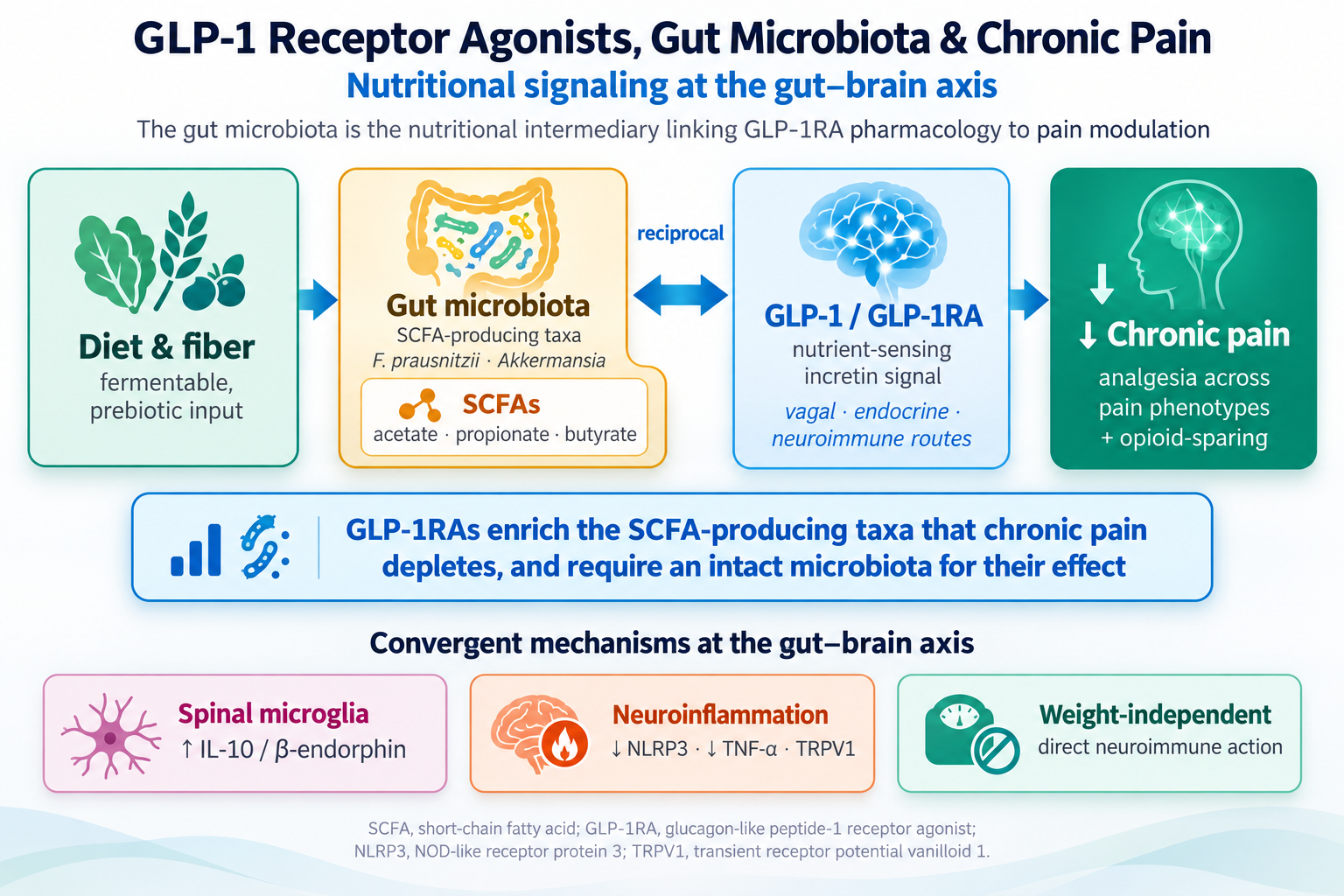
Review: GLP-1 Receptor Agonists, Gut Microbiota, and Chronic Pain: Nutritional Signaling at the Gut–Brain Axis
In a recent review published in the journal Nutrients, researchers discussed the influence of glucagon-like peptide-1 (GLP-1) and its receptor agonists (GLP-1 RAs) on nociception through effects on the gut microbiome and gut-brain axis (GBA) signaling.
The findings suggest that GLP-1 provides paracrine, endocrine, and neurocrine signals that help regulate gastrointestinal, metabolic, and immune functions, while also mediating the gut-brain crosstalk.
Chronic pain remains among the most common reasons for seeking medical care worldwide. The substantial healthcare burden and limitations of existing analgesics are driving the search for new approaches to pain management.
Recent studies suggest that GBA dysregulation and dysbiosis may influence pain sensitization. Altered gut microbial signaling, including depletion of microbes that produce beneficial metabolites such as short-chain fatty acids (SCFAs), together with changes in GLP-1-related pathways, may contribute to pain sensitization.
About the review
In the present review, researchers explored the link between the gut microbiome, GLP-1RA signaling, and chronic pain. They searched the Embase, Web of Science, and PubMed databases from inception to June 30, 2026, for relevant preclinical experiments, randomized controlled trials (RCTs), systematic reviews, meta-analyses, and observational studies.
Initially, 825 records examining GLP-1 signaling, gut microbiome alterations, and pain-related outcomes were identified. After 323 duplicate records were removed, 502 unique records were screened, 202 full-text reports were assessed, and 80 studies met the eligibility criteria.
The final synthesis drew on 97 references after foundational and contextual papers found through reference-list searches were also included.
GLP-1, gut microbiome, and pain signaling
Pain may emerge from altered bidirectional GBA signaling involving gut microbes, enteroendocrine cells, the enteric and vagal nervous systems, and central pain circuits. In response to digestive products from proteins, carbohydrates, and fats, as well as microbial metabolites such as SCFAs produced by fiber fermentation, enteroendocrine L cells secrete GLP-1.
GLP-1 receptors are expressed in astrocytes, microglia, and neurons across brain regions involved in metabolic processes and pain signaling. GLP-1R is upregulated in spinal microglia after peripheral nerve injury and in reactive astrocytes and microglia during inflammation.
Once released, GLP-1 acts throughout the body, promoting insulin secretion by the pancreas, slowing gastric emptying, and influencing satiety and pain sensitivity in the brain. These gut-brain signals also contribute to anti-inflammatory activity and gut barrier function.
While chronic pain is associated with reduced SCFA-producing microbes, GLP-1RAs may enrich these microbes and exert anti-inflammatory effects. In spinal microglial cells, GLP-1R activation promotes IL-10 expression and β-endorphin signaling.
GLP-1R-related pathways also suppress inflammatory signaling, including NLRP3 inflammasome activity, while GLP-1-derived peptides can inhibit the pain-sensing TRPV1 channel independently of GLP-1R. Collectively, these actions help reduce systemic inflammation and pain sensitivity.
In preclinical experiments, many analgesic effects of GLP-1RAs occurred independently of changes in blood glucose or weight. Intrathecal GLP-1R agonists alleviated nerve injury-, formalin-, bone cancer-, and diabetes-induced hypersensitivity by 60–90% without affecting acute nociceptive responses.
Evidence for pain modulation
Clinical evidence is strongest for idiopathic intracranial hypertension (IIH) headaches and knee osteoarthritis. Preliminary evidence has emerged for visceral pain, reduced opioid medication use, and fibromyalgia. Fecal microbiota transplantation (FMT) from fibromyalgia patients induced pain and metabolomic and immune alterations in germ-free mice, whereas replacing the fibromyalgia-associated microbiota with a healthy community alleviated pain in the model.
A systematic review and meta-analysis found reduced alpha-diversity and SCFA-producing microbes, including Lachnospiraceae, Roseburia, and Faecalibacterium prausnitzii, in individuals with chronic pain. Fermentable fiber intake has been associated with an increased abundance of these microbial taxa, highlighting the influence of diet on nociception through GBA signaling.
GLP-1RAs, primarily developed for type 2 diabetes and obesity, may remodel the gut microbiome and exert analgesic effects across diverse pain phenotypes. In humans, targeted colonic propionate delivery increased postprandial peptide YY and GLP-1 levels, while fermentation of the prebiotic oligofructose also elevated plasma GLP-1, suggesting diet- and microbiome-dependent regulation of GLP-1 secretion. These studies examined endogenous GLP-1 secretion rather than pain outcomes.
In diabetic rats, liraglutide enriched SCFA-producing taxa (Lachnospiraceae, Bacteroides) and the probiotic Bifidobacterium. Preclinical GLP-1RA studies have observed enrichment of microbes such as Akkermansia muciniphila, which strengthen the gut barrier and reduce metabolic inflammation. GLP-1RAs have attenuated allodynia in preclinical models of diabetic neuropathic pain.
Human studies suggest that GLP-1RAs may help reduce pain through their actions on metabolic, gut-brain, and neurovascular networks. In the 68-week STEP 9 trial comprising 407 individuals, 2.4 mg of semaglutide therapy improved osteoarthritis pain scores by nearly 42 vs. 28 points with placebo. Semaglutide users also reported greater weight loss, improved function, and reduced use of analgesic medications.
A separate randomized trial involving 156 participants found that liraglutide produced modest weight loss but did not improve knee pain, leaving the relative contributions of weight loss and direct analgesic mechanisms uncertain. Observational studies have linked GLP-1RA use to lower risks of knee osteoarthritis and replacement.
In a small phase 2 randomized trial, exenatide reduced intracranial pressure in a weight-independent manner, with no change in body mass index during treatment.
Open-label studies and meta-analyses have identified reductions in headache days and related improvements in people with IIH. GLP-1-based therapies may also influence pain through gut-related mechanisms, as suggested by pain reductions reported by irritable bowel syndrome (IBS) patients after treatment with the GLP-1 analog ROSE-010.
Conclusions
The findings highlight the gut microbiome as a potential therapeutic target and proposed mechanistic intermediary in GLP-1RA-mediated pain reduction. GLP-1RAs may enrich gut microbial taxa depleted in chronic pain.
The authors caution that the review is narrative, the evidence base is heterogeneous, and many proposed mechanisms are supported mainly by preclinical studies.
No human study has yet shown that GLP-1RA-induced microbiome changes causally mediate analgesia. Pain-specific clinical trials with longitudinal dietary and microbiome endpoints, including SCFA profiling,g are needed to confirm the proposed mechanisms and clarify their clinical relevance for future pain-management strategies.
Journal reference:
- Odonkor, C. A., Dodurgali, M. R., Cox, F. R., Klimov, I. J., & Abd-Elsayed, A. (2025). GLP-1 Receptor Agonists, Gut Microbiota, and Chronic Pain: Nutritional Signaling at the Gut–Brain Axis. Nutrients, 18(19), 3120. DOI: 10.3390/nu18193120, https://www.mdpi.com/2072-6643/18/19/3120
 Prenatal cannabis exposure linked to subtle brain and behavioral differences in children