Encouraging results from earlier studies prompted researchers to investigate whether an NAD-boosting supplement could improve Parkinson's symptoms during a year-long clinical trial involving 410 patients.
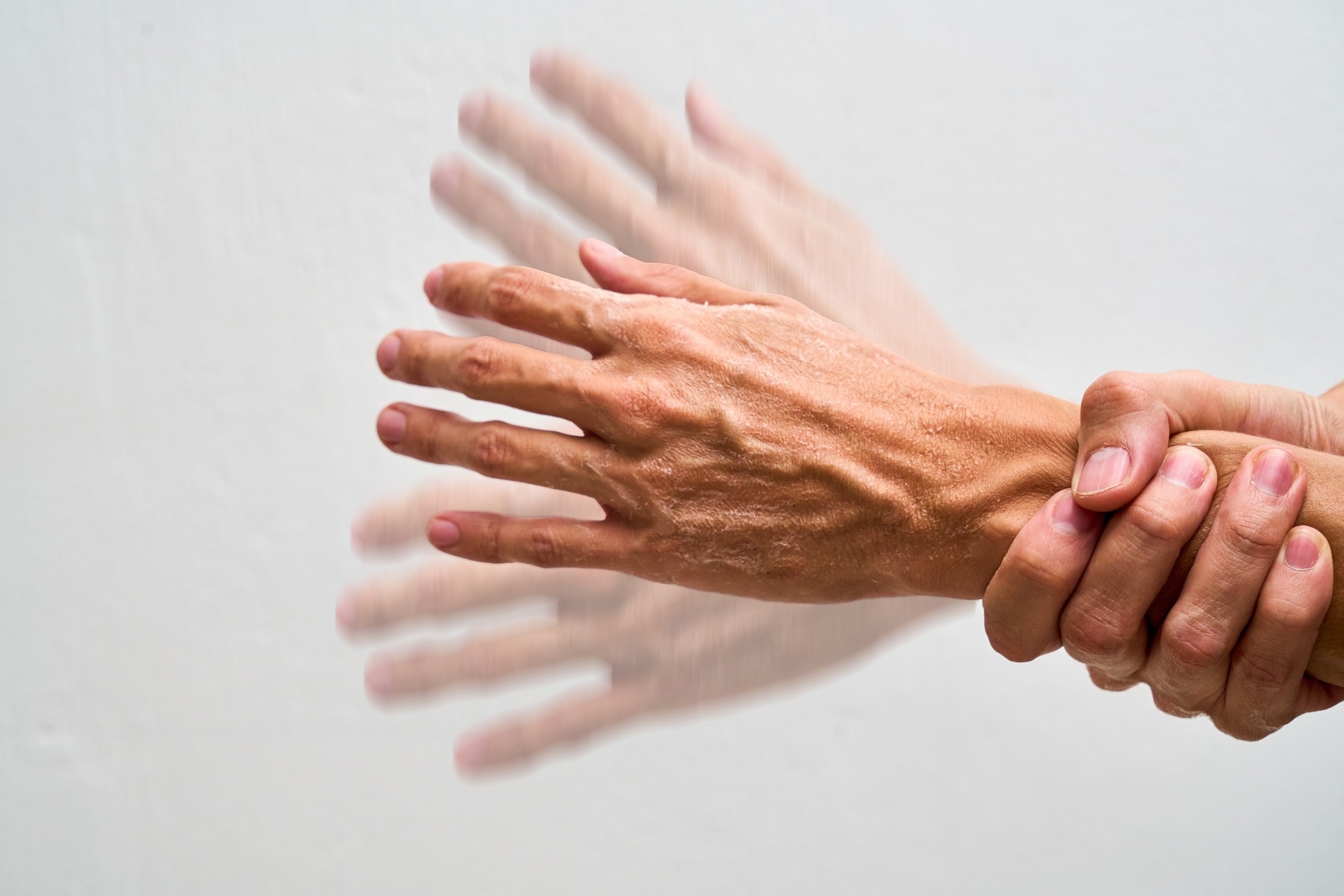
Study: Nicotinamide Riboside for Patients With Early-Stage Parkinson Disease. Image Credit: Fabian Montano Hernandez / Shutterstock
A recent randomized controlled trial (RCT) published in The Journal of the American Medical Association (JAMA) found that treatment with the oral NAD precursor nicotinamide riboside did not improve outcomes in individuals with early Parkinson's disease (PD) and was associated with modestly worse clinical scores than placebo.
Background
PD is among the major causes of neurological disability, and current treatments relieve symptoms without modifying disease progression.
The body metabolizes nicotinamide riboside into nicotinamide adenine dinucleotide (NAD). Preclinical models suggest that increasing NAD levels may affect mitochondrial function and homeostasis, DNA damage repair, protein homeostasis, and oxidative-inflammatory pathways. Animal studies have also reported neuroprotective effects, with greater preservation of dopaminergic neurons, better motor function, and improved survival.
Earlier short-term trials reported increased cerebral NAD levels, reduced inflammatory markers in cerebrospinal fluid, and greater expression of genes involved in mitochondrial and proteostasis pathways. Exploratory analyses also suggested improvements in disease scores.
It remained uncertain whether prolonged nicotinamide riboside treatment could modify the disease course and improve clinical outcomes in early PD. The NOPARK trial was designed to test this.
Study characteristics
The study included 410 participants with early PD in a randomized, double-blind, placebo-controlled phase 3 clinical trial conducted at 11 centers in Norway. Of these, 393 were included in the primary analysis population, and 391 contributed to the primary outcome model.
All participants were 35 years old or more and had been diagnosed with PD within the two years prior to enrolment in the study.
Eligibility required early disease as per the Hoehn and Yahr staging system (stage below 3), dopamine transporter brain scans confirming denervation of dopaminergic nigrostriatal pathways, and stable dopaminergic treatment at the time of enrolment.
Participants were randomized to oral nicotinamide riboside 500 mg twice daily or placebo for 52 weeks. The primary outcome was change in the Movement Disorder Society Unified Parkinson's Disease Rating Scale total score (MDS-UPDRS parts I-III). The scale ranges from 0 to 236, with higher scores indicating more severe disease.
Clinical thresholds for meaningful improvement or worsening are 6.7 and 5.2 points, respectively.
The study also examined five key secondary outcomes: parts I-III of the MDS-UPDRS, dopamine transporter brain imaging, and the Non-Motor Symptoms Scale (NMSS) score, where higher scores indicate more symptoms.
Participants were, on average, 65.6 years old, and 34% were female. Norwegian research bodies funded the study, and ChromaDex, a Niagen Bioscience company, supplied the trial medication. Some investigators disclosed patents related to nicotinamide riboside treatment for Parkinson's disease that were licensed to Niagen Bioscience.
Increase in MDS-UPDRS score
Both groups showed modest improvement over the first 13 weeks, with greater improvement in the placebo group. After this point, scores in the nicotinamide riboside group continued to increase, while scores in the placebo group decreased until week 26, then increased thereafter.
The group trajectories diverged after the first three months of the intervention.
At week 52, the model-estimated mean total score increased by 2.45 points with nicotinamide riboside, versus a decrease of 0.27 points with placebo. The adjusted mean difference was 2.72 points, favoring placebo and reaching statistical significance.
Medication adjustments before enrolment may also partly explain the early improvement in the placebo group, but analyses accounting for dopaminergic treatment were consistent with the main findings.
Of the five secondary outcomes, only one differed significantly between groups. The NMSS score, which measures symptoms such as mood changes, sleep problems, and digestive difficulties, increased slightly with nicotinamide riboside but decreased with placebo, with an adjusted between-group difference of 4.22 points.
Sensitivity analyses supported these findings. An exploratory measure of health-related quality of life also favored placebo, but this analysis was not adjusted for multiple comparisons.
Serious adverse events occurred in 8.3% of participants receiving nicotinamide riboside and 14.1% of participants receiving placebo. The difference was not statistically significant, and overall adverse event rates were similar between groups.
Exploratory analyses showed marked increases in total blood NAD levels in the nicotinamide riboside group, with the mean between-group difference being 30 μM. The NAD+/NADH ratio and most measured NAD metabolic intermediates and breakdown products also rose significantly. Among participants who underwent brain spectroscopy, the groups showed no statistically significant difference in changes in the ratio of cerebral NAD to ATP, a molecule involved in cellular energy production, after 52 weeks.
Comparison with previous trials
The findings differ from the early, exploratory clinical signals reported in shorter trials. The authors hypothesize that sustained NAD augmentation may adversely affect biological processes in PD, though the mechanisms responsible remain unexplained.
Another possibility is that nicotinamide riboside and dopaminergic therapy in PD may interact to worsen symptoms. Dopamine transporter binding declined in both groups, but the difference between them was not significant. The authors noted that this finding was consistent with a medication interaction, along with preclinical evidence suggesting that nicotinamide riboside may affect dopamine metabolism.
The greater nonmotor symptom burden relative to placebo argues against a purely dopaminergic explanation, but it does not identify a cause. Researchers have not yet established why these differences occurred.
Limitations
The study has several limitations. Subtle changes in motor symptoms might be missed in patients assessed while on medication, potentially reducing the ability to detect small treatment differences. The lack of a washout phase limits the ability to distinguish symptomatic effects from changes in disease progression.
The brain imaging used is not sensitive enough to detect small changes over one year, and the results cannot exclude modest changes in dopaminergic neurodegeneration.
Conclusion
The findings showed that in this cohort with PD, nicotinamide riboside treatment for 52 weeks was associated with modestly worse outcomes compared with placebo, with no evidence of clinical benefit. The statistically significant difference fell below the clinically relevant threshold for worsening.
“These findings do not support nicotinamide riboside as a disease-modifying treatment for Parkinson's disease.” The authors also concluded that the results did not support its use as a symptomatic treatment for Parkinson disease at the dose and duration tested. Because this compound is sold over the counter and widely used as a supplement, the results are clinically relevant as further trials of NAD supplementation continue.
Source:
Journal reference:
 Skipping water during exercise may limit your body's response to whey protein