By linking tanning bed use to widespread genetic damage in healthy skin cells, this study reveals how artificial UV exposure may prime the skin for melanoma long before tumors appear.
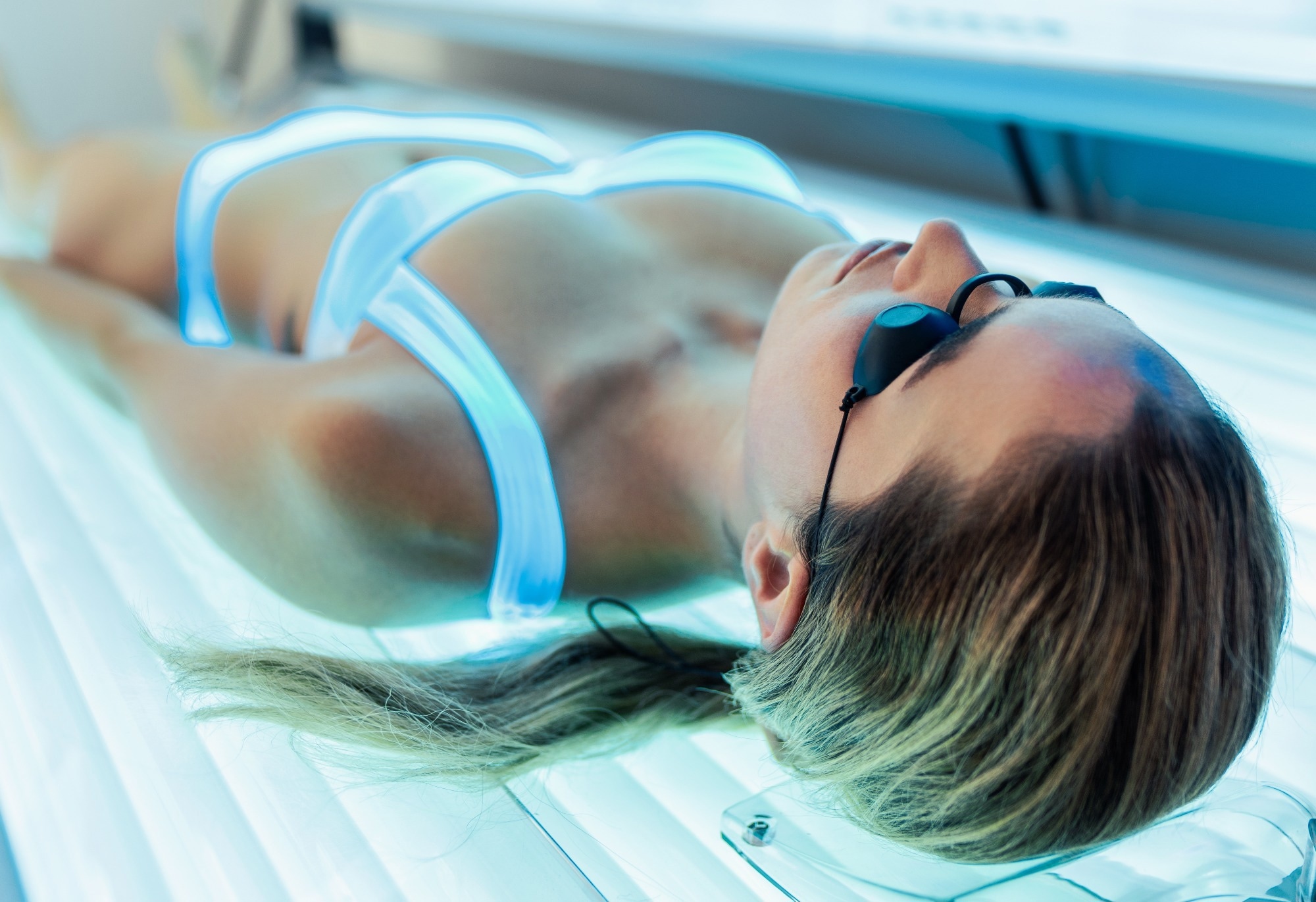
Study: Molecular effects of indoor tanning. Image Credit: Josep Suria / Shutterstock
In a recent study published in the journal Science Advances, researchers provided high-resolution molecular evidence supporting a link between indoor tanning and an increased risk of melanoma. The study compared single-cell resolution genomic data from clonally expanded melanocytes obtained from individuals with very high lifetime tanning bed exposure versus controls and found that the former cohort carries a significantly higher burden of deoxyribonucleic acid (DNA) mutations compared to non-users.
Crucially, these mutations were observed to be abundant in melanocytes, pigment-producing cells, located on body parts typically shielded from natural sunlight, such as the lower back. The study also identified a specific accumulation of pathogenic, cancer-driving mutations in outwardly normal-appearing skin. These findings challenge industry claims about the safety of artificial ultraviolet (UV) radiation and offer a biological mechanism that may help explain why tanning bed users frequently develop multiple melanomas at younger ages.
Melanoma Burden and UV Exposure Debate
Melanomas are the clinical term for tumors, especially malignant tumors, of melanin-forming cells, typically associated with skin cancers. Globally, melanomas remain one of the deadliest forms of skin cancer, with public health records finding them responsible for approximately 11,000 deaths annually in the United States (US) alone.
While decades of research have established the primary cause of these cancers as exposure to UV radiation, the debate surrounding artificial sources of UV light has remained contentious. While scientists and clinicians believe that artificial tanning beds may exacerbate skin cancer risk, their manufacturers and marketers stress their safety. Consequently, despite the World Health Organization (WHO) classifying tanning beds as Group 1 human carcinogens, nearly 30 million Americans reportedly still use them every year.
Tanning Industry Claims and Contradictions
The tanning industry often markets indoor tanning machines as controlled, safer alternatives to natural sunlight, arguing that these devices emit higher ratios of ultraviolet A (UVA) to ultraviolet B (UVB) light, which purportedly reduces the risk of melanoma-triggering burns. Furthermore, proponents often suggest that a pre-vacation tan protects the skin against future damage.
However, recent clinical data suggest that young women who use tanning beds often develop melanomas on the trunk and buttocks, areas that receive low cumulative sun damage in the general population. Until now, the specific cellular and molecular mechanisms driving these observations remained unclear.
Study Design and Data Sources
The present study aims to address this ongoing debate and inform future public health recommendations by analyzing the DNA of skin cells to better understand how artificial UV radiation may contribute to melanoma development. The study comprised two main components, large-scale epidemiological analysis and high-resolution melanocyte genomic sequencing.
Epidemiological data were obtained from the Department of Dermatology at Northwestern Medicine’s patient records (n = 32,315), derived from a high-risk dermatology clinic population. These records were categorized into a case cohort of 2,932 patients with a quantifiable history of tanning bed usage and an age-matched control group of 2,925 non-users. This design allowed researchers to map the anatomical distribution of melanoma across different body sites and estimate adjusted odds of melanoma associated with indoor tanning.
Melanocyte Genomic Sequencing Methods
Genetic sequencing data were obtained by excising biopsies of normal, non-tumorous skin from the upper and lower backs of 11 heavy tanning bed users, defined as individuals with more than 50 lifetime sessions, with reported exposure ranging from dozens to several hundred sessions. These samples were compared with two control groups: patients from a high-risk skin cancer clinic and cadaver donors representing the general population, for whom tanning bed exposure histories were unavailable.
Melanocytes were isolated from these biopsies, clonally expanded in culture, and subjected to single-cell-resolution whole-exome and transcriptomic sequencing, enabling detailed comparisons of mutation burden and mutational signatures across individual pigment-producing cells.
Epidemiological and Molecular Findings
Analyses provide strong evidence of the damaging effects of artificial UV exposure. Epidemiologically, tanning bed users were significantly more likely to develop melanoma on body sites that typically receive low cumulative sun exposure, such as the trunk, compared to non-users (76.1% versus 61.2%).
After adjusting for age and family history, tanning bed users demonstrated a 2.85-fold higher odds of developing melanoma than controls. The analysis also revealed a higher likelihood of multiple primary melanomas among individuals with a history of indoor tanning.
Genetic sequencing revealed marked differences between cases and controls. Melanocytes from tanning bed users carried a higher overall mutation burden, with a median of 5.69 mutations per megabase of DNA compared with 2.86 mutations per megabase in controls. Importantly, this elevated mutation load was observed even in biopsies taken from the lower back, confirming that tanning beds can damage skin in areas typically protected from natural sunlight. The study also noted that melanocytes from the upper back, which may receive incidental sun exposure, exhibited high mutation burdens in both groups.
While classic UV-associated mutational damage, signature SBS7, predominated across all samples, melanocytes from tanning bed users showed a significantly higher relative contribution of mutational signature SBS11. The biological origin of this signature remains uncertain, and the authors caution that its interpretation requires further validation, but its enrichment in tanning bed users suggests potential differences in the mutagenic effects of artificial UV exposure.
Notably, melanocytes from tanning bed users were substantially more likely to harbor pathogenic, cancer-driving mutations despite appearing histologically normal. These mutations were detected across sampled sites, with a higher fraction observed in upper-back melanocytes than lower-back melanocytes, highlighting a widespread field of genetically altered cells rather than isolated areas of damage, and suggesting a potential mechanism for the development of multiple primary melanomas.
Implications for Public Health and Prevention
The study establishes a robust molecular and epidemiological association between indoor tanning and melanoma, particularly among individuals with heavy lifetime exposure. Rather than offering a safe alternative to natural sunlight, artificial tanning appears to increase melanoma risk by elevating mutation burdens and expanding the number of melanocytes carrying pathogenic mutations throughout the skin.
These findings undermine the tanning industry’s safe-tanning narrative and suggest that practices such as a pre-vacation tan may instead load normal-appearing skin with genetic alterations that increase melanoma susceptibility, particularly at younger ages.
 New skin-permeable polymer delivers insulin without needles