With just two human studies directly examining how cannabis use relates to breast milk nutrients and immune components, researchers are probing whether cannabinoids themselves, maternal diet, or wider social circumstances are driving the differences observed.
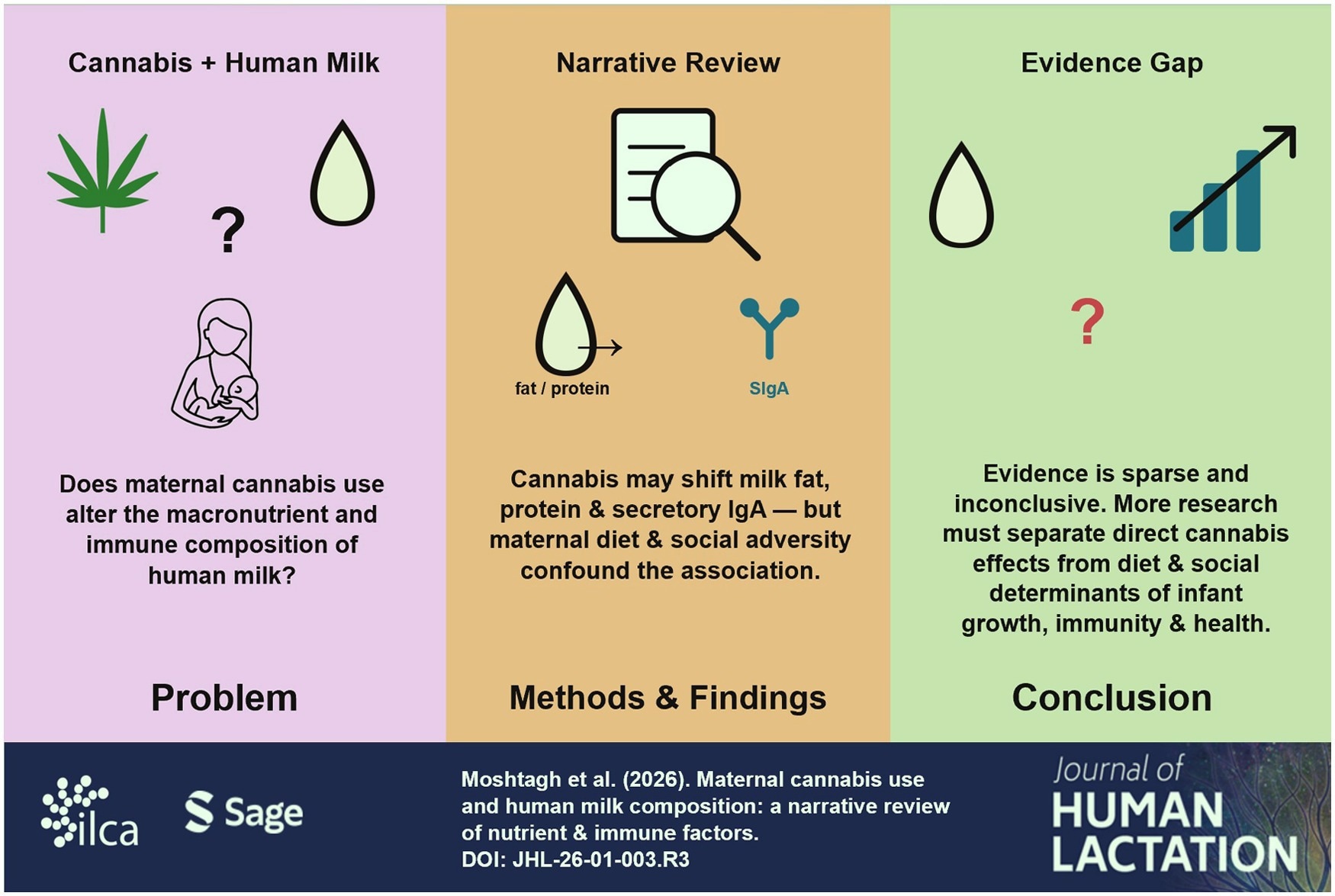
Nutritional Composition of Breastmilk in the Context of Maternal Diet and Cannabis Use: A Narrative Review
A recent narrative review published in the Journal of Human Lactation found that evidence remains sparse and inconclusive on whether maternal cannabis consumption is associated with changes in the nutritional and immunological composition of breast milk, independent of maternal diet and socioeconomic factors.
Background
Human milk is the ideal infant food as it contains macronutrients, bioactive compounds, and immunological factors necessary for optimal growth and development. It is protective against gastrointestinal disease and infections and supports physical and neurological development. Breastfeeding has also been associated with a lower risk of metabolic syndrome, lower blood pressure, and lower low-density lipoprotein (LDL) levels in adolescence.
However, breast milk composition depends on multiple factors, including maternal diet and other exposures. It varies over a single feed, across the stages of lactation, and between women and populations. However, little is known about how maternal cannabis use affects human milk composition.
About 182 million people worldwide between 15 and 64 years of age use recreational cannabis. In North America, women of reproductive age are using it in increasing numbers, with 47.6% of Canadian women aged 15 to 44 reporting lifetime cannabis use in 2017.
Long-term cannabis use in adults has been associated with higher anxiety and depression, hyperactivity, memory gaps, and delinquent behavior. Cannabis use during pregnancy and lactation is also more commonly reported among women experiencing social adversity, including lower income, lower educational attainment, and younger maternal age. These structural circumstances can independently shape food security, access to nutritious foods, healthcare, and overall health.
In addition, endocannabinoids play a role in appetite regulation and lipid synthesis within the breast cells. Chronic cannabis use may modify maternal dietary intake through appetite stimulation or altered patterns of food intake, although whether cannabis independently changes dietary patterns among pregnant or lactating women remains unclear.
The psychoactive component of cannabis, delta-9-tetrahydrocannabinol (Δ9-THC), has been reported in breast milk at concentrations approximately eight times those in maternal plasma. It can be detected in breast milk from six days to six weeks after the last use, and its levels vary with frequency of consumption and the time elapsed since last use.
One older study reported lower motor development scores at age one among infants exposed to cannabis through breast milk, while another found no detrimental effect from occasional cannabis use during lactation. The former study found no differences in growth or intellectual development. Thus, cannabis use may affect infant neurodevelopmental and other health outcomes both directly and indirectly, but the evidence remains limited and inconsistent. The underlying biological pathways linking cannabis use and breast milk composition need to be uncovered.
Study characteristics
This narrative review aimed to synthesize evidence on changes in breast milk composition with maternal cannabis consumption. The authors also assessed how maternal diet and social adversity, both associated with cannabis use, could confound associations between cannabis exposure and maternal nutrition, health, and breast milk composition.
Emerging evidence suggests that cannabis use may be associated with changes in the fat, protein, and immunological components of breast milk, especially secretory immunoglobulin A (SIgA). The evidence came primarily from only two studies.
Carbohydrates
Carbohydrates make up about 40% of the total energy in breast milk, with lactose being the most abundant sugar. Lactose facilitates calcium absorption and acts as a carrier for human milk oligosaccharides (HMOs). HMOs help shape the gut microbiome, promote intestinal maturation, and support immune development, while stable lactose concentrations help maintain osmotic pressure and fluid balance.
Neither study found a significant overall difference in total carbohydrate or energy levels between cannabis consumers and controls. However, one study found that 11-OH-THC levels were inversely associated with carbohydrate concentrations, while dual cannabis and nicotine users had lower total carbohydrates. That study also reported higher lactose concentrations among cannabis users.
The important physiological role of breastmilk carbohydrates in infant development makes these preliminary findings worthy of further study, particularly because carbohydrate concentrations are typically relatively stable.
Fats
Breast milk fat contributes 50% to 60% of total energy, along with fat-soluble vitamins, polyunsaturated fatty acids, and other important lipids. These lipid components support neural, visual, and cognitive development, while some fatty acids also influence inflammation and immune function.
The evidence for the association of cannabis use with fat levels in breastmilk is mixed, with one study showing no significant association while another showed an 11% reduction in fat. A sustained reduction in total fat may reduce the infant’s supply of lipids important for neurocognitive development. However, because the studies did not measure specific fatty acid fractions, this potential consequence remains an extrapolation rather than a direct finding.
This concern may be greater for preterm infants who have lower fat reserves and depend heavily on breast milk for development.
As cannabis use has been associated with a higher risk of preterm birth, these infants might face compounded developmental risks, though further research is needed to establish this. Animal studies have also shown that dietary lipids can increase cannabinoid absorption, raising the hypothesis that lower-fat milk might alter infant cannabinoid exposure. However, direct evidence for this effect in humans is lacking.
Protein
Protein findings differed between the two studies. One small study found no overall difference in crude or true protein between cannabis users and non-users, although protein levels were higher among participants who used both cannabis and nicotine. A larger study reported higher casein concentrations in breastmilk samples containing cannabinoids, even after adjustment for several maternal and socioeconomic factors.
Notably, prenatal cannabis use is linked to higher rates of preterm birth, and the authors suggest that higher breast milk protein could be beneficial because preterm infants have greater protein requirements for growth and development. However, the clinical significance of the observed protein differences remains uncertain.
The authors note that some current clinical guidelines recommend cessation of breastfeeding if cannabis use continues, which might negate this potential benefit of breastfeeding. Moreover, the authors argue that such recommendations can challenge the mother’s autonomy while depriving both mother and infant of the known benefits of breastfeeding. Importantly, the review does not conclude that cannabis exposure is safe, but argues that current evidence does not clearly show that stopping breastfeeding produces better infant outcomes than continued breastfeeding with cannabis exposure. The authors call for further research to generate evidence to support harm-reduction guidance.
Immunologic changes
In the smaller study, SIgA levels were lower in association with cannabis use and were inversely associated with levels of the cannabinoid 11-OH-THC in breastmilk, suggesting a potential dose-response relationship.
SIgA is the primary passive mucosal defense in infants and the predominant immunoglobulin in breastmilk. Therefore, lower SIgA levels could result in increased vulnerability to infection at a time when the infant’s own immune system is not wholly functional.
Again, this concern is particularly important in preterm infants, who are at elevated risk of sepsis, necrotizing enterocolitis, and other infection-related complications. However, the available studies did not directly test whether cannabis-associated differences in SIgA resulted in more infant infections.
Limitations
The authors note that these are preliminary findings and should be interpreted with caution, especially since the underlying mechanisms remain unclear. The review itself was narrative rather than systematic, with no formal inclusion or exclusion criteria, quality appraisal tools, or PRISMA-compliant screening, and the authors did not claim that their search was exhaustive.
In the smaller study, breastmilk sampling procedures were not fully described, including the proportion of foremilk and hindmilk collected, and important timing variables were not controlled. The use of convenience sampling in the larger of the two studies limits the generalizability of its findings. Some participants who reported cannabis use but had no detectable levels of the measured cannabinoids were also classified in the non-exposed comparison group. Moreover, cannabis contains over 100 cannabinoids, of which a small minority have been characterized in breast milk.
Dietary assessments were not included in either study, although maternal diet is a major contributor to breast milk composition. Changes in appetite and food consumption linked to cannabis use and structural factors such as food insecurity or income could potentially influence maternal nutrient intake and, in turn, breast milk composition. Therefore, an observed difference in milk composition between cannabis users and non-users may not necessarily result directly from cannabis exposure.
Notably, neither study assessed trauma history, intimate partner violence, or broader psychological adversity, which are known to be associated with cannabis consumption around the period of childbirth. Moreover, these are linked to stress, which may affect breast milk composition through immunologic and metabolic changes. The larger study did adjust for mood disorders, but this did not capture the broader context of psychological adversity and lived experience.
Cannabis use patterns were also not considered separately, with both studies treating users as relatively homogeneous groups despite differences in frequency, duration, and route of administration that may influence cannabinoid exposure in breast milk.
Conclusion
The review suggests that maternal cannabis use may be associated with changes in breastmilk composition, especially in fat and protein and in SIgA content. However, the authors stress that the evidence remains sparse, inconsistent, and unable to establish whether these differences are caused directly by cannabis.
Maternal cannabis use is more commonly reported in contexts of deprivation and other forms of social adversity, and some women report using cannabis to manage symptoms including pain, anxiety, nausea, and sleep disturbance. Such contexts may also affect access to a nutritious diet, healthcare, and other resources that may independently affect breast milk composition.
The authors emphasize the need to distinguish between these factors, since they call for different intervention strategies, rather than relying solely on recommendations to stop breastfeeding when cannabis use continues. They also highlight the importance of incorporating socioeconomic markers, food security measures, and dietary assessments into future research on cannabis use during lactation.
 Study links commercial cannabis markets to increased addiction