Introduction: From Common Weed to Powerhouse Greens
Nutritional & Phytochemical Profile
Omega-3 Content & Cardiovascular Health
Antioxidant Capacity & Metabolic Benefits
Culinary Integration, Processing & Safety Considerations
Conclusion & Future Research Directions
References
Further reading
Often called a garden weed, purslane raises scientific questions about how its fatty acids, antioxidant compounds, and harvesting conditions affect its dietary value.
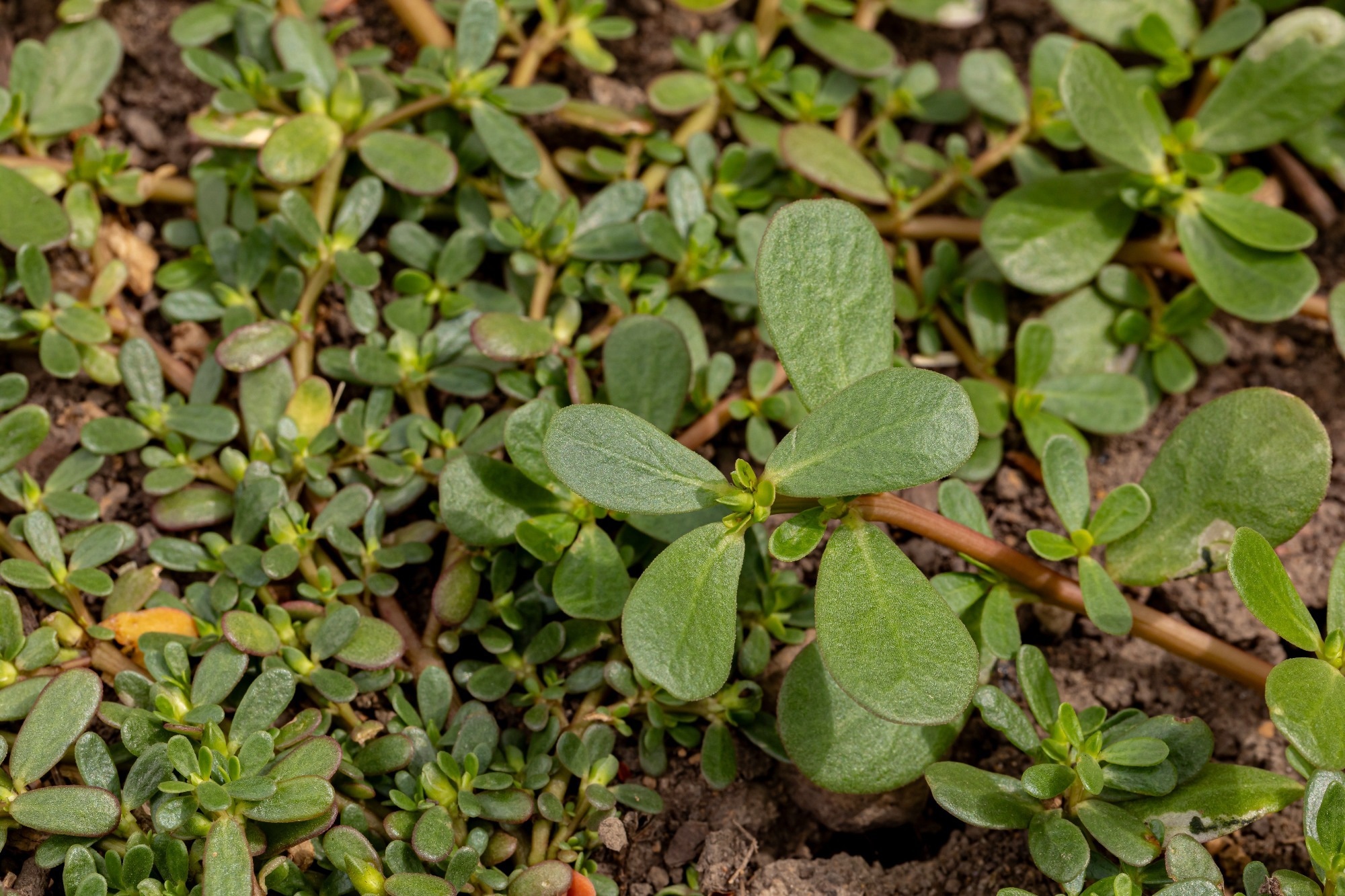 Image Credit: J.J. Gouin / Shutterstock.com
Introduction: From Common Weed to Powerhouse Greens
Purslane (Portulaca oleracea) is a nutrient-dense succulent widely consumed as a potherb in Central Europe, Asia, and the Mediterranean region. Historically, purslane has also been used to treat various inflammatory, gastrointestinal, respiratory, and skin conditions.1,2
Purslane can tolerate drought, salinity, and relatively poor soils, allowing it to grow where water and fertile land may be limited. These characteristics have encouraged research into its use as an edible crop, as this plant is a rich source of α-linolenic acid (ALA), vitamins, minerals, and diverse phytochemicals. Research on extracts and isolated constituents suggests antioxidant, anti-inflammatory, and metabolic effects, mainly in cell and animal studies.2,3
Nutritional & Phytochemical Profile
Purslane's nutritional value comes from its omega-3 fatty acid, carotenoid, vitamin, and mineral content. Purslane contains relatively high concentrations of ALA as compared to many leafy vegetables. It also provides vitamins C and E, B-complex vitamins such as riboflavin, niacin, and pyridoxine, provitamin A carotenoids, and minerals such as magnesium, potassium, calcium, and iron.1,2
Purslane secondary metabolites include betalains, flavonoids, and alkaloids with potential bioactive properties. In fact, purslane leaves have higher levels of ALA, α-tocopherol, ascorbic acid, and glutathione than spinach leaves, though these findings should not be generalized to all growing conditions.1,2
Several nutrients and phytochemicals contribute to purslane's dietary value. Carotenoids, as well as vitamins C and E, show antioxidant activity in laboratory assays that measure effects like free-radical scavenging, rather than clinical benefits after consumption.
Nevertheless, nutrient concentrations can vary considerably with cultivar, growing conditions, plant part, and harvest stage. This variability limits comparisons between samples grown or harvested under different conditions.1,2,4
Harvesting stage and plant part can affect purslane's macronutrient, mineral, phenolic, oleracein, and organic acid composition. One study found that early harvesting at 29 days after sowing was associated with higher phenolic and oleracein levels, particularly in leaves.
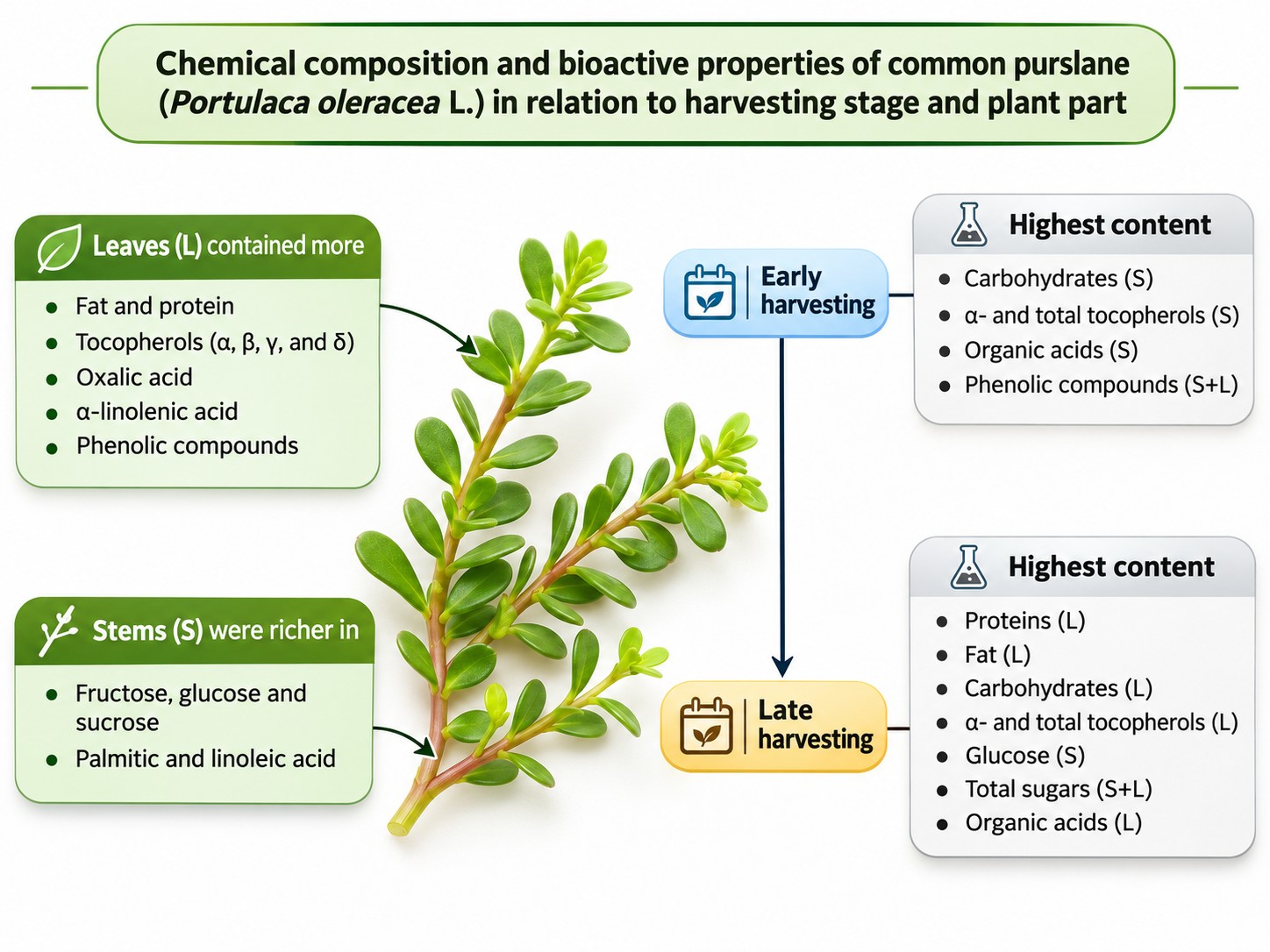
Chemical composition and bioactive properties of common purslane (Portulaca oleracea L.) in relation to harvesting stage and plant part.4
This did not maximize every nutrient, as leaf tocopherols were highest at 52 days and oxalic acid was lowest at the intermediate harvest of 43 days in both leaves and stems. Leaves contained a higher proportion of ALA among total fatty acids than stems; however, percentages of total fatty acids should not be read as absolute amounts per serving.4
Discover the Surprising Health Benefits of Eating Purslane!
Omega-3 Content & Cardiovascular Health
Purslane contains several fatty acids, including linoleic, palmitic, α-linolenic, behenic, oleic, and lignoceric acids, while providing approximately 300-400 mg of ALA per 100 g of fresh leaves, equivalent to 3-4 mg/g.1
Small amounts of the longer-chain omega-3 fatty acid eicosapentaenoic acid (EPA) have also been reported, though its presence should not be confused with the much higher ALA content. Both fatty acid identity and quantity matter when describing purslane's contribution to dietary omega-3 intake.1,4
Animal studies suggest that purslane extracts may influence circulating triglyceride and cholesterol levels and vascular inflammation. Some small clinical trials have reported improvements in lipid measurements or blood pressure, while others found no change in selected outcomes. These findings do not establish that purslane prevents atherosclerosis or cardiovascular events.3
Purslane's major bioactive compounds include polysaccharides, alkaloids, flavonoids, and other phytochemicals. Extracts and isolated constituents have shown radical-scavenging activity in laboratory assays, as well as reduced inflammatory signaling and expression of cytokines like tumor necrosis factor-α (TNF-α) and interleukin-6 (IL-6). Importantly, these effects vary with the preparation and experimental model.2
Experimental studies suggest that purslane may influence insulin sensitivity, glucose uptake, and α-glucosidase activity. In cultured adipocytes, an 80% ethanolic extract increased glucose uptake by promoting glucose transporter type 4 (GLUT4) translocation through the phosphoinositide 3-kinase (PI3K) and AMP-activated protein kinase (AMPK) pathways.
GLUT4 helps glucose enter cells by translocating to the cell surface. Animal studies have also reported reductions in glycated hemoglobin (HbA1c) and fasting blood glucose, though not all experiments found glucose-lowering effects.2,3
Human findings on glucose control are mixed. While one 12-week trial in adults with type 2 diabetes receiving an oral glucose-lowering drug reported lower HbA1c with purslane extract, another five-week seed trial found a slight reduction in fasting glucose without improved insulin resistance. A separate trial in people with nonalcoholic fatty liver disease found no improvement in fasting glucose or insulin resistance. Differences in populations and preparations limit direct comparisons. These findings do not establish that eating purslane can prevent or treat diabetes.3
Clinical studies have investigated purslane seed supplementation in women with type 2 diabetes. One 16-week trial used 7.5 g/day of seed powder, with or without aerobic exercise, while a separate eight-week trial reported using 7.5 g twice daily. These trials reported opposing changes in glucagon-like peptide-1 (GLP-1), so a consistent effect on this hormone remains unclear.
Importantly, both trials used different durations and dosing schedules, limiting direct comparison. Some clinical studies reported lower low-density lipoprotein (LDL) cholesterol or higher high-density lipoprotein (HDL) cholesterol; however, all results varied by population, preparation, and dose.3
Purslane extracts have also shown antioxidant and liver-protective effects in experimental models. Ethanolic and aqueous leaf extracts have been used in paracetamol-induced liver injury in vitro models; however, this experiment assessed cytotoxicity in cultured cells, rather than protection against paracetamol toxicity. The distinction separates evidence of limited cell toxicity under the tested conditions from evidence of liver protection.4
 Image Credit: Quang Ho / Shutterstock.com
Culinary Integration, Processing & Safety Considerations
Purslane can be consumed as fresh leaves and stems or in cooked preparations. Its tender stems and leaves can be eaten raw in salads or cooked with other greens. Cooking and food processing may alter the levels of phenolic compounds and oleracein derivatives, making preparation another factor in the composition of the food consumed.2
Purslane seeds can also be ground into powder and incorporated into foods such as bread and cereals. Importantly, these culinary uses differ from the measured seed doses and concentrated extracts investigated in clinical and laboratory research.2,3
Reported oxalate content in purslane leaves is 671-869 mg/100 g fresh weight; therefore, high dietary oxalate intake may increase the risk of calcium oxalate kidney stones in susceptible individuals. Further toxicological evaluation of extracts and isolated constituents is warranted, since safety as a food cannot establish safety at concentrated supplement doses.1,2,4
Conclusion & Future Research Directions
As a plant source of omega-3 fatty acids, P. oleracea may be useful in plant-based diets. Its nutritional composition supports its use as a vegetable, while evidence for treating metabolic disease remains inconclusive.
Further clinical trials should use clearly characterized preparations and assess clinically relevant outcomes, tolerability, and dose. Research should distinguish the effects of consuming the vegetable from those of seed supplements, extracts, and isolated compounds. Cultivation and harvesting studies can help characterize variation in nutritional composition and oxalate content.2–4
References
- Uddin, M. K., Juraimi, A. S., Hossain, M. S., et al. (2014). Purslane Weed (Portulaca oleracea): A Prospective Plant Source of Nutrition, Omega-3 Fatty Acid, and Antioxidant Attributes. The Scientific World Journal 951019. DOI: 10.1155/2014/951019, https://onlinelibrary.wiley.com/doi/10.1155/2014/951019
- Li, Y. X., Xiao, L. G., Yan, H., et al. (2024). Nutritional values, bioactive compounds, and health benefits of purslane (Portulaca oleracea L.): A comprehensive review. Food Science and Human Wellness 13(5); 2480-2501. DOI: 10.26599/FSHW.2022.9250203, https://www.sciencedirect.com/science/article/pii/S2213453024001927
- Ebrahimian, Z., Razavi, B. M., Mousavi Shaegh, S. A., & Hosseinzadeh, H. (2022). Effects of Portulaca oleracea L. (purslane) on the metabolic syndrome: A review. Iran Journal of Basic Medical Sciences 2; 1275-1285. DOI: 10.22038/IJBMS.2022.63264.13967, https://www.researchgate.net/publication/366087168_Effects_of_Portulaca_oleracea_L_purslane_on_the_metabolic_syndrome_A_review
- Petropoulos, S. A., Fernandes, Â., Dias, M. I., et al. (2019). Nutritional Value, Chemical Composition and Cytotoxic Properties of Common Purslane (Portulaca oleracea L.) in Relation to Harvesting Stage and Plant Part. Antioxidants 8(8); 293. DOI: 10.3390/antiox8080293. https://www.mdpi.com/2076-3921/8/8/293
Further Reading
Last Updated: Nov 9, 2026