By simplifying the gut’s microbial complexity, synthetic communities could help scientists pinpoint how specific foods influence microbial function, host health, and the next generation of nutrition-based therapies.
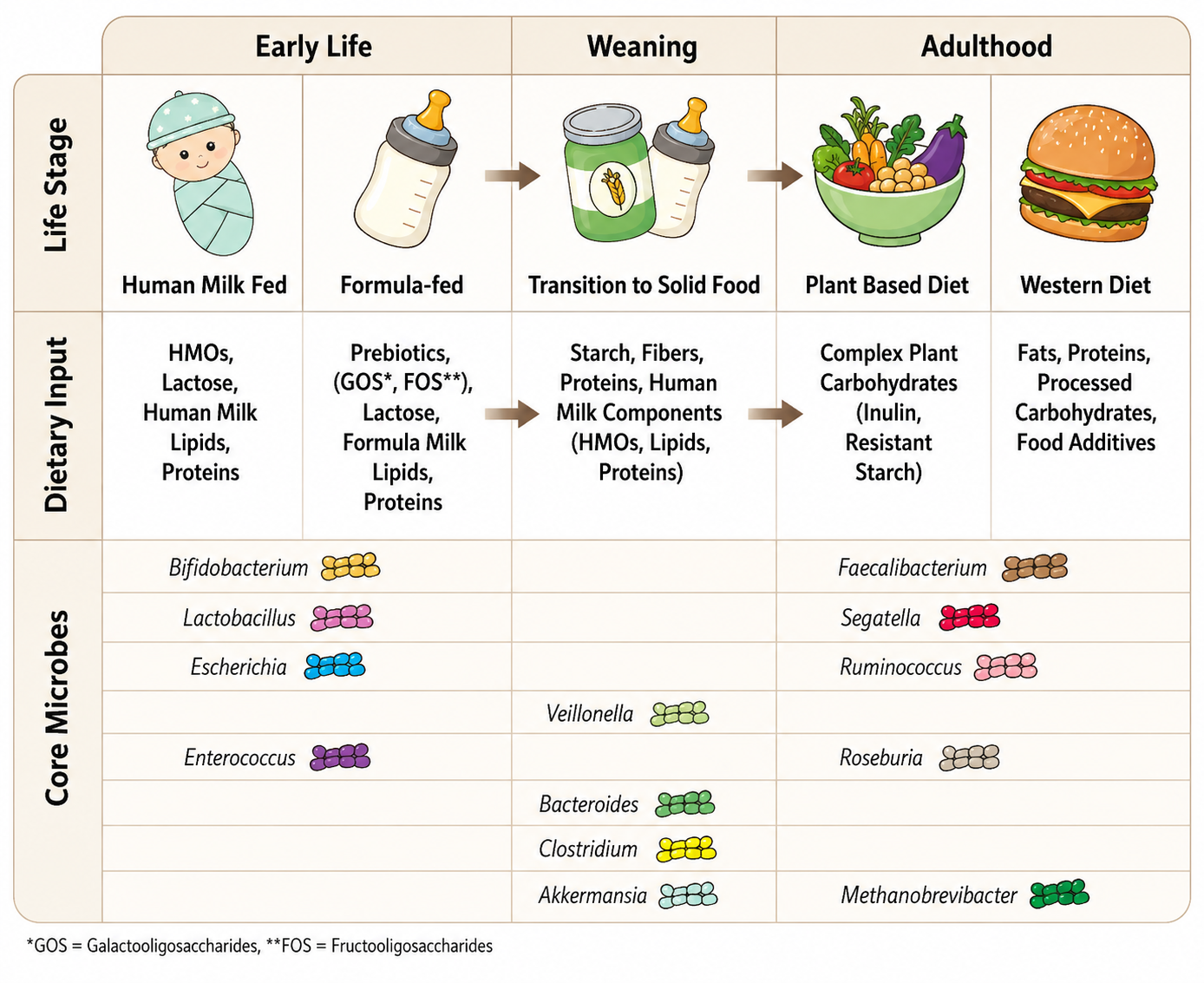
Study: From diet to function: using synthetic microbial communities to map gut microbial interactions - Image Credit: Adapted from Senoo, D. K. J., Acton, L., & Hall, L. J. (2026). From diet to function: using synthetic microbial communities to map gut microbial interactions. npj Biofilms and Microbiomes. DOI: 10.1038/s41522-026-01012-9. Licensed under CC BY 4.0.
In a recent article in press in the journal npj Biofilms and Microbiomes, a group of authors examined how synthetic microbial communities (SynComs) can be used to uncover the mechanisms through which dietary components influence gut microbial composition, function, and host health.
Background
Trillions of microorganisms living in the human gut help digest food, produce vitamins, regulate immunity, and even influence brain development. Changes in diet can have a major impact on the gut microbiota, but because of their complexity, there is still much to be learned about how different foods affect microbial behavior. Researchers are now using SynComs to study microbial behavior under controlled conditions. Further research is needed to determine how these systems can be translated into personalized nutrition and microbiome-based therapies.
Understanding SynComs and their importance
A diverse set of microbes make up the human gut microbiota and contribute to digestion, vitamin production, immune system regulation, the production of short-chain fatty acids, and protection against harmful organisms. Several factors together influence the composition of the human gut microbiota, including age, diet, geographic location, genetics, medication use, and lifestyle. Diet has one of the biggest influences on the composition and activity of gut microbes. However, studying direct dietary effects in naturally complex microbial communities is difficult because numerous microbial species interact simultaneously.
SynComs allow researchers to simplify the gut microbiome while still maintaining selected representative taxa and key metabolic capabilities. They also help distinguish microbial effects from host-related influences when combined with animal or host-associated models.
Designing effective synthetic communities
Simple SynComs may contain only a few microbial species and are useful for examining specific metabolic pathways or microbial interactions. More complex communities contain larger numbers of microorganisms and better resemble natural gut ecosystems while maintaining experimental control.
One important step in developing a SynCom is to select the appropriate strains of microorganisms. Researchers commonly source their microbial isolates from fecal samples or a known culture collection of microorganisms. Factors considered when selecting strains include ecological relevance, metabolic activity, and their ability to represent different stages of human life. Relevant traits that may be evaluated, depending on the research question, include carbohydrate metabolism, butyrate production, bile acid transformation, amino acid fermentation, and cross-feeding interactions.
Experimental models used to study SynComs
Researchers study SynCom behavior using laboratory-based and host-associated systems. Researchers can precisely manipulate environmental conditions using in vitro models such as batch fermentation and chemostats, as well as other continuous fermentation systems. Batch cultures are ideal for short-term studies of microbial reproduction and metabolite production, whereas other advanced systems, including the Simulator of the Human Microbial Intestinal Ecosystem (SHIME), TIM-2, and gut-on-chip platforms, provide long-term stability and realistic gut-like conditions. These systems can simulate nutrient flow, intestinal transit, and mucosal environments.
Germ-free or gnotobiotic animals colonized with defined SynComs allow researchers to assess the impact of microbes on immune system development, intestinal barrier function, metabolism, and disease susceptibility. These types of models serve as links between controlled laboratory experiments and integrated host-microbe biology.
How diet shapes SynComs
Diet has a significant impact on gut microbial composition and function. Microbes that ferment carbohydrates to create short-chain fatty acids thrive on diets that are high in fiber, while high-fat diets may favor bile-tolerant and lipid-utilizing taxa, and protein-rich diets may enrich amino acid fermenters and increase branched-chain fatty acid production. Using SynCom studies, researchers can show how different types of food, such as human milk oligosaccharides, can influence the types of microbes present; moreover, multi-omics and computational modeling have provided important insights into the nature of interactions between microbes and possible functional responses to dietary alteration.
Applications, challenges, and future directions
SynComs are an excellent research tool for examining diseases associated with diet and microbiota, such as obesity, type 2 diabetes, inflammatory bowel disease (IBD), colorectal cancer, allergic diseases, asthma, and neurodevelopmental disorders. By enabling controlled manipulation of microbial composition, SynComs provide stronger mechanistic evidence of disease pathology and identify microbial pathways contributing to disease etiology than observational studies can. They are also used to preclinically evaluate the effects of probiotics, prebiotics, synbiotics, and drug-microbiome interactions.
Cultivating strict anaerobic microorganisms is technically demanding, and maintaining stable microbial communities over extended periods can be difficult. It is also very difficult to predict which species will coexist, as both environmental conditions and resource availability influence microbial interactions. Furthermore, researchers do not follow standardized protocols for developing SynComs, making it difficult to compare results across studies. The review also proposes a minimal reporting checklist for diet-focused SynCom studies, aligned with broader reporting frameworks, to improve reproducibility and comparability.
Future advancements in SynCom technologies should make them even more realistic and useful. Advances in multi-omics, AI-assisted, function-first community design, ecological modeling, organoid testing, and gut-on-a-chip will all help SynComs better predict functional outcomes. Researchers are also expanding SynComs beyond bacteria to include fungi, viruses, and archaea, creating multi-kingdom communities that more accurately reflect the natural gut environment. These advances may ultimately support personalized nutrition and microbiome-based therapeutics.
Conclusion
The researchers concluded that SynComs represent a powerful and versatile approach for investigating the complex relationships among diet, gut microorganisms, and host health. These defined SynComs can strengthen causal inference about dietary components, microbial metabolism, and physiological outcomes that are difficult to determine in natural microbial ecosystems. Although challenges related to stability, cultivation, ecological realism, and standardization of these microbial communities still exist, technological advances will continue to improve the value of their use. By incorporating multi-omics techniques, artificial intelligence, host-relevant modeling, and multi-kingdom microbial systems, microbiome research will be better positioned to support precision nutrition and microbiome-based therapeutic development.
Journal reference:
- Senoo, D. K. J., Acton, L., & Hall, L. J. (2026). From diet to function: Using synthetic microbial communities to map gut microbial interactions. npj Biofilms and Microbiomes. DOI: 10.1038/s41522-026-01012-9, https://www.nature.com/articles/s41522-026-01012-9
 Onion-loving gene linked to lower diabetes and blood pressure risk