An analysis of more than 143,000 people suggests that roughly a handful of nuts a day may offer the greatest benefit, with higher intake linked to substantially lower hypertension risk.
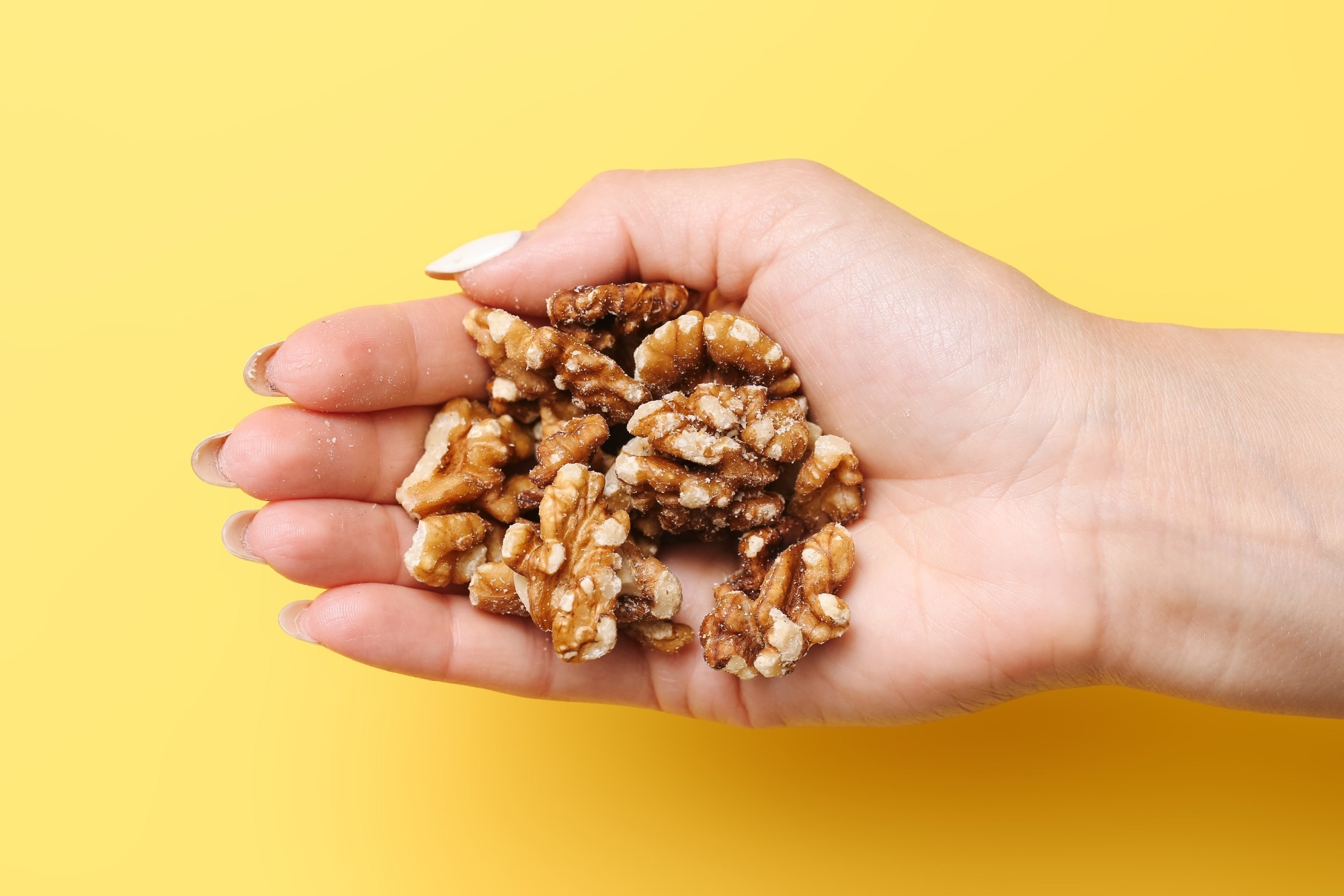
Paper: Nut consumption and the risk of hypertension: a systematic review and dose response meta-analysis of prospective studies. Image Credit: Pawel Michalowski / Shutterstock
In a recent study published in the British Journal of Nutrition, researchers examined the association between nut consumption and the risk of hypertension.
Hypertension is a significant health concern, affecting 1.4 billion people worldwide. It is also one of the leading contributors to the global burden of disease, accounting for nearly 8% of disability-adjusted life years.
Diets low in whole grains, potassium, fruit, vegetables, and nuts/seeds but high in added sugar, sodium, sugar-sweetened beverages, and processed and red meat are the primary dietary risk factors associated with hypertension.
Nuts and their constituents have been suggested to contribute to cardiovascular health. Several meta-analyses of randomized controlled trials have reported reductions in blood pressure (BP) with nut intake, although findings have not been entirely consistent. However, a borderline significant decrease in the risk of hypertension was reported in a meta-analysis of prospective cohort studies.
Subsequent prospective cohort studies have yielded mixed results on the association between nut intake and hypertension risk.
About the study
In the present study, researchers evaluated the association between nut intake and the risk of hypertension. First, the Embase and PubMed databases were comprehensively searched for studies assessing the association between nut intake and the risk of hypertension. Eligible studies were prospective cohort studies, population-based cohort studies, case-cohort studies, and nested case-control studies.
Relevant data, such as study and participant characteristics, exposure, risk estimates, follow-up, and adjusted variables, were extracted from included studies. A modified Newcastle-Ottawa Scale was used to evaluate the quality of studies. The strength of evidence was assessed using the World Cancer Research Fund (WCRF) grading criteria. Summary relative risk (RR) estimates were computed for the association between nut intake and hypertension risk using random-effects models.
Both linear and non-linear dose-response associations were examined. The I-square statistic was used to assess heterogeneity between studies. Further, meta-regression and subgroup analyses explored potential sources of heterogeneity, including follow-up duration, sex, study quality, geographical location, number of cases, assessment method, and adjustment for confounders. Publication bias was examined using funnel plots and Egger’s test.
Findings
The broader literature search, which incorporated additional dietary exposures, identified 7,879 records, of which eight prospective studies were included in the nut analysis. There were 143,380 participants, including 20,665 with hypertension, aged 18–87 years, across studies. Two studies included only males, while the remaining included both sexes. Three studies were conducted in the United States (US), three in Asia (Iran, China, and South Korea), and two in Europe (France and Spain). On average, the quality score of studies was 6.8 out of eight.
Six studies were rated as high quality and two as medium quality. The highest nut consumption was inversely associated with hypertension risk, with a summary RR of 0.84, compared to the lowest intake. In the linear dose-response analysis, the summary RR was 0.8 for each serving of nuts (~28 g) consumed per day. However, between-study heterogeneity was substantial and was partly driven by one study. In addition, a potential non-linear association was noted, with the non-linear curve flattening at 25–30 g/day.
The inverse association was observed in most subgroup analyses, with no evidence of heterogeneity between subgroups. The authors graded the likelihood of causality as probable under the WCRF criteria, although they noted that residual confounding could not be ruled out. In a sensitivity analysis, transforming odds ratios to RRs did not alter the summary RR for the highest-versus-lowest nut intake category. Begg’s and Egger’s tests and funnel plot inspection revealed no indication of publication bias, although only eight studies were available.
Conclusions
In summary, higher nut intake was associated with a significantly lower risk of hypertension. In particular, a 20% lower relative risk was associated with each 28 g/day increment in nut intake in the linear dose-response analysis. There was some indication of a non-linear association, with 30–35 g/day of nut intake associated with a modeled 26% decrease in risk. These findings are consistent with meta-analyses reporting benefits of nut intake for BP.
The study’s limitations include potential residual confounding, dietary measurement error, mostly single baseline assessments of nut intake, and the lack of analysis by specific nut types.
Moreover, there was no data on whether nuts were salted or unsalted, an important consideration because salt can increase BP, and there were no studies from Africa or the Indian subcontinent. As such, the findings may not apply to all ethnicities or populations.
Future research should include diverse cohorts, examine specific nut types and whether they are salted, investigate specific metabolites in nuts, and elucidate the mechanisms underlying the association. Overall, the results provide further support for dietary recommendations for increased nut consumption.
 Maternal blood test reveals prenatal methylation clues linked to autism risk