Not all ultra-processed foods showed the same cancer associations: a major US study reveals why whole grains, fiber, dairy, and processed meats may matter more than a single food-processing label suggests.
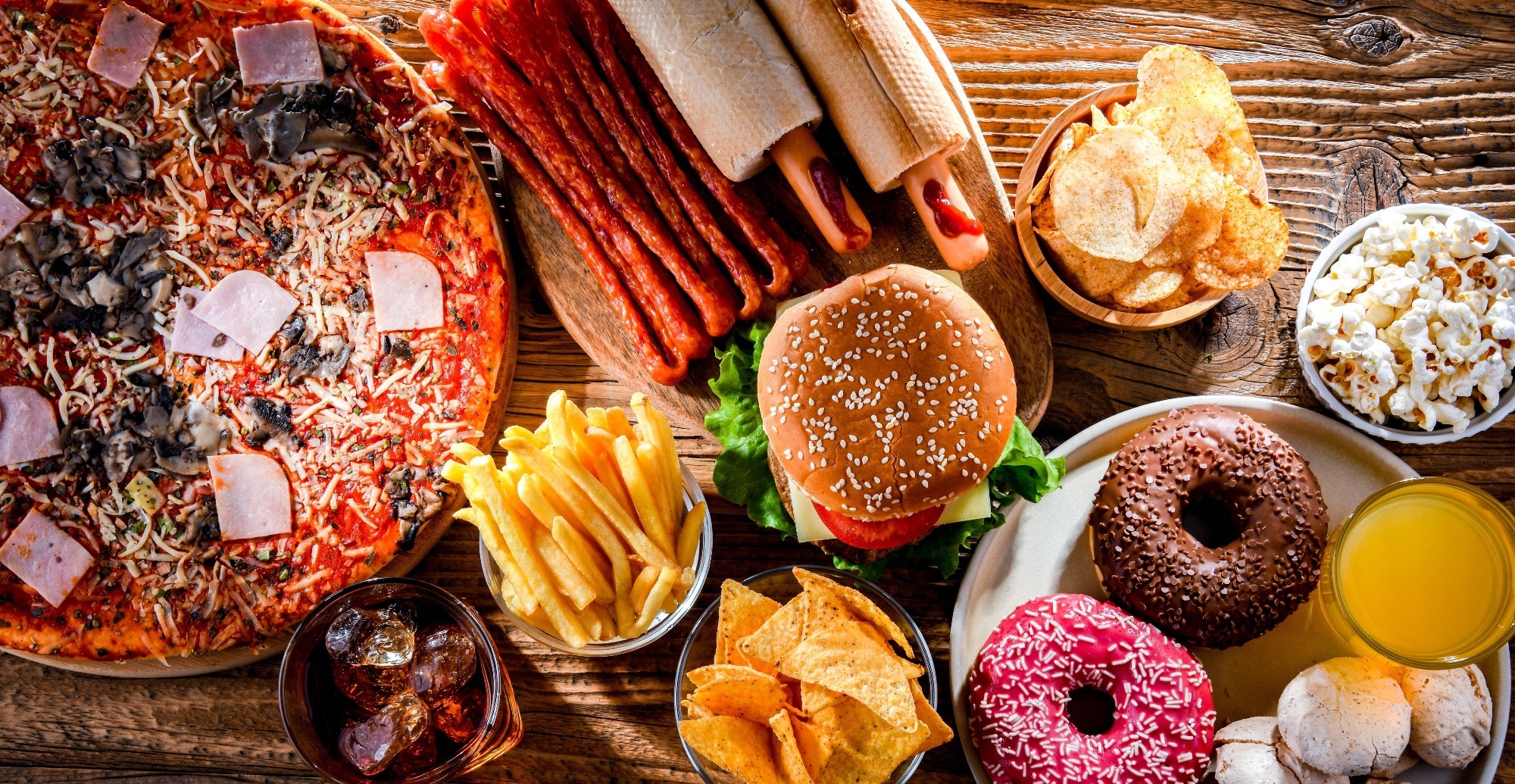 Study: Associations of food processing and dietary risk factors with colorectal cancer incidence in the NIH-AARP Diet and Health Study: A cohort study. Image credit: monticello/Shutterstock.com
A recent PLoS Medicine study estimated the associations between ultra-processed food (UPF) intake and colorectal cancer (CRC) incidence in a large cohort of older US adults.
UPF consumption and colorectal cancer
Colorectal cancer (CRC) ranks as the third most commonly diagnosed cancer in the United States. Dietary factors are key modulators of CRC risk, with specific nutrients and food groups exerting harmful or protective effects. Higher intake of processed meats, red meat, and alcohol is associated with increased CRC risk, whereas diets rich in whole grains, fiber, dairy, and calcium are linked to lower incidence. These relationships illustrate the critical role of overall dietary patterns in CRC prevention.
Several prospective cohort studies have linked ultra-processed food (UPF; NOVA group 4) consumption to higher CRC incidence; however, findings remain inconsistent across populations and methodologies. This lack of consensus underscores the uncertainty surrounding UPF's role in CRC development. In addition, research has not adequately explored how current dietary guidelines for CRC prevention relate to research on food processing.
Dietary guidelines recommend limiting added sugars, sodium, and saturated fats, and favoring whole foods. Although most UPFs are nutrient-poor, exceptions exist, complicating broad health assessments. Associations between UPF subgroups and health outcomes, including type 2 diabetes and CRC, are inconsistent, highlighting the need for more precise research to clarify UPF-related CRC risk.
Examining the relationship between UPF intake and CRC incidence
Researchers used data from the National Institutes of Health-American Association of Retired Persons (NIH-AARP) Diet and Health Study, which recruited adults aged 50–71 years from six US states and two metropolitan areas between 1995 and 1996. Participants provided information about their diet, lifestyle, health, and demographic characteristics.
After excluding participants with certain pre-existing health conditions, previous cancer diagnoses, unreliable dietary information, or insufficient follow-up, the researchers analyzed data from 461,682 adults.
Participants reported their usual food and drink consumption through a questionnaire covering 124 items. Researchers then classified foods according to the Nova system, which groups foods by their level of processing. They also estimated participants' intake of key nutrients and food groups and assessed overall diet quality using the Healthy Eating Index-2020, which reflects US dietary recommendations.
To account for differences in how much people ate, ultra-processed food (UPF) intake was measured by weight relative to daily calorie consumption. Participants were divided into five groups based on their UPF intake, with separate groupings for men and women. Alcohol was assessed separately.
The researchers tracked colorectal cancer diagnoses and examined whether UPF consumption was associated with cancer incidence overall and in different parts of the colon and rectum. Their analyses accounted for factors that could influence cancer risk and examined whether associations changed over time.
They also investigated whether the relationship between UPF intake and colorectal cancer differed according to overall diet quality, sex, or body mass index (BMI).
UPF intake and CRC risk patterns
The study included 461,682 adults, whose diets contained a median of 293 grams of ultra-processed foods (UPFs) per 1,000 calories, accounting for 43% of daily energy intake. Over a median follow-up of 18.8 years, researchers recorded 10,075 colorectal cancer cases.
After accounting for other factors that could influence cancer risk, the researchers found no significant association between overall UPF consumption and colorectal cancer incidence, including cancers in different parts of the colon and rectum. The findings remained largely unchanged after adjusting for diet quality and body mass index (BMI).
Although participants with poorer diets in certain UPF intake groups had a higher colorectal cancer risk than those with healthier diets and low UPF consumption, there was no consistent pattern linking increasing UPF intake to greater risk. The association between UPF intake and cancer incidence also did not differ significantly by sex or BMI.
However, the type of ultra-processed food appeared to matter. Higher consumption of UPF breads, breakfast cereals, frozen desserts, and milk drinks was associated with lower colorectal cancer risk, while reconstituted meat and fish products were linked to higher risk. These subgroup findings were exploratory and should be interpreted cautiously.
The researchers also examined whether nutrients and food groups had different associations with cancer risk depending on their source. Dairy and calcium were linked to lower colorectal cancer risk whether they came from UPF or non-UPF sources, while processed meat was associated with higher risk regardless of processing classification.
Whole grains and fiber from UPFs were also associated with lower cancer risk, whereas associations for non-UPF sources were not statistically significant. However, this does not establish that UPF sources offer greater protection.
Finally, a statistical analysis suggested that replacing 10% of food intake by weight from UPFs with minimally processed foods was associated with a modest 2% reduction in colorectal cancer incidence.
Diet remains crucial for CRC prevention regardless of food processing level
Analysis of this large US cohort found no significant association between overall ultra-processed food (UPF) intake and colorectal cancer incidence. The findings reinforce the importance of dietary quality, including consuming whole grains, fiber, and dairy while limiting processed meat, regardless of food processing levels.
The study had several limitations, including reliance on self-reported dietary information collected in the mid-1990s, which may not reflect current eating habits. Its observational design also means that the findings cannot establish cause and effect.
The researchers called for further studies to better understand how food processing and nutritional quality influence colorectal cancer risk.
 Scientists studied diet and lung cancer in 95,612 adults. One eating pattern stood out