When it comes to colon health, the benefits of wheat and rye bran in wholegrain foods are well-known. Now researchers in Sweden have shown how these fibers may have a therapeutic use, too. A new study demonstrates the potential to marshal bran fiber for direct delivery of drugs treating colon diseases like ulcerative colitis, Crohn's or colorectal cancer.
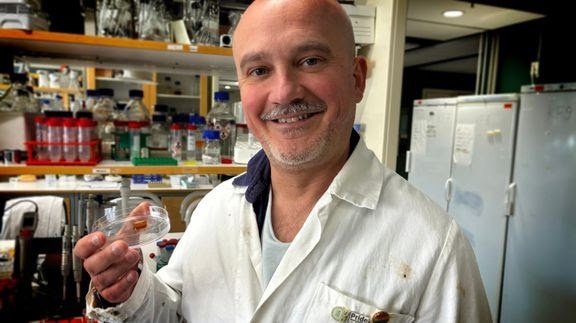 A new study indicates that wheat and rye bran might hold the key for better delivery of treatments for colon disorders. Pictured, KTH glycoscience researcher, Professor Francisco Vilaplana, shows a sample bran hydrogel that his team has developed. Image Credit: David Callahan
Researchers at KTH Royal Institute of Technology report they have successfully tested the concept of using bran-based hydrogels for encapsulating potential colon treatments, ensuring they are delivered where they are most needed. While more development and research are needed, the latest test results – with encapsulated model small molecules and proteins – offer a possible bridge between agricultural side streams, biomaterials and medicine delivery.
We believe this could one day have applications for oral delivery of drugs or probiotics to the gut, for example to treat inflammatory symptoms."
Francisco Vilaplana, Director of the PLENTY Research Center and Professor in Glycoscience, KTH Royal Institute of Technology
Medications that release in the colon can ensure a concentration of drugs to target diseased tissue, which is important when treating lower intestine issues. Most of these kinds of drugs are packed in coatings that dissolve when acidity reaches a certain point more commonly found in the colon, typically at a level of pH 7.
But from person-to-person, drugs are exposed to varying levels of stomach acid, digestive enzymes, changing fluid volumes, mucus, and a moving intestinal tract, all of which can trigger an early release. So, the search for alternative triggers has led researchers to an enzyme found among colon bacteria, β-xylanase, which can digest plant fiber.
The researchers created their hydrogel with the plant fiber Arabinoxylan, which was extracted from wheat and rye bran. Rye arabinoxylan (RAX) hydrogels fully retained a model protein and then released a substantial amount triggered by a gut bacterial β-xylanase enzyme.
It remains unknown whether the gel would survive the stomach and small intestine during in vivo digestion. But, because β-xylanase cuts the gel's arabinoxylan fiber network to release the encapsulated target molecules, it offers the possibility of using natural and degradable materials for repeated contact with the gut.
Vilaplana says that rye gel was found to be particularly effective at retaining the model protein. The researchers also explored techniques to tune performance of the gels through steps like freeze-drying.
The study was co-authored by KTH PhD student Carl Rämgård and Associate Professor Lauren McKee. Funding support for the study was provided by Svenska Forskningsrådet (Formas) and PLENTY - the Centre for Circular and Symbiotic Food Provisioning.
 Australia scrapped a sugar labeling proposal. What does that mean for baby food?