A comprehensive contamination control strategy must include a dedicated section addressing personnel-related microbiological and particulate contamination risks introduced into an aseptic process, as required by and outlined in the European Union (EU) Guidelines for Good Manufacturing Practice (GMP), Annex 1: Manufacture of Sterile Medicinal Products (2022).
Image Credit: Tatevosian Yana/Shutterstock.com
This article investigates the primary personnel-related factors that drive particle/microbial contamination risks to the product and describes practical measures to mitigate these risks.
Particle Measuring Systems Advisory Services can assist companies in producing sterile products in adherence to all necessary regulations and guidelines. This is achieved by developing a tailored contamination control approach and identifying appropriate actions or mitigation measures to minimize contamination risk.
Introduction
The production of sterile products is a critical process requiring strict controls and adherence to specific guidelines to reduce microbiological, particle, and pyrogen contamination risks (Note: while this paper uses the general term “risk of contamination”, it is understood to include the risk of microbiological, particle, and pyrogen/endotoxin contamination).
As detailed in Annex 1: “2.1 The manufacture of sterile products is subject to special requirements in order to minimize risks of microbial, particulate and endotoxin/pyrogen contamination.”1
A product is considered sterile when it is free from viable microorganisms.2 To manufacture a product carrying the “sterile” label, two processes may be applied:
- Terminal sterilization, in which the final, sealed product is sterilized using validated techniques.
- Aseptic processing, which involves the separate sterilization of each component (e.g., containers, closures), product filtration at 0.22 μm, and subsequent assembly in an environment specifically designed to prevent microbial contamination.
In aseptic processing, since the product does not undergo terminal sterilization in its final container, preserving aseptic conditions throughout all critical processing stages is essential to prevent contamination risk, from compounding to final packaging.
Annex 1 defines Aseptic Processing as: “The handling of sterile product, containers and/or devices in a controlled environment in which the air supply, materials and personnel are regulated to prevent microbial, endotoxin/pyrogen and particle contamination”1
Regulatory guidelines outline several key factors to minimize the risk of contamination, including the requirement for facilities to establish a Contamination Control Strategy (CCS).
As highlighted in the latest version of EU GMP Annex 1 (2022), a CCS must be implemented to identify and evaluate overall contamination risks in the facility and to propose and review appropriate mitigation actions (e.g., corrective and/or preventive action plans). A pharmaceutical CCS must account for all potential contamination sources, and personnel are consistently recognized as one of the largest risk contributors.
“…2.5 The development of the CCS requires detailed technical and process knowledge. Potential sources of contamination are attributable to microbial and cellular debris (e.g. pyrogen, endotoxin) as well as particulate (e.g. glass and other visible and sub-visible particles).
Elements to be considered within a CCS should include (but are not limited to):
Design of both the plant and processes including the associated documentation.
Premises and equipment.
Personnel.
Utilities. …”1
Personnel introduce particles and microbes shed from skin, hair, and clothing. For this reason, a robust Contamination Control Strategy (CCS) must analyze all variables that allow personnel to introduce contaminants into the process. Key personnel-related factors that can lead to microbiological or particulate contamination include, at a minimum:
- Gowning
- Qualification and training
- Flow
- Intervention
- Personnel monitoring
This paper analyzes all of these listed factors, with a specific focus on the practices of aseptic gowning.
Evaluating personnel-related contamination risks
Scientific studies demonstrate that humans shed roughly 1 billion skin cells every day. This translates to a shedding rate of approximately 30,000 to 40,000 skin cells per minute, many of which become airborne particles in cleanroom environments.3 According to Whyte, about 10 % of these airborne particles are viable carriers of microorganisms.4
As a result, evaluating all the risks posed by the presence of personnel in the cleanroom is crucial. This evaluation must begin with a clear understanding of all the processes, flows, and activities involving personnel. This is followed by an in-depth analysis of the potential hazards associated with each identified risk and the assessment of appropriate mitigation actions where necessary.
Gowning
Gowning activities conducted in the personnel airlock play a critical role in minimizing contamination risk. Gowning requirements vary depending on the final cleanroom classification, as detailed in paragraph 7.13 of Annex 1, 2022 edition.
In addition to the gowning requirements themselves, several other factors related to gowning affect the overall process. These factors should be addressed within the CCS as part of the broader “personnel” consideration. To comply with regulatory guidelines, the CCS should include the following recommendations:
- Each gowning step should be clearly defined and detailed in the gowning procedure to prevent misinterpretation and ensure correct application of the procedure.
- Theoretical and practical training should be conducted on the gowning procedure as well as aseptic methods.
- Gowning materials in all sizes (overalls, gloves, boots, masks) must be available and appropriately managed in the changing room.
- The changing room must provide sufficient space for movement during gowning, avoiding contact with surfaces such as walls, benches, cabinets, or shelves.
- Gowning room furniture (i.e., shelf, waste basket) should be easily accessible to the operator during gowning to prevent incorrect aseptic technique application.
- The number of personnel in the changing room should be limited to minimize particle generation
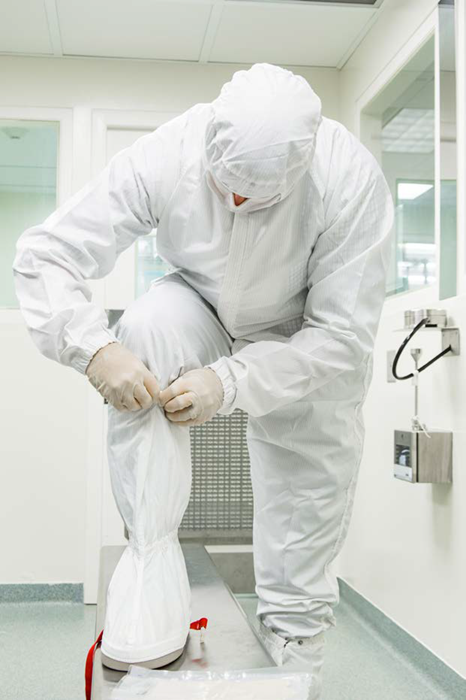
Figure 1. Ascetic Gowning. Image Credit: Particle Measuring Systems
Additional personnel factors
At a minimum, the following additional personnel-related factors must be assessed in the CCS:
- Qualification and training:
Personnel must be qualified and have sufficient training. The training program should include basic elements of hygiene, microbiology, and aseptic methods.
Personnel movement within the cleanroom should be controlled and detailed in a written procedure to reduce contamination risk between different areas.
Activities carried out by personnel should be clearly defined in the operating procedure and reinforced through practical, on-the-job training. Aseptic technique training is essential.
Personnel monitoring represents a potential risk if sampling points are not adequately defined and analyzed through a risk assessment.
How Particle Measuring Systems can help clients with these critical assessments
Particle Measuring Systems (PMS) Advisory Services can be an important resource for developing a Contamination Control Strategy as it assists producers in identifying, assessing, and managing contamination risks by utilizing a structured Quality Risk Management (QRM) approach:

Image Credit: Particle Measuring Systems
The development of a CCS begins with in-depth process mapping, breaking down each stage to identify potential microbiological and particulate contamination risks. Each risk should subsequently be analyzed, and appropriate control and mitigation measures should be adopted to minimize contamination risk.
PMS Advisory Services offers both remote and on-site support, delivering knowledge, expertise, objective identification of potential contamination sources, and recommended appropriate enhancements in compliance with relevant regulations.
Conclusion
Establishing a Contamination Control Strategy (CCS) is a key requirement of EU GMP Annex 1. Developing a strategy to define and evaluate all controls for managing product contamination risk requires a clear understanding of the existing system to ensure adherence to regulatory requirements. Engaging and involving multidisciplinary teams with broad and deep expertise is essential to fully assess every factor identified as a potential contamination source.
Developing an effective CCS demands a comprehensive strategy that accounts for every relevant variable, including processes, procedures, system design, and the environment, to maintain strong control over contamination risks and preserve product quality.
Acknowledgments
Produced from materials originally authored by Rosa Laronga, Advisory Specialist, Particle Measuring Systems.
References and further reading
- European Commission. (2022). The Rules Governing Medicinal Products in the European Union Volume 4 EU Guidelines for Good Manufacturing Practice for Medicinal Products for Human and Veterinary Use. Available at: https://www.gmp-compliance.org/files/guidemgr/20220825_gmp-an1_en_0.pdf.
- 5.1.1. Methods of Preparation of Sterile Products. (2005). European Pharmacopoeia.
- Sandle, T. (2014). People in Cleanrooms: Understanding and Monitoring the Personnel Factor.
- Whyte, W. (1981). Settling and Impaction of Particles into Containers in Manufacturing Pharmacies. PDA Journal of Pharmaceutical Science and Technology, 35(5), pp.255–261. Available at: https://journal.pda.org/content/35/5/255.
About Particle Measuring Systems
Particle Measuring Systems has 35 years of experience designing, manufacturing, and servicing microcontamination monitoring instrumentation and software used for detecting particles in air, liquid, and gas streams, as well as molecular contamination monitoring.
Specific applications include cleanroom monitoring, parenteral sampling, filter and in-line testing in deionized water and process chemicals, and point-of-use monitoring of inert gases and in-situ particle monitoring. Specialty monitoring includes parts cleanliness testing with a highly automated solution.
Particle measuring systems
Whether you want to protect a product or meet industry requirements, such as ISO 14644, USP 797, or GMP, Particle Measuring Systems has a large variety of particle counters and molecular monitors to meet your needs. With 35 years of experience, it has proven reliability to support your application.
Particle counters
Protect your product with reliable particle counters. PMS has airborne, portable, and liquid particle counters for a wide variety of applications, including DI water, chemicals, and cleanroom monitoring. Compare particle counters or learn how to monitor your cleanroom or product by reading our papers.
Molecular contamination monitors
Molecular contamination causes costly problems for high-value products, production processes, and equipment surfaces. PMS has solutions for both Airborne Molecular contamination (AMC) and Surface Molecular contamination (SMC). With parts-per-trillion limits of detection, real-time sampling, NIST traceable calibrations, and various data analysis packages, you can monitor in confidence.
Gas detectors
If you need gas detectors for process control or continuous emissions monitoring, Particle Monitoring Systems can help. Get real-time, reliable results with its ammonia, hydrogen fluoride, and chlorine detectors for worker protection, CEMs, and pollution monitoring.
Sponsored Content Policy: News-Medical.net publishes articles and related content that may be derived from sources where we have existing commercial relationships, provided such content adds value to the core editorial ethos of News-Medical.net, which is to educate and inform site visitors interested in medical research, science, medical devices, and treatments.