In 2019, 262 million people worldwide had asthma, with 455,000 deaths from the chronic condition.1 These stark figures highlight the need for improved asthma control.
Often, people with asthma assume that if they have no physical symptoms, their asthma is under control. However, this is not always the case; asthma is caused by airway inflammation, which is not necessarily visible or felt.
Many asthma patients feel healthy until symptoms suddenly flare up. Fractional exhaled Nitric Oxide (FeNO) testing is an important tool for preventing exacerbations and improving asthma management.
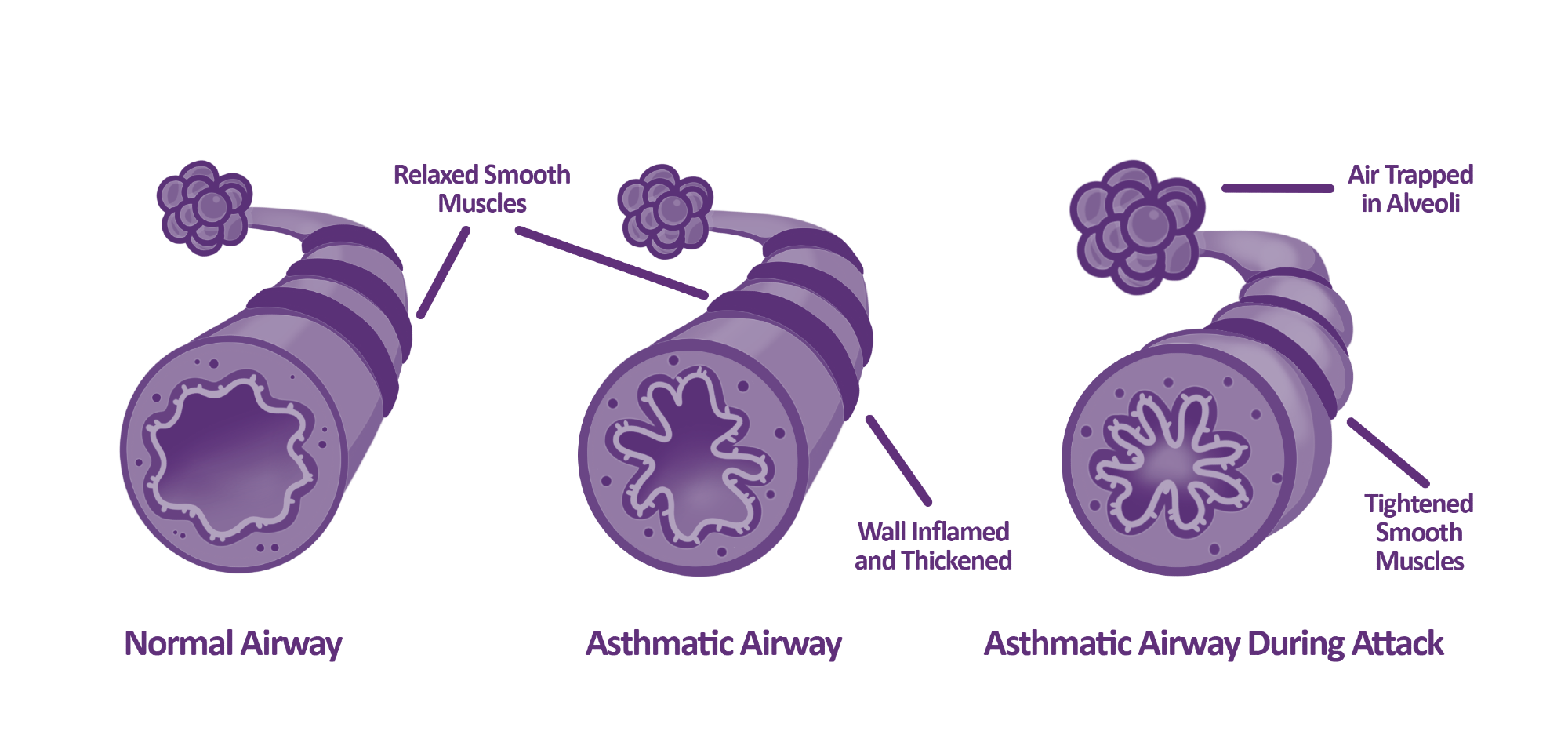
Image Credit: NObreath
What is FeNO and why does it matter?2
When the airways are inflamed, they produce excess nitric oxide (NO), which can be measured with a FeNO test. A FeNO test assesses airway inflammation by measuring NO levels in exhaled breath.
High FeNO readings suggest eosinophilic airway irritation: the higher the reading, the worse the inflammation. Healthcare workers can use airway inflammation measurements to help diagnose asthma and adapt treatment accordingly.
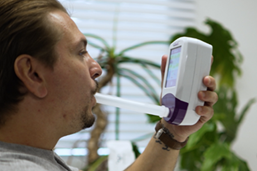
Image Credit: NObreath
Limitations of traditional asthma monitoring
Traditionally, clinicians have relied on patients to report their symptoms, which does not necessarily provide a complete picture of a person's asthma. Many people with asthma feel that they should cough and wheeze, so they downplay their symptoms.
Including a FeNO test in routine asthma assessments enables healthcare professionals to detect airway inflammation early, allowing them to monitor drug response and tailor treatment. This can eventually detect an exacerbation early and get patients back on track with well-managed asthma.
Additionally, medication adherence rates range from 30 to 70 %.3 A patient may take their medication properly and regularly; nonetheless, a simple FeNO test can reveal poor adherence.
Showing a patient their airway inflammation provides an opportunity to discuss and reiterate the necessity of proper adherence and technique.
Recent advancements in FeNO testing
In the 1990s, researchers discovered FeNO as a noninvasive biomarker of airway inflammation and used chemiluminescence to measure it.
This technology proved to be extremely expensive due to the need for frequent maintenance and calibration, and difficult to access because of the machines' size and the specialized training required.
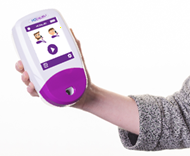
Image Credit: NObreath
In recent years, this has progressed to electrochemical sensor technology, enabling the creation of more cost-effective, portable FeNO devices such as the NObreath® while still meeting the gold standard of chemiluminescence.
Thanks to continued improvement, FeNO devices are now available at the point of care and give immediate results, improving patient outcomes.
FeNO first appeared in worldwide clinical practice guidelines for asthma in the late 1990s, and in 2011, the American Thoracic Society (ATS) officially authorized its use to measure airway inflammation in adults and children.4
Since then, FeNO testing has been recommended in asthma guidelines all over the world, with the most recent joint guidance from the National Institute for Health and Care Excellence (NICE), the British Thoracic Society (BTS), and the Scottish Intercollegiate Guidelines Network (SIGN) recommending FeNO as the first-line test for asthma diagnosis.5
The NObreath® FeNO device
The NObreath® was developed in 2008 with healthcare professionals and patients in mind. It offers a non-invasive, cost-effective solution for FeNO testing, making it more readily available to healthcare providers globally.

Image Credit: NObreath
The NObreath® includes an adult and child test mode and is suited for all settings because of its precision and portability. It requires only an exhale, making it a simple test for both adults and children.
The device was built with the patient in mind and includes several flow incentive screens. These incentive screens not only entertain the patient, but also assure a proper flow rate of 50 ml/s, resulting in an accurate test result.
Many asthma deaths are thought to be preventable, indicating a need for improved asthma care. Advances in FeNO testing have helped improve asthma control, and as it becomes more widely recognized in global asthma recommendations, it has the potential to make a difference.
References and further reading
- World Health Organization (2024) Asthma. Available at: https://www.who.int/news-room/fact-sheets/detail/asthma
- NHS England (2025) Fractional Exhaled Nitric Oxide (FeNO). Available at: https://www.england.nhs.uk/aac/what-we-do/innovation-for-healthcare-inequalities-programme/rapid-uptake-products/fractional-exhaled-nitric-oxide/
- Cambridge Network (2024) Improving adherence in asthma treatment. Available at: https://www.cambridgenetwork.co.uk/news/improving-adherence-asthma-treatment
- Dweik, R. A., et al. (2011). An official ATS clinical practice guideline: interpretation of exhaled nitric oxide levels (FENO) for clinical applications. American journal of respiratory and critical care medicine, (online) 184(5), pp.602–15. DOI: 10.1164/rccm.9120-11ST. https://pubmed.ncbi.nlm.nih.gov/21885636/.
- National Institute for Health and Care Excellence (2024) Asthma: diagnosis, monitoring and chronic asthma management (BTS, NICE, SIGN). Available at: https://www.nice.org.uk/guidance/NG245
About NObreath
The NObreath® is a FeNO device by Bedfont® Scientific Ltd. which can be used to measure airway inflammation for the management and diagnosis of asthma.
Our mission is to help improve asthma diagnosis & management of adults and children worldwide through FeNO measuring. Our purpose is to make FeNO measuring more accessible globally, with the creation of an effective yet cost-efficient FeNO device and equally low cost consumables.
Sponsored Content Policy: News-Medical.net publishes articles and related content that may be derived from sources where we have existing commercial relationships, provided such content adds value to the core editorial ethos of News-Medical.net, which is to educate and inform site visitors interested in medical research, science, medical devices and treatments.