Adelaide researchers are challenging decades-old assumptions about brain cancer treatment in a bid to make radiation therapy more effective against tumors, while reducing damage to healthy tissue.
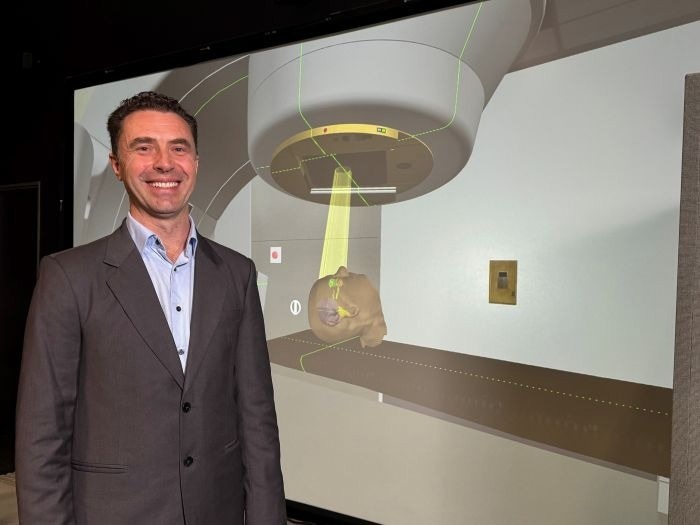 Professor Ivan Kempson. Image Credit: Adelaide University
The groundbreaking work, led by Professor Ivan Kempson from Adelaide University, has received $240,000 through the Mark Hughes Foundation Centre for Brain Cancer Research (MHF Centre) at the University of Newcastle to support an MHF Centre Innovation Node for Radiobiology.
The project is the first to be announced under a new national funding initiative designed to strengthen collaboration and fast track promising brain cancer research.
The research focuses on one of the most used treatments for brain cancer: radiation therapy.
While radiation plays a vital role in treating brain tumors, scientists still do not fully understand exactly how it affects tumor cells, healthy cells, and the body’s immune system.
According to Professor Kempson, a biophysicist at Adelaide University’s Future Industries Institute, much of what is currently accepted about radiation biology dates back to research from the 1960s and 1970s.
It is time to take a fresh look. There is still so much we don’t know about brain cancer and how radiation affects the body. We’re going back to basics, questioning long-held assumptions and using new technologies to better understand what is really happening at a cellular level.”
Ivan Kempson, Professor and Biophysicist, Future Industries Institute, Adelaide University
One of the most exciting aspects of the project is the use of specialized tools that are the first of their kind in Australia. These tools allow researchers to measure radiation damage to DNA with a level of precision that has not previously been possible.
DNA damage is one of the main ways that radiation kills cancer cells. By understanding exactly how that damage occurs, researchers hope they can find ways to increase the impact of radiation on tumor cells while protecting healthy brain tissue.
“We're looking at how we can enhance DNA damage in tumor cells, but protect DNA in normal cells as well,” Professor Kempson said.
The team is also investigating how radiation influences the immune system. Increasingly, researchers believe that the body's own immune response could play a significant role in helping fight brain cancer, but there are still many unanswered questions about how radiation affects immune cells within a tumor.
To answer those questions, Professor Kempson's team is working closely with clinicians at the Royal Adelaide Hospital, conducting research in a real-world treatment environment using the same high-energy equipment used to treat patients. This approach is providing insights that cannot be gained through traditional laboratory studies alone.
“For families affected by brain cancer, advances are urgently needed. The outcomes are very poor and survival rates have changed little in the past 35 years, with only two in 10 patients surviving beyond five years. It kills more children than any other disease and more people under 40 than any other cancer.”
Despite its devastating impact – one Australian is diagnosed every five hours – brain cancer receives less than 5% of federal cancer research funding.
MHF Centre Director Professor Mike Fay said the project demonstrates the importance of investing in innovative research and national collaboration.
“Brain cancer is an incredibly complex disease and there is no single solution,” Professor Fay said.
“By bringing together experts with different skills and supporting the best ideas in Australia, we're building the knowledge that could lead to better treatments and better outcomes for patients.”
The funding will also help grow Australia's brain cancer research workforce, supporting scientists dedicated to tackling one of the nation's greatest unmet medical challenges.
As the first of three Innovation Partner Node projects to be announced in 2026, the investment marks another step towards a coordinated national effort to improve outcomes for people diagnosed with brain cancer.
 Scientists identify novel autoimmune driver behind DNA repair breakdown in childhood cancer