Blueberries contain compounds linked to cardiovascular health, but what happens when gut bacteria are removed from the equation? A new mouse study examines how dietary phytochemicals, microbial metabolism, and blood vessel inflammation relate.
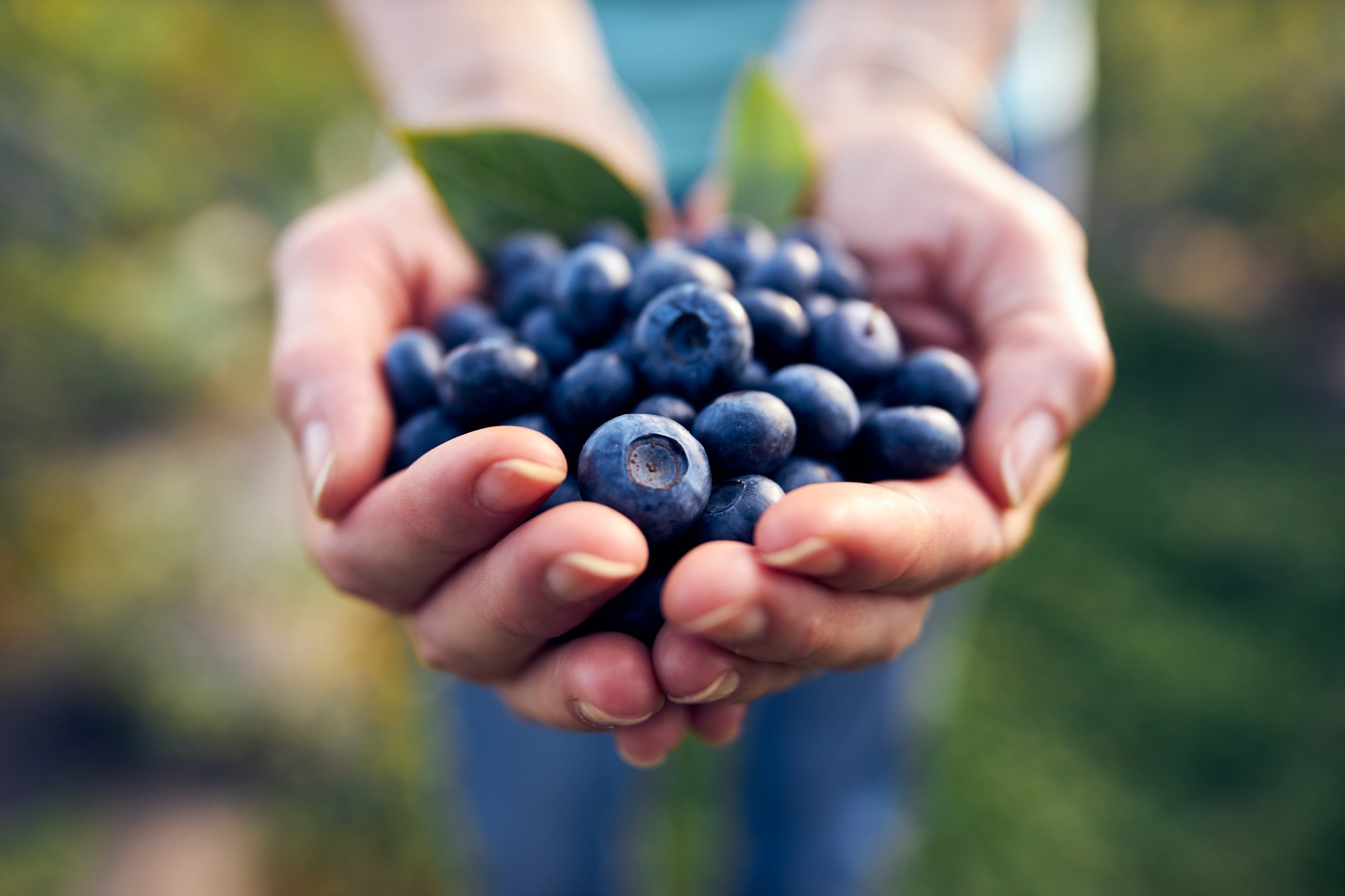
Study: Blueberry phytochemicals modulate the gut–vascular axis through microbiome–metabolome interaction. Image Credit: True Touch Lifestyle / Shutterstock
A recent study published in the journal Food & Function suggests that blueberry phytochemicals may modulate vascular inflammation through microbiome–metabolome interactions along the gut–vascular axis. Conventionally raised mice showed higher plasma concentrations of blueberry-associated metabolites than their germ-free (GF) and antibiotic-treated counterparts. Dietary blueberry supplementation reduced high-fat diet (HFD)-induced vascular inflammation, an effect lost after microbial depletion. Hippuric acid was inversely associated with inflammatory markers, but the researchers did not establish its causal role. The findings highlight the importance of gut microbes in regulating the vascular effects of dietary phytochemicals.
In addition to producing vitamins, regulating metabolism, and modulating immune activity, gut microbes metabolize phytochemicals consumed in everyday meals. Once generated, the bioactive metabolites mediate several physiological processes in the body. These metabolites can have beneficial or detrimental effects on human health.
Previous studies have associated blueberry intake with increased flow-mediated dilation in healthy adults, postmenopausal women, and individuals with metabolic syndrome. Related experimental work reported reduced endothelial inflammation in diabetic mice and endothelial cells isolated from people with diabetes. However, the mediating role of the intestinal microbiome in the metabolism of blueberry phytochemicals remains unclear.
About the study
In this study, the researchers examined how interactions between the gut microbiome and plasma metabolome influence the vascular effects of blueberry phytochemicals.
GF and conventionally raised mice were orally administered freeze-dried blueberries at 500 mg/kg body weight. The researchers confirmed the absence of microbes in GF mice by showing no amplification of the 16S ribosomal RNA (rRNA) gene from fecal deoxyribonucleic acid (DNA). Separate groups received a standard or high-fat diet (HFD), supplemented with or without blueberry powder at 3.7% w/w. This dietary quantity was estimated to correspond to 240 g of fresh blueberries, equivalent to approximately 1.5 daily servings for humans, based on body-surface-area scaling. To deplete intestinal microbes, designated groups of mice received an antibiotic mixture containing 1.0 g/L each of ampicillin, metronidazole, and neomycin sulfate, plus 500 mg/L vancomycin, for 12 weeks.
Plasma samples were collected at baseline and at multiple time points over 24 hours after oral gavage to characterize blueberry metabolites using ultraperformance liquid chromatography–tandem mass spectrometry (UPLC-MS/MS). The team also collected murine cecal contents for microbial profiling and aortic vessels to assess vascular endpoints. They compared the number of monocytes bound to the luminal endothelial layers of aortic vessels and measured serum inflammatory biomarkers to evaluate the effects of blueberry consumption on vascular inflammation. In addition to body weight and blood glucose levels, the researchers measured total body fat using time-domain nuclear magnetic resonance (TD-NMR).
The team assessed microbial diversity and community composition using established statistical measures of alpha and beta diversity. Spearman correlations were used to analyze the associations between gut microbes and blueberry-derived metabolites. Only male mice were used for the experiments to reduce potential confounding associated with hormonal fluctuations.
Results and discussion
Following oral blueberry administration, plasma concentrations of several blueberry-associated metabolites rose in conventionally raised animals, whereas GF mice showed minimal changes, suggesting that gut microbes are major contributors to phytochemical breakdown. GF mice showed few circulating metabolites, all at low nanomolar (nM) levels. Caffeic acid achieved approximately 6.0 nM, whereas the other compounds remained at lower concentrations.
Preclinical experiments performed with antibiotic-treated animals confirmed these findings. In the standard-diet cohort, blueberries raised hippuric acid and p-coumaric acid levels by five- to sixfold, while 3,4-dimethoxycinnamic acid showed a 60-fold rise without antibiotic treatment. Antibiotic treatment significantly reduced hippuric acid; 3,4-dimethoxycinnamic acid showed a nonsignificant downward trend, while p-coumaric acid was not reduced, suggesting a contribution from host metabolism. An increase in an unclassified genus within Coriobacteriales was also observed following blueberry intake, alongside reductions in Extibacter, Lactococcus, and GCA-900066575.
The researchers next examined whether the microbial and metabolite changes were accompanied by reduced vascular inflammation in HFD-fed mice. In this cohort, dietary blueberries attenuated HFD-related inflammation in blood vessels, as indicated by decreased monocyte binding to the vascular endothelium. Supplemented mice also showed lower circulating concentrations of inflammatory chemokines such as keratinocyte-derived chemokine (KC, a functional counterpart of human IL-8) and monocyte chemoattractant protein-1 (MCP-1, also called JE in mice). Yet antibiotic-mediated microbial depletion reduced circulating blueberry metabolites, and the vascular anti-inflammatory benefits were no longer observed. The intervention did not significantly alter body weight, body fat, or fasting and non-fasting blood glucose, suggesting that improvements in these metabolic measures did not explain the vascular effects.
Microbial taxa that increased with HFD, including Faecalimonas, showed positive correlations with vascular inflammation. By comparison, hippuric acid, which increased significantly with blueberry supplementation, and 3-hydroxyhippuric acid, which showed a nonsignificant upward trend, were inversely correlated with inflammatory markers. The researchers also found that Clostridia UGC-014 and Turicibacter, whose abundance rose following blueberry intake, were positively linked to hippuric acid, while an unclassified genus within Coriobacteriales was associated with hippuric acid and p-coumaric acid in the standard-diet cohort.
Conversely, microbes reduced by blueberry intake, such as Extibacter and GCA-900066575, showed negative associations with metabolites such as 3,4-dimethoxycinnamic acid and hippuric acid. Dietary blueberries improved selected HFD-altered measures of microbial diversity, including Faith's phylogenetic diversity and observed features. Blueberry phytonutrients, including anthocyanins, are poorly metabolized by human digestive enzymes but are converted by gut microbial enzymes into phenolic metabolites, potentially increasing their bioavailability and helping to explain the findings.
Conclusion
The preclinical findings indicate that blueberry intake altered gut microbial communities and increased circulating metabolites associated with lower vascular inflammation. Based on these observations, dietary phytochemicals may reduce vascular inflammation through microbiome-metabolome interactions. Hippuric acid is not specific to blueberries, because other dietary phenolics and endogenous metabolism can also produce it. The study did not establish a direct causal role for individual metabolites or bacterial taxa, and its exclusively male mouse cohorts limit generalizability. Clinical research is needed to determine whether comparable vascular effects occur in humans.
Future investigations could combine targeted microbial studies, stable isotope tracing, direct hippuric acid supplementation, and studies in female mice and humans to identify the mechanisms and assess their potential clinical relevance.
Source:
Journal reference:
 Scientists found a link between Mediterranean diet blood markers and longer survival