Researchers tracked more than 2,000 patients after their first blood clot to investigate whether coffee habits and the circumstances of the initial event influenced their chances of developing another.
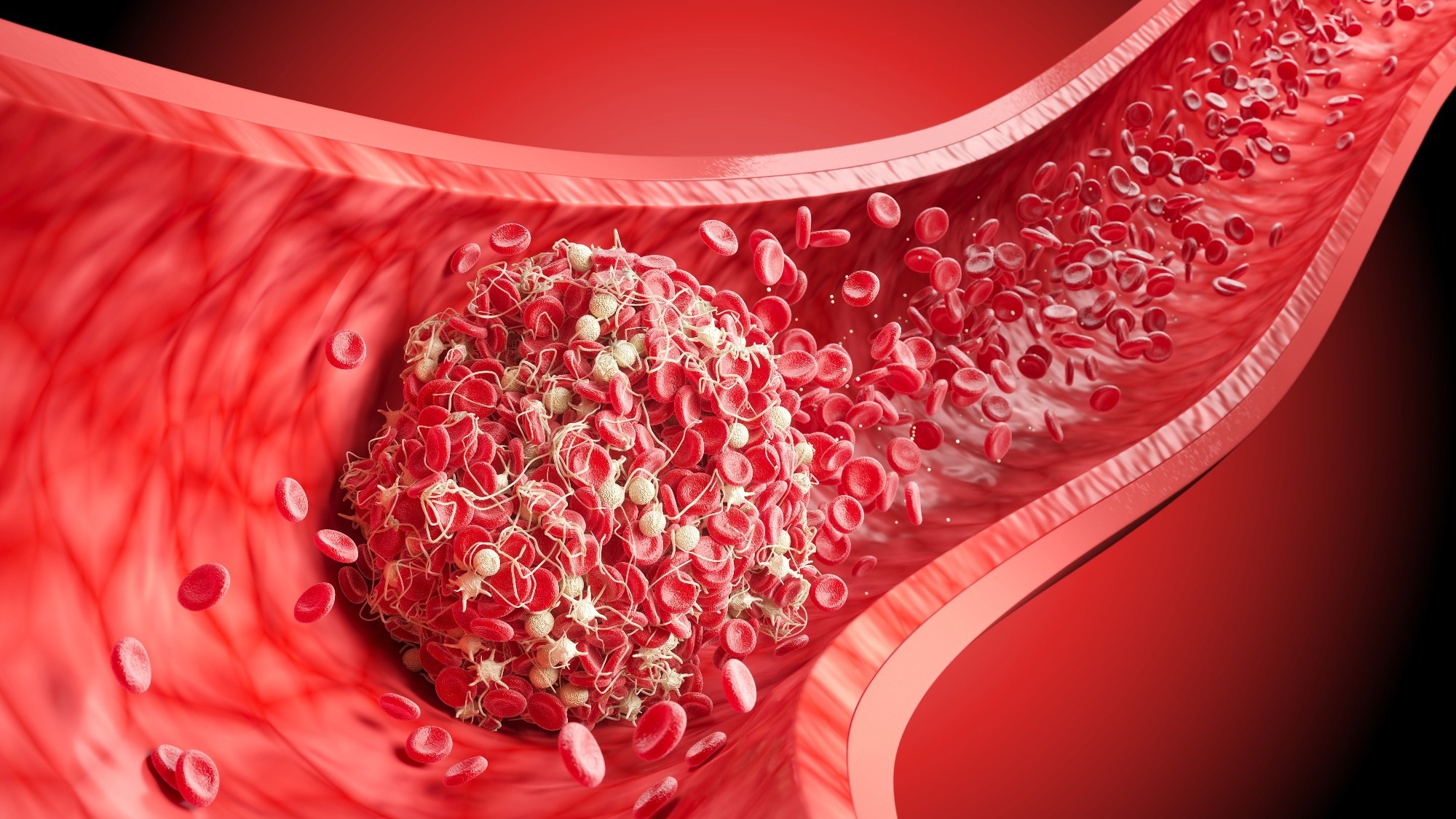
Association between coffee consumption and risk of recurrent venous thromboembolism – Results from the Trøndelag Health Study and Tromsø Study. Image Credit: Anusorn Nakdee / Shutterstock
In a recent study published in the journal Research and Practice in Thrombosis and Haemostasis, a group of researchers in Norway investigated the association between daily coffee consumption and the risk of recurrent venous thromboembolism (VTE) among individuals who experienced a first venous thromboembolic event.
Background
VTE includes deep vein thrombosis (DVT) and pulmonary embolism (PE). It affects approximately 1 in 12 people over their lifetimes and accounts for more than 10 million cases worldwide annually. Beyond the initial event, patients may experience recurrent thrombosis, long-term complications, reduced quality of life, and increased mortality. Approximately 30% of patients may experience recurrent VTE within 10 years, with many occurrences taking place in the years right after the first one. While prolonged anticoagulant treatment reduces recurrence risk, it increases the risk of major bleeding. Identifying lifestyle factors associated with recurrence is a priority, and further research is needed to clarify coffee's potential role. Previous studies have linked coffee consumption to a lower risk of first-time VTE, but its association with recurrence had not been investigated.
About the study
The researchers combined data from the Tromsø Study and the Trøndelag Health Study (HUNT), two Norwegian population-based cohorts. The study population comprised 2,071 individuals diagnosed with a first-lifetime, symptomatic, objectively confirmed VTE. Participants were recruited through four Tromsø Study surveys and the third HUNT survey conducted between 2006 and 2008. Follow-up occurred until recurrent VTE, migration, death, or 2020, whichever occurred first.
Questionnaires collected information on coffee consumption and lifestyle factors, while physical examinations and blood samples provided additional health data. Coffee intake was self-reported before the first VTE, and changes in consumption during follow-up were not measured. Participants indicated their daily intake of boiled and other types of coffee. Consumption categories included 0 cups, 1–2 cups, 3–4 cups, 5–6 cups, or more than 6 cups. The researchers obtained other information, including age, sex, body mass index (BMI), smoking practices, a history of cardiovascular disease (CVD) or cancer, and physical activity level.
The researchers identified initial and recurrent VTE events by searching hospital databases. Trained healthcare professionals reviewed medical records, and events were validated using clinical symptoms and objective confirmation through imaging or autopsy. Cox regression models were used to compare recurrence hazards across coffee-consumption groups. The results were adjusted for the age and sex of the patients and for possible confounding factors including BMI, smoking status, and CVD history. Subgroup analyses examined the type and circumstances of the initial VTE. Sensitivity analyses began follow-up three or six months after the first event because the duration of anticoagulant treatment was not recorded.
Study results
During a median follow-up of 2.8 years, 310 recurrent VTE events occurred among the 2,071 participants. The group reporting no coffee consumption contained only 140 participants, limiting the precision of comparisons. Participants who consumed no coffee had higher cumulative recurrence incidences than those drinking 1-2 cups daily. Other coffee-consumption groups generally fell between these two groups on the published cumulative-incidence curves.
The association between coffee consumption and recurrence was nonlinear rather than showing a consistent reduction with every increase in intake. People who drank 1-2 cups daily had a 51% lower estimated recurrence hazard in comparison with non-consumers, after age and sex adjustment. The association remained similar after additional adjustment for BMI, smoking, and previous CVD. Risk estimates were also lower among participants consuming more than two cups daily, but these associations were not statistically significant. The lowest estimated risk occurred among those drinking 1-2 cups daily, without evidence of progressively greater benefit at higher intake levels. Combining all coffee drinkers into one group also produced an overall estimate that did not reach statistical significance.
Subgroup analyses examined the location and circumstances of the initial VTE. Among participants whose first event was DVT, consumption of 1-2 cups daily was associated with a lower recurrence risk. For participants whose initial event was PE, the corresponding association was not statistically significant. The estimates differed, but this does not establish that the association varied between DVT and PE.
The distinction between provoked and unprovoked VTE was particularly important. Provoked events were associated with identifiable factors, such as surgery, trauma, acute medical conditions, cancer, or immobilization. Among individuals diagnosed with provoked VTE, coffee consumption was associated with a considerably lower estimated recurrence hazard. Those who consumed 1-2 cups of coffee per day had an estimated recurrence hazard that was 67% lower than that of participants who did not drink coffee. The study also observed lower estimates at higher consumption levels, without a consistent trend toward greater benefit as intake increased.
By comparison, coffee consumption was not significantly associated with recurrent unprovoked VTE. When researchers compared all coffee drinkers with non-consumers, they found a lower estimated recurrence hazard after provoked VTE but no clear association after unprovoked VTE. Sensitivity analyses produced similar findings when the researchers delayed the start of follow-up by three or six months.
Conclusions
Coffee consumption was linked to a lower estimated risk of recurrent VTE, particularly among individuals whose initial event was provoked by identifiable factors. Consuming 1-2 cups daily was associated with the lowest estimated overall recurrence risk, while higher intake did not demonstrate a progressively greater benefit. No clear association was observed after unprovoked VTE. Coffee consumption was recorded before the first VTE, so the study cannot establish whether starting or continuing to drink coffee afterward affects recurrence risk.
The small non-coffee group, incomplete information on anticoagulant treatment, and possible unmeasured confounding limit interpretation. Most participants were White Norwegians, so the findings may not apply equally to other populations. The observational study cannot establish that coffee prevents recurrent blood clots, and the researchers called for confirmation in other cohorts.
Source:
Journal reference:
- Olsen, M. M., Brækkan, S. K., Hveem, K., Grønning, K., & Hansen, J.-B. (2026). Association between coffee consumption and risk of recurrent venous thromboembolism: Results from the Trøndelag Health Study and Tromsø Study. Research and Practice in Thrombosis and Haemostasis. 10(7). DOI: 10.1016/j.rpth.2026.106966, https://www.rpthjournal.org/article/S2475-0379(26)03624-1/fulltext
 Menopause leaves a blood protein signature linked to brain aging and Alzheimer’s risk