What separates the daily habits of people with and without cardiovascular disease? A study of 495 hospital patients in Iran examined five lifestyle areas, exercise, diet, stress management, and social connections, to identify where the most pronounced differences emerged.
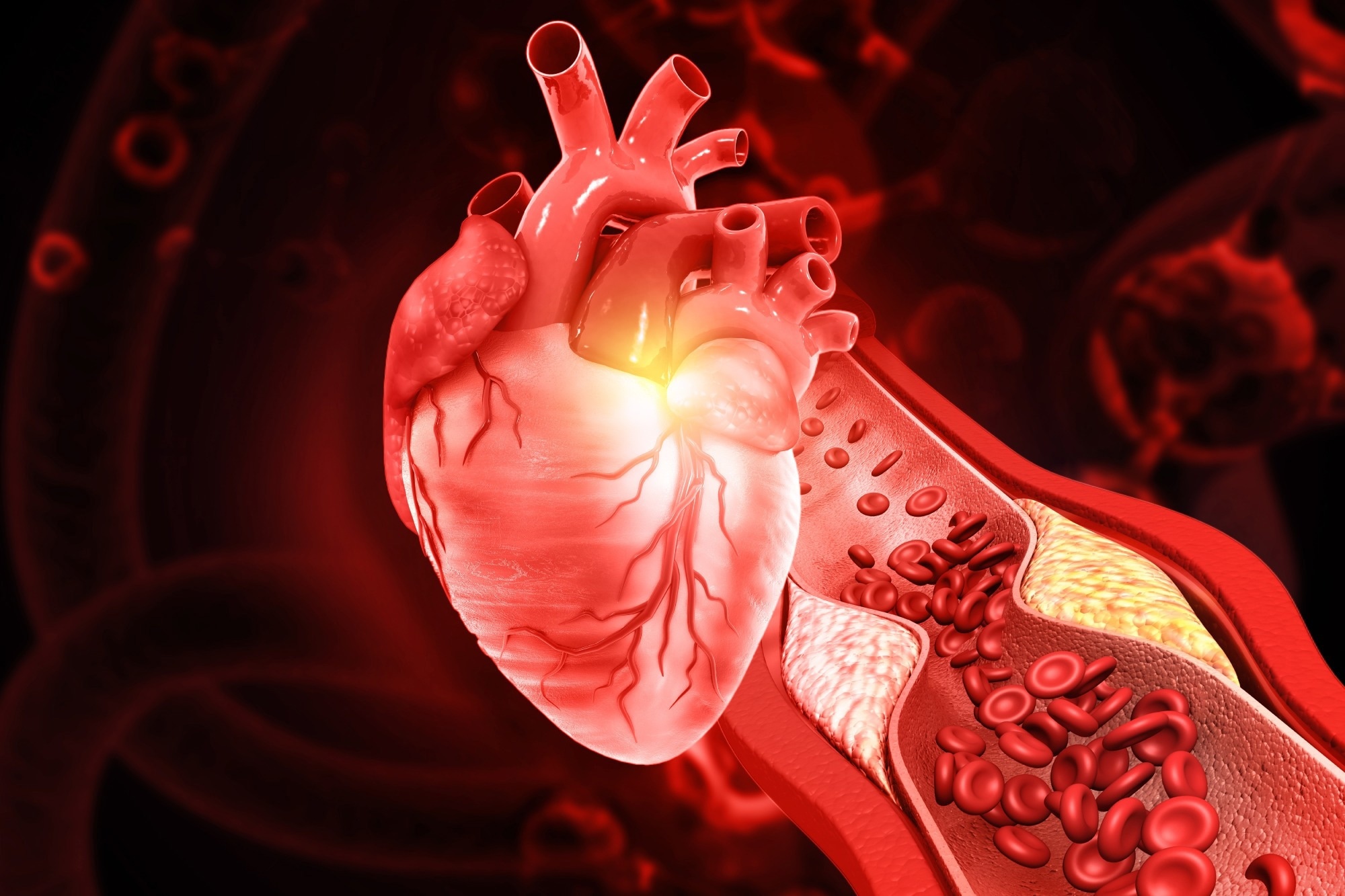
How is the relationship between life style and cardiovascular diseases? A case- control study. Image Credit: Explode / Shutterstock
Cardiovascular diseases are a major contributor to the global burden of noncommunicable diseases and are the leading cause of mortality. In a recent study published in the journal BMC Public Health, researchers in Iran examined whether lifestyle habits differ between patients with and without diagnosed cardiovascular disease.
Background
Cardiovascular diseases (CVDs), such as hypertension and heart failure, are highly prevalent in most countries, including Iran. Interventional research shows that reducing risk factors through lifestyle modifications, such as eating habits and physical activity, lowers the rate of coronary heart disease and stroke.
Smoking, combined with diabetes, obesity, or older age, raises susceptibility to CVDs, and unhealthy diet and sedentary behavior further contribute to dyslipidemia, an abnormal level of blood fats. Because the chronic processes that lead to CVDs can begin early in life, researchers need to assess the association between lifestyle habits and CVDs comprehensively.
About the study
In this study, the researchers conducted a case-control study at the Imam Reza and Imam Ali hospitals in Kermanshah, Iran. The case group consisted of 99 recently diagnosed patients admitted to inpatient heart and cardiac care departments. The study also included 396 controls from other departments, such as gastroenterology and urology, who had no diagnosed cardiovascular disease. For every CVD case, four controls were chosen to increase statistical power.
The team calculated the sample size using lifestyle scores from an earlier study, with a 5% significance level and 80% statistical power. Participants were recruited through convenience sampling, selecting eligible, available, and willing patients. The eligible participants were between 18 and 65 years old, could communicate in Farsi or Kurdish, and had no sensory or cognitive impairment.
Case participants had a physician-confirmed diagnosis and used at least one cardiac medication. People with serious underlying illnesses such as kidney failure or any form of metastatic cancer, or those with unstable circulation, were excluded.
Lifestyle was measured using a previously validated healthy lifestyle questionnaire. It contained 46 questions, spanning five domains: prevention, physical activity and recreation, healthy eating, stress management, and interpersonal and social relationships. Answers were scored on a five-point scale, and total scores classified lifestyle as unfavorable, moderate, or favorable.
Two trained interviewers visited inpatient wards to obtain data between February 28 and June 9, 2023. They explained the study aims and obtained informed consent before collecting data.
Chi-square tests compared categorical characteristics, while one-way analysis of variance (ANOVA) was used to compare mean lifestyle scores across demographic categories. Logistic regression was also performed to estimate odds ratios before and after adjustment for education, age, marital status, job, income, computer knowledge, and source of health information.
Key findings
The study found that people with higher lifestyle scores had lower odds of being in the CVD group, even after the researchers accounted for differences between the groups.
The average lifestyle score was 146.66 among patients with CVDs and 169.4 among controls. These means fell in the moderate and favorable lifestyle categories, respectively, using the questionnaire's scoring thresholds. For each additional point on the scale, the odds of CVDs were 4% lower in the unadjusted analysis and 6% lower after adjusting for demographic and socioeconomic differences. The adjusted odds ratio was 0.94 (95% confidence interval, 0.93 to 0.96). An odds ratio compares the odds of an outcome at different values of a predictor; it does not establish a reduction in disease risk.
Each of the five lifestyle domains also showed a significant link. After adjustment, a one-point increase in the physical activity and recreation score was associated with 38% lower odds of CVDs, the strongest numerical association per questionnaire point among the five domains. Stress management was linked to 22% lower odds and healthy eating to 18% lower odds of CVDs. Preventive measures and social and interpersonal relationships were each linked to 12% lower odds.
The study found that patients with CVDs also differed from controls in income, job status, and computer knowledge, and more than half of them reported insufficient income. The authors suggested that income, education, and employment circumstances may affect opportunities for healthy habits, though the findings did not directly establish these explanations. The authors recommended prioritizing nutrition, stress management, social connection, and community support for physical activity in prevention programs.
The study had some limitations, including the self-reported lifestyle questionnaire, which participants completed independently or with interviewer assistance and could have introduced bias into the data. The hospital-based convenience sample limits generalizability, and lifestyle was recorded after diagnosis, so illness itself may have influenced behavior. Relevant factors, including comorbid conditions, were not fully assessed. Residual confounding from other clinical characteristics, such as smoking, diabetes, and obesity, remains possible. The type of cardiovascular condition was not specified for each participant, which prevented analyses by condition.
Conclusions
Overall, the findings suggested that better lifestyle scores were linked to lower adjusted odds of CVDs, with physical activity and recreation showing the strongest numerical association per questionnaire point. The authors concluded that improving nutrition, social relationships, stress management, and opportunities for physical activity could help support prevention efforts, especially among people with lower incomes. These associations do not establish whether lifestyle changes would prevent CVDs. They also recommended that future longitudinal and intervention studies should account for other illnesses while clarifying how lifestyle shapes heart health over the years.
Source:
Journal reference:
- Maleki, R., Mazhin, A. M. K., Rezaeian, S., Shakiba, E., Darvishigilan, H., Safizade, K., & Karami, B. (2026). How is the relationship between lifestyle and cardiovascular diseases? A case- control study. BMC Public Health, 26(1), Article 3216. DOI:10.1186/s12889-026-28613-5, https://link.springer.com/article/10.1186/s12889-026-28613-5
 Switching to potassium-enriched salt could prevent millions of global deaths