From everyday meals and protein requirements to caffeine and creatine, researchers examine which nutritional strategies help the body perform at its best and which popular dietary practices may undermine athletic goals.
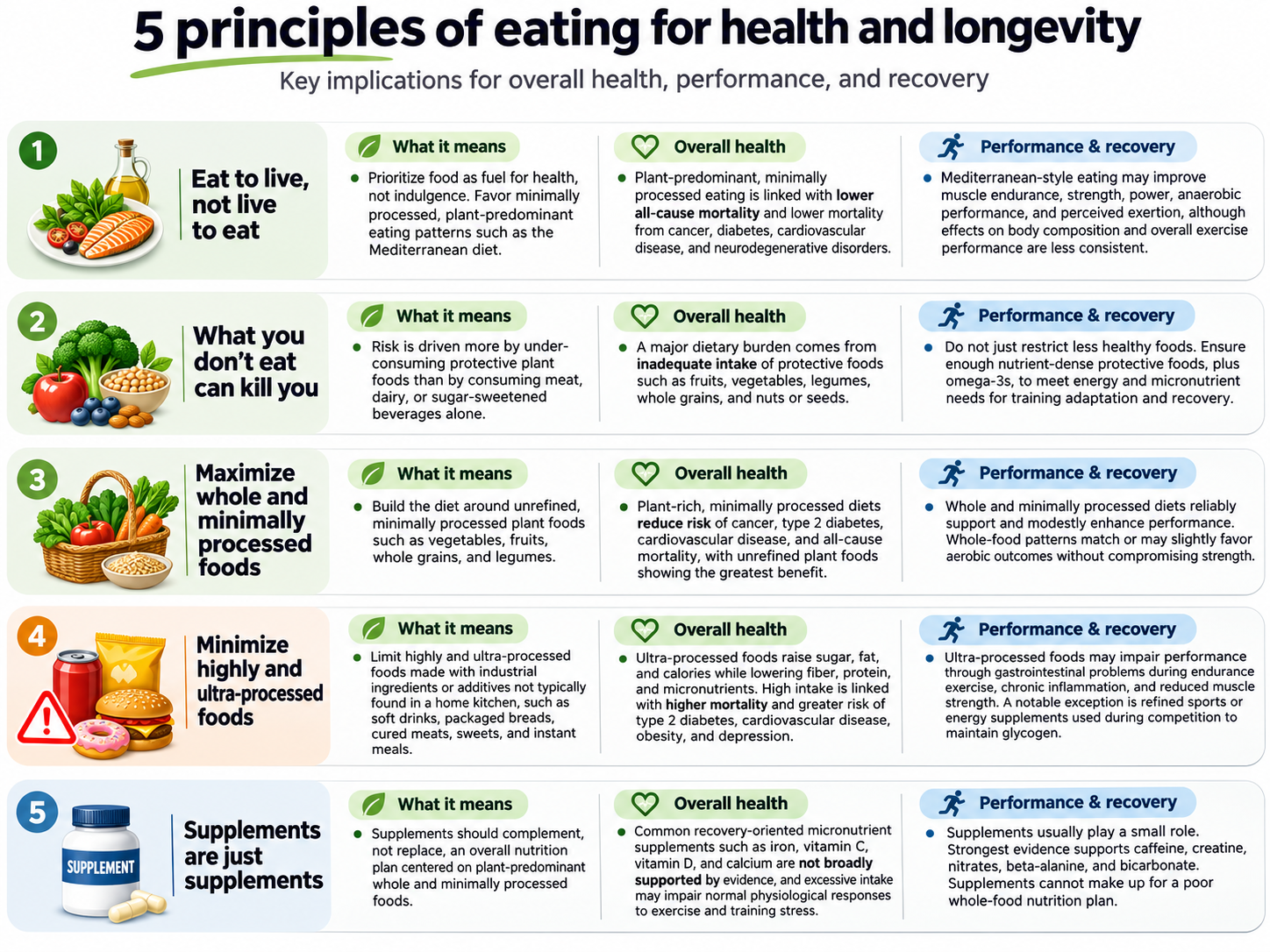
Image Credit: Made with the assistance of ChatGPT / OpenAI using data from Table 1. Principles of eating for health and longevity. Rosenfeld, R.M.; Metzl, J.D. Optimal Nutrition and Supplements for Human Performance. Nutrients 2026
In a recent narrative review published in the journal Nutrients, Richard M. Rosenfeld of SUNY Downstate Health Sciences University and the American College of Lifestyle Medicine, in collaboration with Jordan D. Metzl of the Hospital for Special Surgery in New York, USA, examined how plant-rich diets, sufficient energy intake, balanced macronutrient consumption, and targeted supplementation may improve physical performance and recovery while promoting long-term health in adults across all levels of physical activity.
Background
Are there ways to improve athletic performance while preserving long-term health? Apart from genetic factors, nutrition plays an important role in maintaining physical and cognitive health and supporting everyday and athletic performance. Dietary quality and sufficient energy consumption can influence health, longevity, and the body's ability to meet physical demands.
The review draws primarily on clinical guidelines, systematic reviews, and meta-analyses rather than presenting new experimental findings. Further research is needed to clarify individualized nutritional requirements and supplement effectiveness across different athletic populations.
Healthy eating patterns and performance
A predominantly plant-rich, minimally processed eating pattern provides a foundation for health, longevity, and athletic performance. The Mediterranean diet incorporates these principles by emphasizing whole grains, legumes, fruits, vegetables, nuts, and seeds. Several observational studies have shown a lower risk of death, cardiovascular diseases, and other chronic illnesses with increased adherence to this diet.
Evidence indicates that appropriately planned plant-based diets can support strength, endurance, aerobic fitness, and recovery to a similar extent as omnivorous diets. Their superiority for athletic performance, particularly among elite athletes, remains unproven. The authors recommend making nutrient-rich plant foods the foundation of everyday eating while incorporating animal foods according to individual preferences and nutritional needs.
Whole and minimally processed plant foods contain dietary fiber and other beneficial nutrients. Ultra-processed foods often contain refined starches, added sugars, industrial fats, and artificial additives. High consumption of these foods is associated with an increased risk of obesity, type 2 diabetes, heart disease, and certain cancers. Evidence directly linking their consumption to poorer athletic performance remains limited.
While athletes may use sports drinks, gels, and protein supplements to meet specific training requirements, these products should not replace balanced everyday meals.
Energy availability and macronutrient requirements
Adequate energy intake is necessary to maintain normal physiological functions and support exercise demands. Low energy availability (LEA) occurs when dietary energy intake is insufficient to meet the body's physiological needs after accounting for energy expended during exercise. Prolonged or severe LEA can progress to relative energy deficiency in sport (REDs).
Among surveyed Boston Marathon runners, indicators of LEA were more common in women than men and were associated with slower race times and more medical problems. Chronic underfueling can impair bone health, reproductive function, immunity, metabolism, sleep, and muscle performance. Potential warning signs include declining performance, prolonged recovery, irritability, poor sleep, low testosterone, and menstrual irregularities.
Eating enough is particularly important for athletes, since a nutrient-rich diet cannot compensate for insufficient energy intake.
Protein supports muscle development, maintenance, and repair. While the recommended dietary allowance (RDA) for sedentary adults is 0.8 g/kg/day, exercising individuals generally require approximately 1.4–2.0 g/kg/day. Athletes training to build muscle may benefit from 1.6–2.2 g/kg/day. Distributing approximately 20–30 g of protein per meal supports muscle protein synthesis (MPS).
Total daily protein intake and its distribution across meals generally matter more than precise timing around exercise. Beneficial whole-food sources of protein include dairy products, poultry, fish, nuts, seeds, legumes, and soy. Among older adults, combining protein intake with resistance training improves muscle strength and body composition more than consuming protein alone. Protein requirements should be individualized for people with chronic kidney disease, diabetes, or hypertension, as excessive consumption can worsen kidney-related complications.
Carbohydrates are the primary fuel for moderate- and high-intensity exercise. Recommended intake varies with training demands, ranging from approximately 5–7 g/kg/day for up to an hour of activity, 6–10 g/kg/day for one to three hours, and 8–12 g/kg/day for training lasting four hours or more. Athletes should adjust carbohydrate intake to match their daily training load. Carbohydrate loading can also improve performance during endurance events lasting more than 90 minutes.
Fat provides energy, supplies essential fatty acids, and helps absorb vitamins A, D, E, and K. Athletes should get 20–35% of their energy from fat, with less than 10% of total energy coming from saturated fat. Good sources of unsaturated fats include nuts, seeds, avocados, and olive oil.
Ketogenic diets offer no established athletic performance advantage and may impair high-intensity and endurance activities that rely heavily on carbohydrates and muscle glycogen stores.
Fiber promotes gut health by supporting the production of short-chain fatty acids by intestinal bacteria, which help regulate immunity, inflammation, and metabolism. Men should get about 38 g of fiber each day and women about 25 g. Fiber may cause gastrointestinal distress in susceptible athletes when consumed close to exercise, but evidence supporting routine precompetition fiber restriction remains limited.
Evidence-based supplements
Dietary supplements should not replace healthy eating. Some supplements can improve performance and support recovery, but their effectiveness varies by training status, age, activity, and nutritional needs. Taking vitamins and minerals beyond physiological requirements may offer no additional benefit and could interfere with training adaptations.
Caffeine can reduce perceived exertion and produce modest improvements in exercise performance and aerobic endurance. Higher doses may cause anxiety, an increased heart rate, gastrointestinal discomfort, and disrupted sleep.
Creatine monohydrate can increase muscle strength and mass and may assist recovery following resistance training and high-intensity exercise. Its effects on endurance performance remain uncertain, and supplementation may increase body weight through water retention.
Dietary nitrates from beetroot may improve blood flow and oxygen delivery, supporting selected aspects of sprinting, cycling, and weightlifting performance, particularly in less-trained individuals. Sodium bicarbonate and beta-alanine may benefit high-intensity, short-duration activities, but the performance benefits of bicarbonate are small and inconsistent, and gastrointestinal discomfort can limit its use. Beta-alanine appears more effective in less-trained individuals and those with lower muscle carnosine levels, a compound that helps regulate muscle acidity during intense exercise.
Omega-3 fatty acids may reduce muscle soreness following exercise, but evidence for improved athletic performance remains inconclusive. Polyphenols found in berries, cocoa, cherries, and beetroot may support recovery through antioxidant and anti-inflammatory effects. Vitamin E may reduce exercise-induced muscle damage, but evidence supporting routine supplementation remains limited.
Protein supplements help individuals meet daily protein requirements. Some improvements attributed to supplementation may partly reflect increased energy intake rather than protein itself. Essential amino acid (EAA) supplements may be particularly useful during fasted exercise when there is insufficient time to digest protein-rich foods. Recreational athletes already consuming adequate protein are unlikely to gain substantial additional benefits from EAAs under normal feeding conditions.
Nutritional considerations for aging athletes
Competitive athletes aged 35 years or older, generally known as masters athletes, experience the same age-related changes as the general population, including loss of muscle mass and strength and decline in bone density and aerobic fitness. Regular physical activity can limit these declines and reduce anabolic resistance, a diminished muscle-building response to dietary protein associated with aging.
Adequate protein intake combined with resistance training can help preserve muscle function. Approximately 1.6–1.8 g/kg/day of protein, distributed across at least three meals or eating occasions, has been suggested for these athletes.
Leucine may stimulate MPS in older adults, while creatine supplementation can improve strength and muscle mass. Creatine may be especially beneficial for older athletes following plant-based diets, who may have lower creatine stores. EAA supplementation has also shown more consistent benefits for physical function in older adults than in younger populations.
Lifestyle factors supporting recovery
Nutrition works alongside physical activity, restorative sleep, positive social connections, and stress management. Most adults require 7–9 hours of sleep nightly, while some athletes may benefit from 9–10 hours to support recovery, cellular repair, and MPS.
Larger amounts of alcohol can impair MPS, rehydration, replenishment of muscle glycogen stores, and exercise recovery. The authors recommend avoiding alcohol before exercise and during the early recovery period, particularly when subsequent performance or injury recovery matters. Alcohol can also disrupt sleep quality and overnight recovery.
A stable body weight can mask insufficient energy availability because the body can conserve energy at the expense of normal physiological functions. A normal body mass index (BMI) also does not necessarily indicate healthy body composition or metabolic health.
Conclusions
The review identifies practical nutritional strategies for adults of all activity levels, with protein, carbohydrate, fat, fiber, and energy requirements adjusted to individual physical demands. For overall health, performance and longevity, a predominantly whole-food, plant-rich diet provides the dietary foundation.
Supplement selection should reflect individual nutritional requirements, age, training demands, and the strength of evidence for specific benefits. The authors emphasize that regular exercise, restorative sleep, positive social connections, and stress management work alongside nutrition to sustain performance and long-term health.
The goal is to meet the body's current physical demands while protecting health throughout life.
 Newly characterized protein may protect spinal discs from age-related damage