Alcohol-free beer is gaining popularity, but what happens between the keg and your glass? Scientists investigated the hidden microbial communities in draught NoLo beers served across UK pubs, raising questions about what influences the quality of every pour.
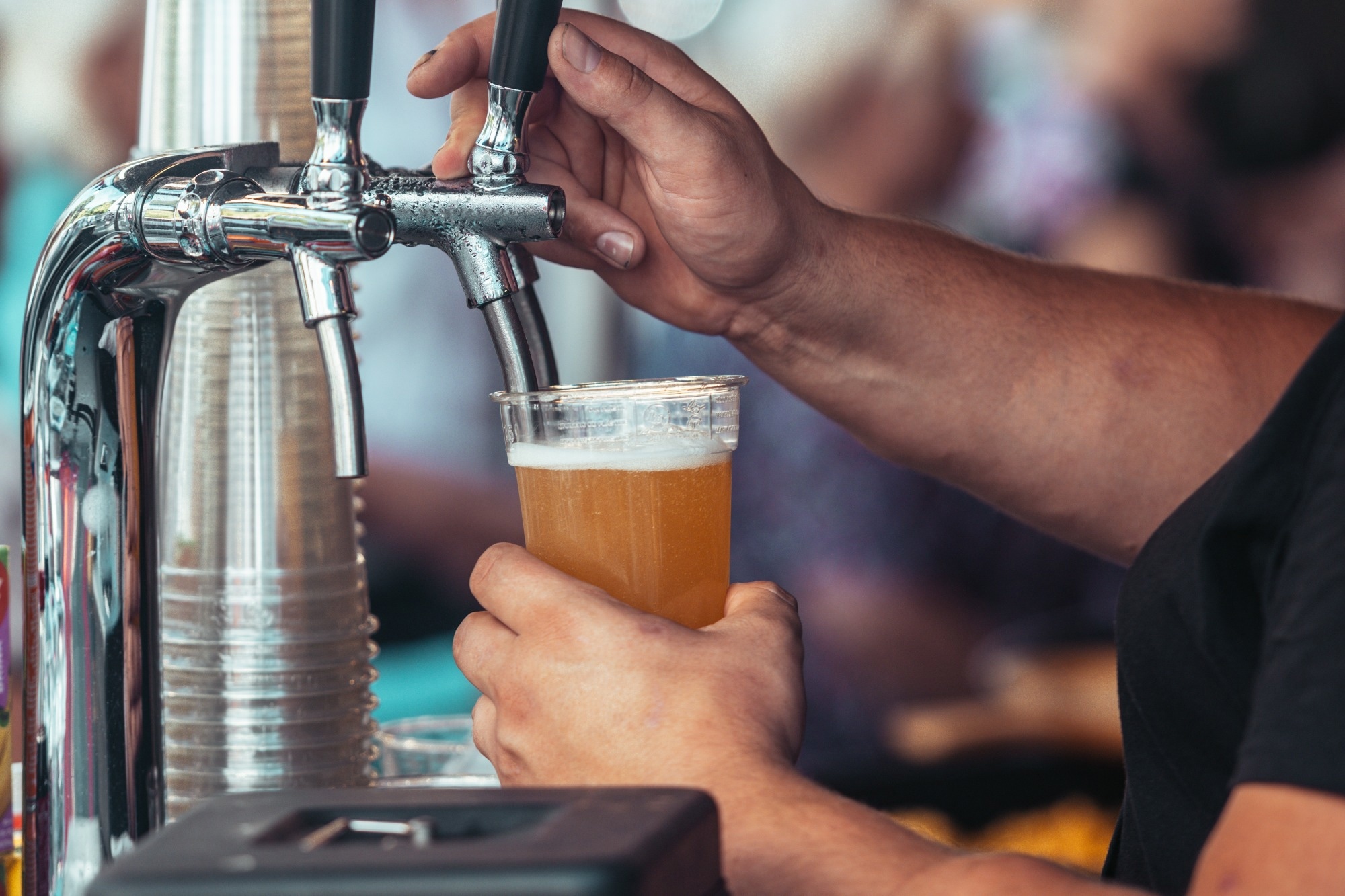
Study: The microbiome of draught no- and low-alcohol beer. Image Credit: Michele Ursi / Shutterstock
In a recent study published in the journal Frontiers in Microbiology, researchers used long-read nanopore DNA sequencing to characterize the microbial communities inhabiting commercially dispensed no- and low-alcohol (NoLo) draught beers.
The study analyzed 49 draught samples from 20 commercial products across 12 retail venues in Nottingham, United Kingdom, to identify spoilage-associated microorganisms and examine factors linked to community variation.
No pathogenic microorganisms were detected in the sequencing analysis, but this does not prove that all sampled beers were pathogen-free. The retail venue, rather than beer style, production method, or alcohol content, accounted for 72.6% of microbial community variation, suggesting a role for local dispense conditions, potentially including line hygiene.
Scientists from the School of Biosciences at the University of Nottingham conducted the research in collaboration with Diageo's International Technical Center in Menstrie, Scotland, United Kingdom.
Background
Research on the microbial composition of standard-strength beer has shown that the beverage is largely microbiologically stable, an observation attributed to beer’s multiple intrinsic antimicrobial barriers, including ethanol concentrations of 4% to 8% alcohol by volume (ABV), low pH (high acidity), limited nutrients, elevated carbon dioxide, minimal oxygen, and bitter hop acids.
Demand for no- and low-alcohol (NoLo) alternatives has increased, and reducing ethanol removes one of beer's protective barriers while often leaving higher concentrations of residual fermentable sugars.
In the United Kingdom (UK), NoLo beverages are defined as beverages containing ≤0.05% ABV for no-alcohol and ≤1.2% ABV for low-alcohol varieties. Packaged NoLo products are typically found to be commercially sterile, but draught beers are served through "long-line" dispense systems maintained by individual hospitality venues ("accounts") outside the brewer's direct control, further complicating product standardization.
Previous research suggests that oxygen ingress, temperature fluctuations, and beer residues in these individual ‘lines’ can encourage biofilm formation (structured, surface-attached microbial communities resistant to routine sanitation).
While previous surveys have examined spoilage in conventional beers, the broader microbial diversity of draught NoLo products remains poorly characterized.
About the study
The present study aimed to address this knowledge gap by characterizing the bacterial and fungal communities of retail draught NoLo beers in the UK.
The study’s sample collection took place between January and April 2025 and included 49 draught samples representing 20 products (0.0% to 0.5% ABV) across 17 brands and seven styles (including lager, India pale ale [IPA], pale ale, pilsner, amber ale, radler, and wheat) from 12 public houses.
Sample-specific microbiome characterization was carried out by first using static "forcing" incubation (30°C for 96 hours) prior to deoxyribonucleic acid (DNA) extraction. Repeated pours of the same product from the same venue were pooled before extraction. Polymerase chain reaction (PCR) was used to amplify bacterial 16S ribosomal RNA (rRNA) genes and fungal internal transcribed spacer (ITS) regions before analysis with Oxford Nanopore Technologies (ONT) long-read sequencing.
Statistical analyses evaluated community structure through measures of microbial richness and evenness within samples and comparisons of composition between samples. The researchers tested whether beer characteristics or retail venue were associated with these differences. Because incubation favored microorganisms capable of growing under laboratory conditions, the resulting profiles may differ from those at the point of sale. DNA sequencing also could not distinguish living cells from dead ones.
Study findings
The study’s nanopore sequencing analyses revealed that the sampled beers cumulatively contained seven microbial phyla, 87 genera, and 207 species. The researchers detected no pathogenic microorganisms, including Escherichia coli and Salmonella species, across the analyzed material.
These assays found that the core microbiome, comprising genera detected in at least 70% of the sequenced sample groups, was dominated by members of Acetobacter, Brettanomyces, and Saccharomyces. The profiles also included organisms known to cause turbidity, souring, and off-flavors, but these effects were not measured directly in the sampled beers.
Species-level analyses found that among yeasts, Brettanomyces bruxellensis was the most abundant species overall, alongside B. anomalus and Saccharomyces uvarum. The two Brettanomyces species can produce phenolic compounds associated with medicinal, smoky, or spicy off-flavors.
The authors also noted that detecting S. cerevisiae raises concerns about diastatic variants that ferment residual dextrins, risking overcarbonation and potentially exceeding legal alcohol thresholds. The sequencing method could not determine whether these variants were present, and the study did not establish that alcohol levels had increased.
Among bacteria, the most prominent acetic acid bacteria (AAB) included Acetobacter oryzoeni and A. sicerae. These species have previously been associated with sugar-rich fermentations, including rice wine vinegar, palm wine, cider, and kefir, rather than traditional beer.
Hop-resistant lactic acid bacteria (LAB), including Levilactobacillus brevis and Secundilactobacillus paracollinoides, were also found to be abundant.
The study’s statistical analyses found no significant association between microbial composition and beer style, production method, or ethanol content within the range of products examined, whereas the specific retail account explained 72.6% of community variance. Identical beer products poured at different venues exhibited differences in their relative microbial profiles, suggesting that product identity alone did not account for the organisms detected.
Within-venue diversity also varied, but richness and evenness did not differ significantly between venues.
Conclusions
The study provides the first long-read nanopore sequencing analysis of microbial communities associated with draught NoLo beers. The results suggest that venue-specific conditions, potentially including dispense equipment, cleaning practices, and product throughput, may influence microbial composition.
These findings support rigorous, tailored cleaning practices targeting beer lines, taps, keg couplers, and nozzles to reduce the risk of microbial spoilage and protect product quality. The researchers did not directly measure cleaning routines or sample biofilms, so the sources of contamination remain uncertain.
Funding disclosure: The study received support through a UKRI-BBSRC industry-linked doctoral program and from Diageo PLC, which employed two of the authors.
Source:
Journal reference:
 Beer and liquor show more oral bacteria links than wine in a large US study