Across cell culture workflows that extend into downstream processes and evaluation, automation removes manual plate transfers and minimizes hands-on intervention during lengthy experiments. Consequently, downstream stages can operate unattended, enhancing instrument utilization and allowing skilled staff to focus on more important work over long culture timelines.
Why choose Molecular Devices’ solution?
Although possible, automating routine cell culture is not easy. Downstream stages still require manual transfers, busy schedules, and skilled personnel.
The CellXpress.ai® Automated Cell Culture System alleviates these constraints by seamlessly integrating with downstream platforms - including robotic plate transfer, automated centrifugation, functional assays, and high-content imaging - to enable completely automated processes beyond cell culture.
The system efficiently streamlines processes by enabling external devices to work together, delivering full automation from start to finish. By removing manual stages following initial processing, the CellXpress.ai system reduces reliance on expert operators to supervise the process, enhances downstream equipment efficiency, and minimizes risks during prolonged experiments. It also offers the possibility of creating truly high-throughput screening systems.
For organizations handling complicated functional assays, this means improved system utilization, more efficient lab operations, as well as a greater return on investment.
Customer challenges addressed
By managing the entire process via a single software environment, the CellXpress.ai system facilitates direct integration with frequently employed downstream systems:
- Automated centrifugation: HiG™ Automated Centrifuge
- High content imaging: ImageXpress® HCS.ai High-Content Screening System
- Functional assays: FLIPR® Penta High-Throughput Cellular Screening System
- Robotic plate transfer: PreciseFlex™ 400
Automatic plate transfer between incubation, processing, and evaluation minimizes hands-on involvement and process interruption.
Example 1: Completely automated organoid passaging with centrifugation
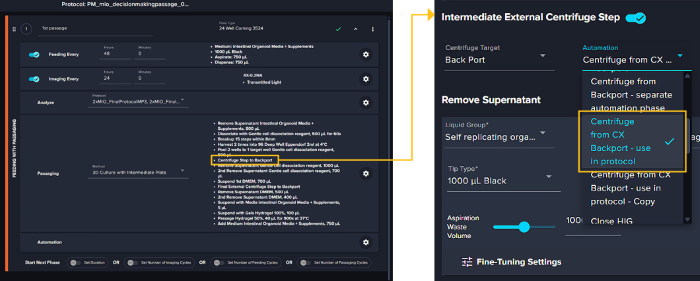
Image Credit: Molecular Devices UK Ltd
- Organoid harvesting into deep well reservoirs
- Automatic plate transfer to an external centrifuge
- Centrifugation runs using user-defined parameters
- Return of plates to the CellXpress.ai system for automated washing, re-embedding, and re-plating
Why it matters: Automating passaging completely eliminates one of the most labor-intensive and failure-prone stages in 3D culture while allowing for unattended organoid workflows with consistent execution.
Example 2: Automated endpoint assays for imaging or functional readouts
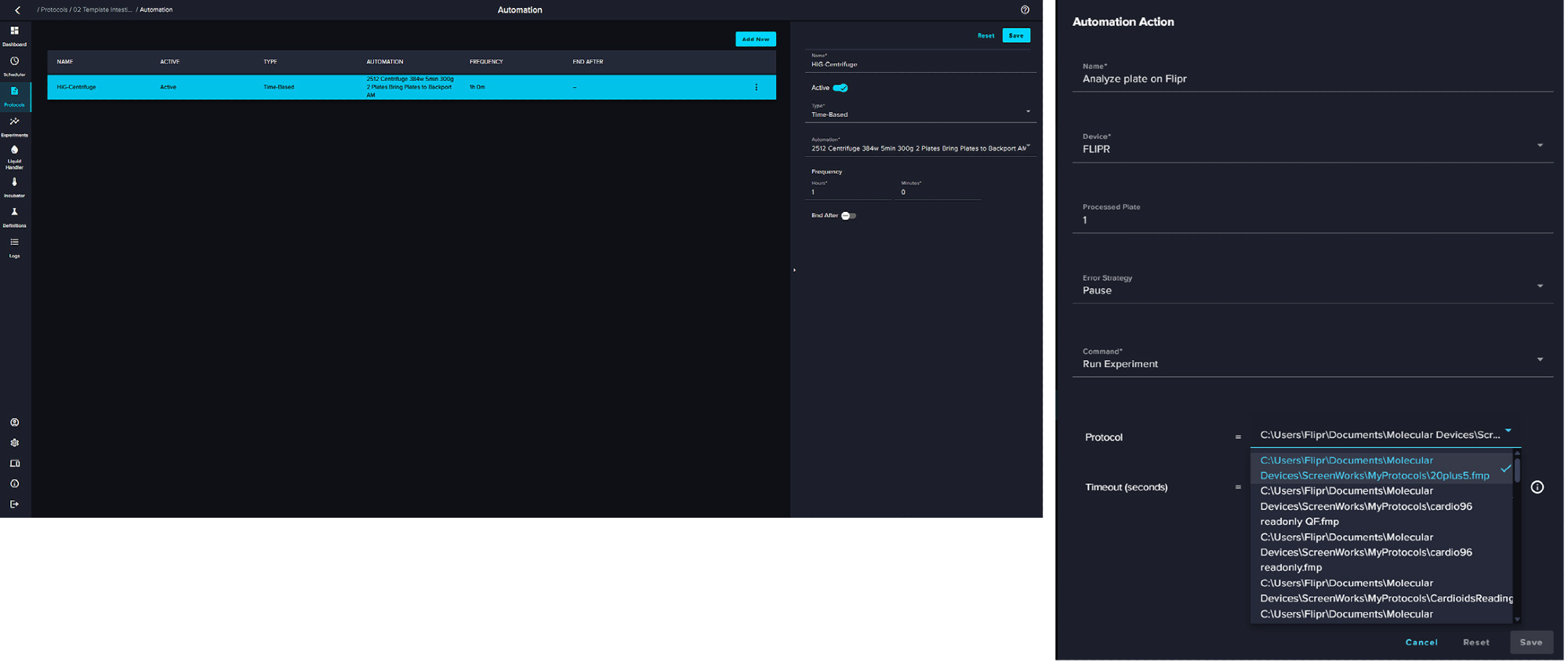
Image Credit: Molecular Devices UK Ltd
After long-term culture and treatment:
- Plates are automatically transferred to an external imaging system, or the FLIPR Penta
- Pre-configured kinetic or imaging protocols are completed without requiring user intervention
- Plates return to the incubator when the process is finished
Download your copy now
About Molecular Devices UK Ltd
Molecular Devices is one of the world’s leading providers of high-performance bioanalytical measurement systems, software and consumables for life science research, pharmaceutical and biotherapeutic development. Included within a broad product portfolio are platforms for high-throughput screening, genomic and cellular analysis, colony selection and microplate detection. These leading-edge products enable scientists to improve productivity and effectiveness, ultimately accelerating research and the discovery of new therapeutics. Molecular Devices is committed to the continual development of innovative solutions for life science applications. The company is headquartered in Silicon Valley, California, with offices around the globe. For more information, please visit www.moleculardevices.com.
Sponsored Content Policy: News-Medical.net publishes articles and related content that may be derived from sources where we have existing commercial relationships, provided such content adds value to the core editorial ethos of News-Medical.net, which is to educate and inform site visitors interested in medical research, science, medical devices and treatments.